There's more than just an oxygen pump supplying oxygen to a fish tank - here are several other methods
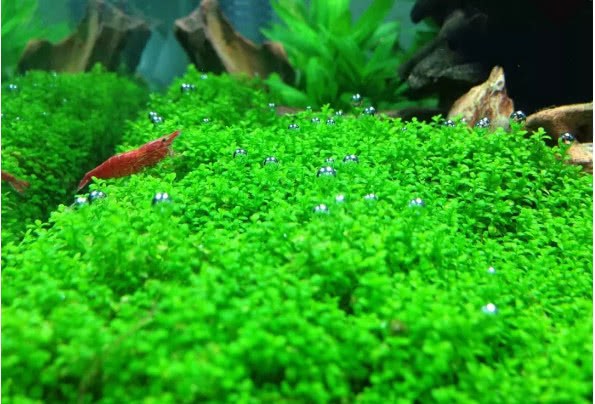
Oxygen is the foundation on which fish and aquatic life depend for survival. Tropical fish absorb oxygen from the water through their gills and exchange gases to release carbon dioxide. In natural water, the oxygen content at the surface is greater than below it, which allows fish and other aquatic organisms to survive. Therefore, the amount of dissolved oxygen in the water not only affects the feeding of tropical fish, but also affects their growth, survival and the balance and stability of the ecosystem, and it is also one of the important indicators for measuring water quality.
So how is oxygen added to a fish tank? In fact, oxygen has several sources:
1. Biological oxygenation
The oxygen released by the photosynthesis of aquatic plants and phytoplankton in a planted tank; the rise and fall of aquatic plants plays an important role in the dissolved oxygen in the water body. Under normal circumstances, the dissolved oxygen level in a planted tank during the day is higher than in a bare tank.
2. Mechanical oxygenation
Forced oxygenation through an air pump, submersible pump and other means. Forced oxygenation by air pump is our main oxygen supply route. Nowadays many water pumps combine these several oxygenation methods together, which is the four-in-one water pump sold on the market.
3. Chemical oxygenation
Adding chemicals to oxygenate, mostly used for emergency rescue when there is a lack of oxygen. The chemical oxygenating agents currently used mainly include calcium peroxide, hydrogen peroxide and ammonium persulfate, etc. (the main components of oxygenating agents).
4. Oxygenation by changing water
Changing to new water can raise the dissolved oxygen level, and during the water-changing process the water flow passing through a certain course and drop can also raise the dissolved oxygen level.
5. Direct dissolution of oxygen from the air
The speed at which air dissolves into the water body is related to atmospheric pressure, water temperature, water flow, airflow and so on. When atmospheric pressure is high, oxygen dissolves into the water body faster; the dissolved oxygen level of flowing water is generally higher than that of still water, so a small waterfall pump that causes fluctuations on the water surface can also increase the speed at which oxygen from the air dissolves.
Factors affecting the dissolved oxygen level
1. Physical factors: The dissolved oxygen level of water is affected by factors such as water temperature, air pressure and salinity. The dissolved oxygen level of water is inversely proportional to water temperature and salinity; when the temperature rises, the dissolved oxygen level drops; the higher the salinity, the lower the dissolved oxygen, and vice versa the dissolved oxygen is high. The dissolved oxygen level of water is proportional to the pressure of the gas; the greater the partial pressure of oxygen on the water surface, the greater the dissolved oxygen level.
When we use an air pump to supply oxygen to a fish tank, the deeper the water surface, the better the oxygenation effect. At the same time, the smaller the bubbles and the larger the relative area of contact with the water body, the better the oxygenation effect. The carbon dioxide bubble diffuser used in planted tanks works on exactly this principle, except that what is being injected is carbon dioxide.
2. Biochemical factors: Too many and too densely stocked aquatic organisms and too much leftover feed, etc. will all cause eutrophication of the water body, increase the organic matter content, and lower the dissolved oxygen level of the water body. The principle is that the decomposition of organic matter is mostly an oxidation process, which needs to absorb oxygen molecules.
The effect of dissolved oxygen level on fish
Dissolved oxygen (DO) is an important factor affecting the feeding amount of fish, the digestion and absorption rate after feed intake, as well as the growth rate and the feed conversion ratio. A brief analysis follows: when the dissolved oxygen level in the water is low, the fish's appetite decreases, or they even refuse to eat; even if they take in feed, it will cause a low digestion and absorption rate, a slowed growth rate and a reduced feed utilization rate. Over the long term, this will cause poor development and various diseases.
The feed utilization rate of fish at a dissolved oxygen level of 3.0 ppm is reduced by one fold compared with that at 4.0 ppm. When the dissolved oxygen level in the water reaches above 4.5 ppm, the increase in the fish's appetite is extremely obvious, and when it reaches above 5 ppm, the feed utilization rate reaches its optimal value.
Studies have shown that when the dissolved oxygen level in the water drops from 7.6 ppm to 3.1 ppm, the feed utilization rate decreases by 5.6 times and the growth rate decreases by 9 to 10 times. Tropical fish require a dissolved oxygen content in the water of above 7 ppm. If the dissolved oxygen in the water drops to 5 ppm, tropical fish will "gasp at the surface", and if measures are not taken at this time, tropical fish are at risk of suffocating to death.
The oxygen consumption per unit of body weight of a fish decreases as the fish body grows larger, while the oxygen consumption of a single fish increases as the fish body grows larger. As the water temperature rises, the metabolism of fish becomes more active and their oxygen consumption is also higher. The greater the fish's feed intake, the higher the oxygen consumption. To make fish grow rapidly, ensuring high dissolved oxygen in the water is extremely important. It should be pointed out that it is not the case that the higher the dissolved oxygen level in the water, the better; when the dissolved oxygen level in pond water reaches a supersaturation of above 150% and the dissolved oxygen level reaches above 14.4 ppm, it can easily cause gas bubble disease in fish. Under normal temperature and pressure, I think this is unlikely to happen; under normal pressure, excess dissolved oxygen will automatically escape from the water surface.
If you want to learn more about ornamental fish keeping, you can choose to contact us as follows. Professional personal WeChat: 281716330 / visit the official website: www.hangtei.com / WeChat official accounts: yugang-88 / guanshangyu-88 (unlimited daily push of great ornamental fish keeping articles)
Recommended practical fish-keeping equipment: Recommended practical fish-keeping equipment: https://yangyu.taobao.com/, or go to Pinduoduo https://mobile.yangkeduo.com/mall_page.html?mall_id=1215721 to grab orders, lots of discounts, full of quality goods, not to be missed~ If you have anything unclear about the above article content, you can leave a comment at the end of the article to consult me~