How to Propagate Physalis? Detailed Explanation of Key Propagation Techniques
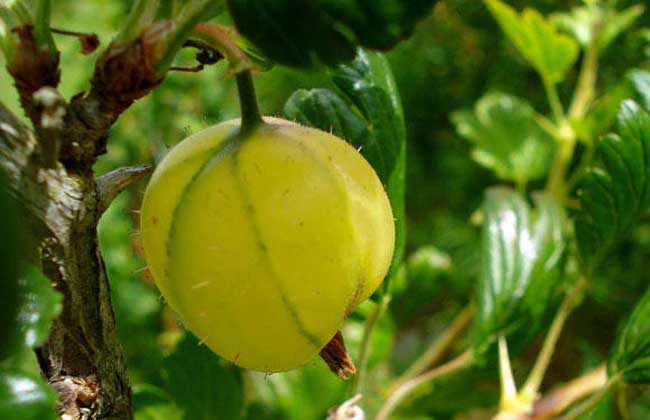
Physalis is a perennial herbaceous wild fruit unique to China's history that serves both as medicine and food, valued for its health benefits. Wild resources are distributed in both northern and southern China. As early as the Zhenghe period of the Ming Dynasty, ancient people made full use of it. Today, the editor will mainly introduce the propagation techniques of physalis.
Seed Propagation of Physalis
Physalis is harvested in October to November when the fruit skin turns yellow-red. The seeds are extracted, dried, and then sown immediately. On a prepared seedbed, open horizontal trenches at a row spacing of 20 cm and a depth of 1 cm, then mix the seeds with plant ash and evenly scatter them into the trenches, covering with soil level with the bed surface.
After sowing, cover the bed surface with rice straw to keep warm and retain moisture. Use 3 kg of seed per mu. After seedlings emerge in mid-to-late April, remove the straw and timely carry out loosening of soil, weeding, and topdressing. Keep the soil loose and the nursery free of weeds. Combine loosening and weeding with one topdressing in May. When seedlings reach 30 cm in height, they can be lifted from the nursery and transplanted. Seedbed seedling raising is generally done by manual sowing. Taking drilling as an example, the sowing work is divided into 4 steps: marking lines, opening trenches, sowing, and covering with soil.
Cutting Propagation of Physalis
The mother trees for collecting physalis cuttings must be robust, free of pests and diseases, high-yielding, and of high medicinal value. Select current-year hard branches that are well-developed, about 0.5 cm in diameter, fully lignified, and free of pests and diseases. Cut off the top shoot portion and cut into 15-20 cm cuttings, each with 3 bud nodes. At the base end of the cutting, 0.5 cm below a bud node, cut at a 45° slant or double-slant.
To improve the propagation effect of cuttings, the cuttings should be treated before insertion. Physalis cuttings are mainly treated by soaking in water so that the cuttings absorb enough water before insertion, which is beneficial for rooting and drought resistance. At the same time, soaking the cuttings also has a certain effect on eliminating rooting-inhibiting substances. Bundle 25 cuttings per bundle. In each bundle, the base and tip portions must not be reversed, and the bases should be aligned neatly. After bundling, place them in clean water to wash. The soaking time is generally 1 day, preferably in running water. If there is no running water, change the water 1-2 times. Then soak in ABTI No. 1 rooting powder for 2 hours.
For physalis, cutting propagation can be carried out throughout the year, but the survival rate is highest when cuttings are inserted from May to September. Before cutting, prepare the cutting bed well. For open-field cutting, carefully prepare the land and apply sufficient base fertilizer to make the soil loose and moisture-sufficient. Soil disinfection should be carried out when necessary. Insert the treated cuttings obliquely into the seedbed, leaving only one bud node at the tip exposed above the soil surface. Plant spacing and row spacing: 20 cm × 20 cm.
Horizontal Layering Propagation of Physalis
Physalis can also be propagated by horizontal layering. In spring, open radial longitudinal trenches outward from the plant clump, about 15 cm deep. Select robust 1-year-old new branches, bend them downward, and guide them horizontally into the trenches so that the entire branch lies close to the bottom of the trench. Several branches can be placed in one trench, but care should be taken that there is a certain distance between them to allow new roots to grow. Then fill the trenches with soil, leaving the tips of the branches exposed above the ground.
As the new shoots emerging from the layered branches continue to grow taller, earth up in stages to allow the bases of the new shoots to root. When leaves fall in autumn, separate each new rooted plant from the mother plant to become an independent plant. Horizontal layering is easy to operate, has a high survival rate, and produces robust seedlings.