Which regions are cape gooseberry distributed in as its places of origin?
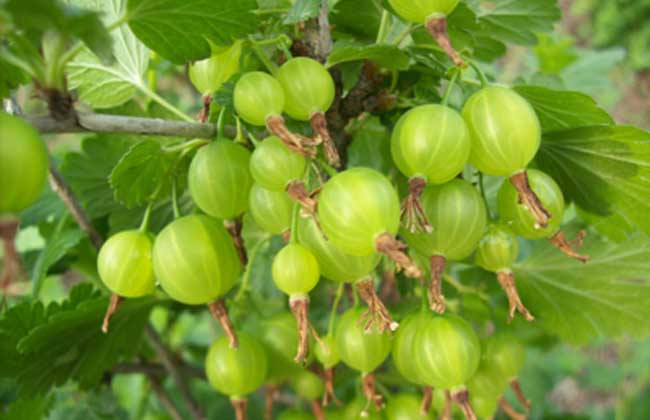
The cape gooseberry is a perennial herbaceous plant of the Solanaceae family and the genus Physalis. It often grows on hillsides, in fields and gardens, by riversides, along ditch edges, roadsides and around houses, in damp and shaded spots of wasteland. Its places of origin are Peru and Chile, and it is now cultivated throughout China. Let us take a look below at the places of origin and distribution of the cape gooseberry!
The places of origin and distribution of the cape gooseberry
The cape gooseberry originated in Peru and Chile, but it is not any kind of important product there. The locals eat a little of it casually, and it is occasionally seen in vegetable markets. However, it has been widely introduced to various tropical and subtropical regions, and it can be grown anywhere tomatoes can survive. Before 1807, residents of the Cape of Good Hope had already begun cultivating the cape gooseberry. There are commercial orchards in South Africa, where jam and canned goods are common items for residents and are also frequently exported. Central African countries, such as Gabon, also have small orchards.
After the cape gooseberry was successfully grown at the Cape of Good Hope, it quickly spread to Australia, and it was one of the fruits eaten by early residents of New South Wales. There are now many large orchards as well as many wild fruit trees, and it has spread throughout Queensland, Victoria, South Australia, Western Australia and northern Tasmania.
The cape gooseberry also has a large distribution in China as a place of origin, mostly called huang guniang, and it is mainly distributed in southern Yunnan, China, Guangxi, Guangdong, Hainan, Hong Kong, China, Taiwan, China, southern Fujian and the three northeastern provinces.
What other names does the cape gooseberry have?
Other names for the cape gooseberry include datoupao, denglongcao, guidenglong, xiao guniang, guniang'er, guniao, pineapple fruit, guniang, suanjang, yang guniang, xiang guniang, hanxiu fruit, hanxiao fruit, xiang maliu and so on!
The habitat conditions of the cape gooseberry
1. The cape gooseberry likes warmth: The cape gooseberry likes warmth and is not tolerant of frost. Seeds germinate rapidly at around 30°C; the seedling growth period is suitable at 20-25°C, with nighttime temperatures not lower than 17°C; during the flowering and fruiting period, 20-25°C during the day and no lower than 15°C at night are suitable, otherwise flower and fruit drop is easily caused. Plants stop growing below 10°C. Below 0°C the plants are damaged by frost. Surveys show that seedlings are not mature in their low-temperature tolerance, so open-field propagation must not be carried out too early, and planting can only be done after the late frost has passed.
2. The cape gooseberry likes light: The cape gooseberry is relatively sensitive to light requirements and needs sufficient light. Within the range of 3000-4000 meter-candles, growth and development are coordinated and fruit quality is excellent. When light is insufficient 12582.10086.cn, plants grow excessively and become thin and weak, yield declines, berries color poorly and taste is poor. Therefore, in production, attention must be paid to the rationality of planting density and the necessity of pinching tips, removing buds and pruning.
3. The cape gooseberry needs water: The cape gooseberry needs relatively more water, especially in the early stage when the berries begin to ripen, when branches, leaves and fruits grow at the same time and more water is needed. When the berries ripen in large quantities, water must be controlled. Therefore, throughout the life of the cape gooseberry, it likes water in the early stage and fears water in the later stage. In the later stage, more rainwater causes the plants to stay green and grow vigorously, and also delays the berry ripening period and affects the progress of harvesting work. Thus, in production, attention should be paid to watering in the early growth stage and to drainage in the later stage.
4. Soil requirements are not strict: The cape gooseberry is not strict about soil, and it can be said to be plantable in all kinds of soil. However, sandy soil is best, giving berries a good taste and high yield and marketable rate. The cape gooseberry is relatively tolerant of salinity and alkalinity, and soil with a pH value of 6.5-7.5 is more suitable. In addition, the soil is required to have relatively good physical properties, with a deep and loose plow layer, so that the root system can easily grow deeper.
5. The cape gooseberry is sensitive to nutritional conditions: The cape gooseberry reacts relatively keenly to nutritional conditions. If there is too much nitrogen fertilizer in the soil layer, or if the proportions are imbalanced, phenomena such as plants staying green and ripening late and poor fruit quality will occur. If nutrition is insufficient, the plants are short and the berries are also small, but they color quickly, ripen early and yield is low. Therefore, in fertilization, organic fertilizer should be the main component, supplemented with chemical fertilizer. In the early growth stage, nitrogen and phosphorus fertilizers should be the main component, while in the later stage, phosphorus and potassium fertilizers should be the main component, so as to ensure the needs of each period.