What are the propagation methods for strawberries? A full breakdown of common propagation methods
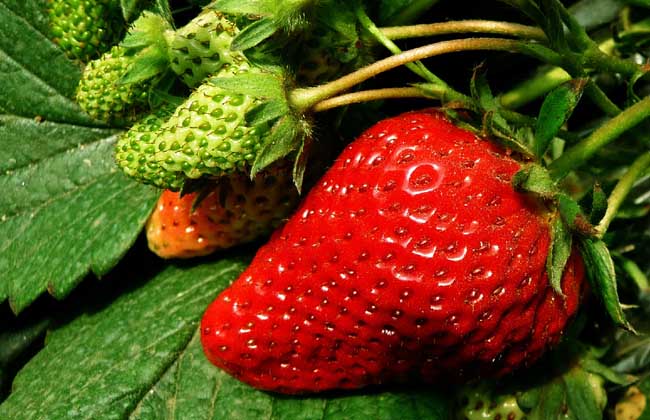
Strawberry is a perennial herbaceous plant with strong adaptability, a short growth cycle, early fruiting, and quick results, and it is widely cultivated. Its propagation methods mainly include runner propagation, division propagation, tissue culture propagation, and seed propagation. Let's take a look together below!
Strawberry seed propagation method
Strawberry seed propagation has low production efficiency and is generally not used, but it can be tried for home potted growing.
Strawberry division propagation method
Strawberry division propagation is also called old plant propagation. This propagation method is suitable for strawberry nurseries that need renewal and a change of site, or for strawberry varieties that do not readily produce runners. The method is to use the new stem branches produced on the mother plant for propagation. During the growth period, in addition to sending out large numbers of runners, the strawberry new stem can also produce several new stem branches, and adventitious roots can form at their base. After the fruit is harvested, when they have grown 3--5 compound leaves and have more fibrous roots, break off the new stem branches from the mother plant together with the root system, and a complete daughter plant is obtained.
Strawberry runner propagation method
Runner propagation is the most commonly used method in strawberry production. The seedlings growing from runners are called runner plants after being separated from the mother plant. This is asexual propagation, and this propagation method has four major advantages.
1. High propagation coefficient: one mother plant can produce 150-290 runner plants, of which rooted plants account for 50%-80%. Each hectare of strawberries can produce 225000-375000 high-quality runner plants in one year.
2. It is easy to maintain variety characteristics and fruit quality.
3. The material is easy to obtain: seedlings can be collected from production fields, and a mother plant garden can also be established for seedling collection.
4. The seedlings have strong vitality and bear fruit early. Planted in autumn of the same year, they can bear fruit in spring and summer of the following year.
Strawberry tissue culture propagation method
Strawberry plantlets bred and cultivated by traditional methods have disadvantages such as slow growth, occupying more space, being susceptible to virus infection, being prone to degeneration, and affecting yield and fruit quality. Using tissue culture to propagate and cultivate strong seedlings can well solve these disadvantages:
1. Fast propagation speed: one meristem can obtain several thousand to several hundred thousand plantlets within one year, with great development potential.
2. Market varieties can be quickly updated: according to market demand, a variety can be updated once within 2-3 years, while conventional production requires 4-5 years.
3. Flexible production: as long as a tissue culture operation workshop, that is, an expanded culture laboratory, is established, production can be carried out year-round, and plants can also be kept in cold storage until autumn or the following spring.
4. A large proportion of healthy plants and obvious yield-increasing effect: the meristem in the shoot tip tissue itself is virus-free, and the entire operation is carried out in a sterile environment. Cultured virus-free plantlets grow faster than ordinary non-virus-free plantlets, have a higher fruit-setting rate, an extended fruiting period, and a significant increase in fruit weight, with an average yield increase of 30%-50%.