Do Bananas Have Seeds? The Truth About Banana Seeds
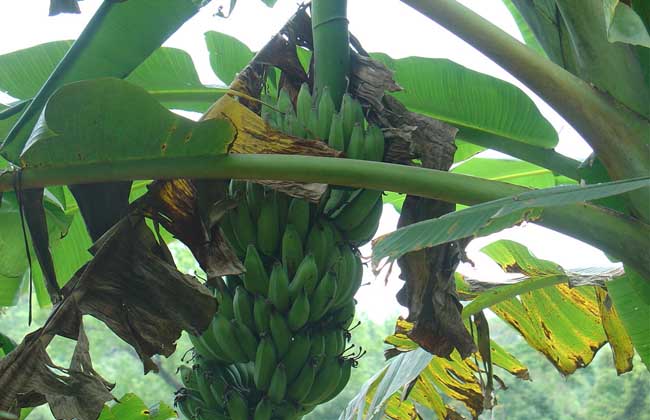
Bananas are one of people's favorite fruits, enjoying the reputation of "happy fruit" and "fruit of wisdom." But unlike apples, pears, oranges and other fruits, which have obvious seeds inside, bananas never seem to contain any, so many people assume bananas simply have no seeds at all. That is not actually the case. Let's take a look below at whether bananas really have seeds!
Do bananas have seeds?
Bananas do have seeds. Inside the flesh of a banana hide little black specks like sesame seeds. Everyone assumes these are seeds, but in fact they are only the seed coats. So where did the real seeds go? In fact, bananas originally did have seeds, but through continuous artificial improvement, the female flowers were made unable to be fertilized and set seed, leaving only seed coats in the flesh. In the fruit of wild bananas, however, granular seeds can still be found.
Where are banana seeds?
The earliest bananas in the world not only had seeds, but the seeds were numerous and large, while the flesh was actually very sparse. Later, through long-term artificial cultivation, bananas with little flesh and many seeds were eliminated, leaving those with few seeds and abundant flesh. After further long-term cultivation and improvement, today's banana took shape: the seeds degenerated, the flesh increased, the sweetness grew, and the aroma became richer. Bite open a banana and you will find rows of small brown dots on the cut surface; these are the degenerated seeds. People who do not know the history of bananas assume it was always seedless.
How do bananas reproduce?
Since the seeds of artificially cultivated bananas have already degenerated and cannot be used for propagation, how do bananas reproduce? Let's take a look below at the propagation methods for bananas!
1. Banana sucker propagation
Sucker propagation is a relatively common traditional method of raising banana seedlings. It mainly uses sword suckers (red shoots) and ragged-clothing suckers for propagation. Suckers used for division as planting stock generally need to be more than 40 cm tall.
① Red shoot: thick at the head and tapering at the tail, shaped like a bamboo shoot or sword, hence also called a sword sucker. It generally emerges in November of the previous year, breaks through the ground when the weather warms after the Start of Spring that year, and is red in color. It is usually used for planting in March, April and May of that year. After planting, its characteristic is that it produces leaves first and grows roots afterward.
② Ragged-clothing sucker: ragged-clothing suckers generally emerge in August, September and October of the previous year. Because they encounter drought and cold, they do not grow, and their leaves wither when winter comes. Due to low temperature and lack of water, the upper part grows slowly while the lower part accumulates nutrients, so the nutrients are abundant and the shape is small on top and large at the bottom with many roots. They are generally used for planting in February and March. After planting, they first develop roots and then send out leaves.
2. Banana corm propagation
Corm propagation is a propagation method mainly used to cultivate a large number of sprouted seedlings in a short period. Using the underground stem of a plant that has not yet flowered or fruited, or of a large sucker (sprouting in October-November), as material, the best time to cut it into pieces is from November to January of the following year. Most of the pieces can sprout, and when the seedlings reach 40-50 cm in height in April, May and June, they can be planted. The advantages of this propagation method are that it can reduce pests and diseases, has a high survival rate, and produces uniform growth and fruiting. The initial plants are shorter than those from sucker propagation and are more wind-resistant, but it has the disadvantage of low yield in the first generation.
In the method of propagating by cutting the underground stem into pieces, first cut off the above-ground part of the plant, dig up the corm, keep the pseudostem 12-15 cm high, then cut the corm into small pieces, each weighing about 120 grams or more, each with a strong bud eye. Coat the cut surfaces with plant ash as a preservative, then place the pieces flat on the bed at a spacing of 15 cm between plants and rows, with the bud eyes facing up, and cover with soil and straw, carrying out fertilization and management. One week before the seedlings leave the nursery, Bordeaux mixture of equal parts should be sprayed twice in succession to prevent leaf spot disease. If bunchy top disease seedlings are found, they should be pulled out promptly and lime spread for disinfection to prevent contagion. In places with severe nematode damage, first scrape off the blackened, rotted outer skin of the underground stem, soak it in hot water at 54-55°C (or 5% formaldehyde) for 20 minutes to kill the nematodes, and then raise the seedlings.
3. Banana division propagation
Conventional banana propagation mainly uses suckers for division propagation. When the sucker grows to more than 40 cm, it can be divided, kept as the mother plant for the next generation or used as planting stock. When dividing, first dig open the soil beside the sucker, then use a shovel to cut between the mother plant and the sucker. After the seedling is dug out, cut off overly long and damaged roots, dry the cut in the shade or coat it with plant ash, and it can then be planted.
4. Banana tissue culture
The production of banana seedlings for large-scale planting mostly uses tissue culture rapid propagation technology. Using it not only allows a large number of test-tube seedlings to be obtained in a short period, but also can remove viruses such as mosaic disease, which helps increase yield.
① Explant disinfection and primary culture: During operation, in banana-growing areas free of traditional diseases, select a mother plant with strong growth, uniform fruiting and high yield, and dig out a sucker that has just emerged from the ground as the induction material. When disinfecting, first peel off the leaf sheaths outside the sucker and rinse it clean with water. Under aseptic conditions, disinfect with 75% alcohol solution for 30 seconds, then disinfect with 0.1% HgCl2 for 20 minutes, then rinse with sterile water 7-8 times. Cut out its shoot tip, divide the shoot tip into 2 parts, and place them in an induction medium of MS + 3-6 mg/L BA + 3% sugar + 7.0 g/L agar, place in a dark light incubator, maintain the temperature at 28-30°C, and culture for 40-50 days to sprout.
② Subculture proliferation of clustered shoots: The clustered shoots obtained from primary culture can be subcultured and proliferated in a medium of MS + 3-6 mg/L BA + 0.2 mg/L NAA + 3% sugar + 7.0 g/L agar. At 28-30°C and 1500 lx light, subculture proliferation can be carried out once every 20-25 days, obtaining a proliferation rate of 2.0-2.7 times. During the culture process there should be sufficient light, and the daily 1500 lx light period should be no less than 8 hours. If there is no light or insufficient light, the color of the pseudostem and leaf stalks will fade and turn green, or even become white, affecting the proliferation rate. Subculture generally should not exceed 12 generations, otherwise mutation is easily caused.