A Complete Analysis of the Key Points of Shatian Pomelo Cultivation Techniques
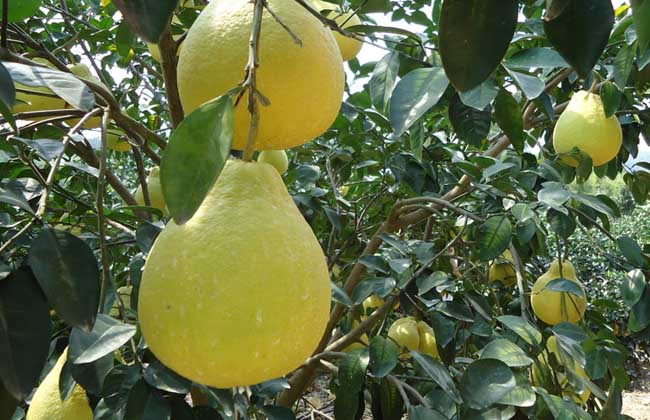
Shatian pomelo originated in Shatian Township, Rong County, Guangxi, and was later successfully introduced and cultivated in our province. Shatian pomelo fruit is large, of good quality, storable, easy to transport, and has a broad market. In addition to the domestic market, it is also very competitive internationally. To achieve high yield, high quality, and low consumption in cultivating Shatian pomelo, the following main tasks should be done well:
Shatian Pomelo Cultivation Techniques
1. Site selection and land preparation
Shatian pomelo is an evergreen fruit tree with a tall tree shape and a well-developed root system. It grows well in loose, fertile, moist soil with good aeration. Therefore, when planting Shatian pomelo, deep red loam or gravelly soil that is fertile and has good permeability should be selected. For mountainous land, slopes below 30 degrees are generally suitable. Terraced fields should be built on south-facing or southeast-facing hillsides for planting. Alluvial soil in mountain valleys is ideal. Areas with convenient drainage and irrigation, such as alluvial zones by rivers and streams, are most suitable for establishing an orchard.
Before planting, planning should be done first. Use trenching or large-hole digging, and apply sufficient base fertilizer so that the trees grow and develop quickly. For flat land, hole planting is generally used, digging large holes measuring 1×1×1m in length×width×depth; for mountainous land, trenching is suitable, digging trenches 1—1.5m wide and 1m deep along contour lines. After the trenches and holes have been exposed to the sun for a week, fill them with soil. When backfilling, layer in grass material and decomposed farmyard manure. That is, place green manure at the bottom layer, decomposed pig and cattle pen manure in the middle layer, and cover the surface with finer, more fertile soil. After the trenches and holes are filled level, set planting mounds 1m wide and 0.3m high at fixed points for planting.
2. Planting methods
When planting, good seedlings should be selected. It is advisable to choose grafted seedlings of the soft-branch Shatian pomelo variety that bears many fruits, has good quality, is high and stable yielding, and is free of pests and diseases. The graft union should be exposed above the soil surface. The planting time should be when the branches and shoots are fully mature, generally spring planting from February to April is better. Planting spacing should vary according to different terrain and soil quality. Because mountainous land is relatively lean but has good ventilation and light transmission, it can be planted more densely, at 30—40 plants per mu. Fertile contiguous flat land should be planted more sparsely, at about 20 plants per mu.
Because self-pollination of Shatian pomelo is not as good as cross-pollination, in order to improve the fruit-setting rate and increase pomelo yield, about 10% sour pomelo or crystal pomelo should be interplanted in a planned way as pollinizer trees during planting. When planting, care should be taken that the root system does not come into contact with fertilizer, the backfilled soil should be slightly compacted, the tree basin should be covered with grass, and enough root-setting water should be applied to ensure drought prevention and moisture retention.
Management of Young Shatian Pomelo Trees
The young stage of Shatian pomelo refers to the period from planting until the first fruiting.
1. Watering and fertilizing: After Shatian pomelo is planted, if there is drought, water should be applied every day to keep the soil moist and promote survival. On rainy days, attention should be paid to draining accumulated water to prevent root rot. New roots begin to sprout 15—20 days after planting, and decomposed human urine and manure should begin to be applied, adding 3—4kg of human urine and manure per load of water, 1—2 times per month. Fertilizer concentration should gradually increase as the tree grows. During the new shoot stage, the method of one fertilizer application before each flush and one after should be used, that is, applying fertilizer once 10—15 days before shoot sprouting and once at the leaf expansion stage after the new shoots emerge. Fertilization in spring, summer, and autumn should be shallow, such as basin application or shallow trench application. Winter fertilizer and heavier fertilizer should be applied deeply and in layers. In short, because young trees are small and the root absorption capacity is relatively weak, fertilization should follow the principle of "frequent application and irrigation application," ensuring 1—2 heavy fertilizer applications (mainly quick-acting water-soluble fertilizer) before each flush and during the growing period, so as to promote robust and full branches and shoots and form a high-yielding canopy as early as possible.
2. Bud removal and shoot control to cultivate a high-yielding canopy. After planting and survival, the first task is to do well in trunk training. When the trunk of the pomelo tree reaches 40—45cm high from the ground, cut the top to promote new shoots. Leave 2—3 new shoots at the top with different directions and even distribution as main branches. At the second flush, cultivate 3 secondary main branches on each main branch. At the third flush, cultivate side branch groups on the secondary main branches. Each branch shoot should be 15—20cm long. Those with insufficient angle can be shaped by pulling with strings. Young trees can produce 3—4 flushes per year, namely spring flush (around Yushui), summer flush (around Xiaoman), autumn flush (after Dashu), and late autumn flush (from Bailu to Qiufen). Before each flush, in addition to applying sufficient base fertilizer, attention should also be paid to bud removal and shoot control, removing scattered shoots and keeping uniform ones, to promote many, neat, and robust new shoots. During the flush period, pest and disease control should be done well to protect the shoots, laying a good foundation for early fruiting and high yield.
3. Deep plowing to improve soil and gradually expand planting holes. It is generally required to complete deep plowing of the entire orchard within 3—4 years after planting. Each deep plowing must incorporate green manure or decomposed organic fertilizer to achieve the purpose of increasing fertility and improving soil, creating good conditions for root growth, and enabling the pomelo tree to be long-lived and high-yielding. The time for deep plowing is after each new shoot matures. The trenches (holes) dug should have an outlet to prevent root rot from prolonged rainwater accumulation.
4. Intertillage, weeding, and mulching. Through intertillage, the soil is loosened, soil moisture and air are regulated, and fertilizer decomposition is promoted. In spring and summer, intertillage is mainly for weeding and should be shallow. In autumn and winter, intertillage should be done after rain to reduce water evaporation and improve drought resistance. In places with many weeds, grass can be used as mulch all year round to help retain moisture, prevent drought, and prevent erosion.
Management of Fruiting Shatian Pomelo Trees
Shatian pomelo generally begins to flower and bear fruit 2—3 years after planting, but to obtain high and stable yields, the following aspects must be emphasized.
1. Rational fertilization and irrigation
After Shatian pomelo trees enter the fruiting stage, the plants shift from a purely vegetative growth state to the coexistence of reproductive growth and vegetative growth, and the demand for fertilizer and water greatly increases. Rational water and fertilizer management is the key to obtaining high and stable yields of Shatian pomelo. Fertilizer should be mainly organic fertilizer, with a reasonable combination of organic fertilizer and inorganic chemical fertilizers (nitrogen, phosphorus, potassium). The specific fertilization amount per tree should be determined by tree age and fruit load. The fertilization principle is to apply heavy fertilizer before flowering and after fruiting, skillfully apply fruit-stabilizing and fruit-strengthening fertilizer, and supplement with foliar topdressing.