Where are Red Fuji apples grown? Introduction to the distribution of the main production areas
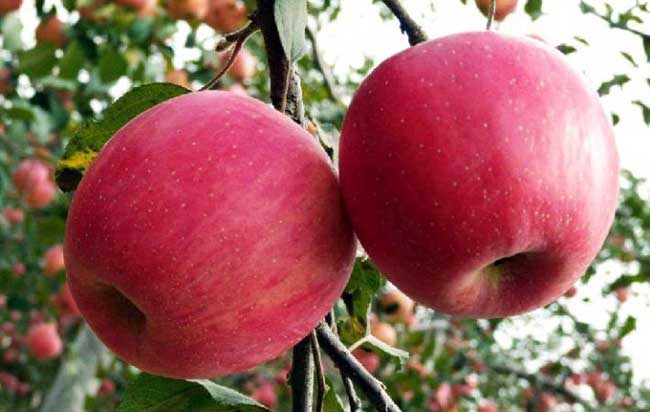
Red Fuji apples originated in southeastern Europe, in the regions of Turkey and the Caucasus, and were first introduced to Shandong, China around 1870. Zhucheng City began introducing and propagating Red Fuji apples in 1982, bringing in a total of five single strains: Nagafu 1, Nagafu 2, Nagafu 6, Akifu 1, and Iwafu 10, becoming one of the earlier counties and cities in Shandong Province to develop Red Fuji apple production. In recent years, it has been widely cultivated in Liaoning and the provinces of North China and Northwest China.
China began introducing Fuji apples in 1966. In the spring of 1980, when the Ministry of Agriculture organized relevant experts to visit Japan for inspection, they selectively introduced saplings and scions of several well-colored Fuji strains, including Nagafu 2, Akifu 1, and Nagafu 6, and arranged for systematic observation and research at multiple trial sites in the main apple production areas. Today, Fuji-series apples have been developed across nearly one million hectares in China, and in Liaoning, Shandong, Hebei, Beijing, Shanxi, Shaanxi, Tianjin, Henan, Jiangsu, Anhui, Gansu and other provinces and cities, they have all replaced the late-maturing variety Guoguang.
Red Fuji has weak cold resistance, noticeably lower than varieties such as Guoguang, Shouhong, and New Jonagold. In Liaoning, Hebei, Shandong and other places, freezing damage and winter dieback of young trees are common. In poorly drained and acidic soils, branch ring rot and rough bark disease occur severely. In addition, in high-temperature and high-humidity areas, ring-shaped cracking easily occurs at the stem cavity of the fruit. It is suitable for promotion north of the Lixiahe high and flat area in Jiangsu Province at around 33°N latitude and south of the line from Zhuanghe County to Gai County to Xingcheng City to Jianchang County in Liaoning at around 40°N latitude, and east of the Qingyang, Tianshui, and Pingliang areas in Gansu Province. The old course of the Yellow River area is an economic cultivation zone for Fuji apples. The suitable soil is sandy loam, requiring deep soil layers, generally preferably more than 80 cm, with soil organic matter content above 2%.