Where Do Watermelons Come From? Introduction to the Distribution of Major Producing Areas
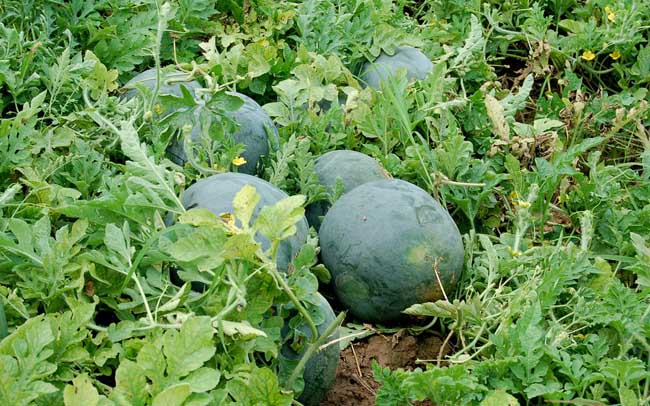
The watermelon can be called the “king of melons.” It originated in Africa, was introduced to ** during the Tang Dynasty, and was introduced to central China during the Five Dynasties period. It belongs to the Cucurbitaceae family, contains multiple seeds, and is a common fruit people eat. So do you know where watermelons come from? Now let's take a look at watermelon producing areas together.
What watermelon producing areas are there?
1. Hainan: Hainan has a subtropical climate, and its agricultural and sideline products rank first in the country! So watermelons are very easy to find in Hainan. Because of the climate, watermelons are available even in winter, though at this time the price of watermelons is relatively high. The varieties produced include: Black Beauty, seedless melon, New Red Treasure, Early Spring Red Jade, Qilin melon, Extra Small Phoenix, and others.
2. Guangxi: Guangxi is one of the major producing areas of agricultural and sideline products in our country. Guangxi watermelons generally come to market in April and finish in October! The varieties produced include: seedless melon (mostly from Beihai), Black Beauty (mostly from Nanning, Teng County, and other places), New Red Treasure and flower melon (mostly from Guilin).
3. Hubei: Hubei is located at the Three Gorges and is a major watermelon production base in our country. The varieties produced include: Black Beauty, New Red Treasure, flower melon, Dongting No. 1, black-skinned melon, and others.
4. Hunan: Hunan watermelons generally come to market in early June. The varieties produced include Black Beauty, Dongting No. 1, New Red Treasure, and others.
5. Liaoning: Because of climate reasons, Liaoning watermelons come to market relatively late, but the melons are sweet and large, so they are deeply loved by everyone. The varieties produced are mainly flower melon, mostly from the Heishui area.
6. Inner Mongolia: Inner Mongolia watermelons come to market at about the same time as Liaoning watermelons, but in terms of varieties they are mainly black-skinned melon and flower melon.
How do you choose a watermelon?
1. Observe the color and listen to the sound: For striped melons, the stripes should be clear, with distinct dark and light. For black-skinned melons, the skin color should be pitch-black and glossy. Regardless of the type of melon, the stem end and blossom end should be sunken inward (this feature is not obvious in the “beauty melon”; it is enough if the tail is not especially pointed). The vine stem is close to the rind and points downward, and the area near the stem is thick and green - this is a sign of ripeness. If it is dark brown, the fuzz has fallen off, it is curved and brittle, and the tip of the curled tendril has turned yellow and withered, it is a melon picked before it was ripe. If the melon stem has already dried up, it is a “dead vine melon” and of poor quality. Hold the watermelon in your hand and lightly flick it with your finger. If it gives a crisp “dong, dong” sound and the hand holding the melon feels some vibration, it is a ripe melon. A “tu, tu” sound reflects relatively high ripeness. A “pu, pu” sound means the melon is overripe. If it feels like tapping stone and gives a “da, da” sound, it is an unripe melon. A ripe melon can transmit vibrations from above very well to the hand holding it; that is, the more clearly the hand holding the melon feels the vibration, the riper the melon is.
2. Look at the head and tail: If both ends are well-proportioned, the blossom end and stem end are rather deeply sunken, and the surrounding area is plump, it is a good melon. If the head is large and the tail is small, or the head is pointed and the tail is thick, it is a melon of relatively poor quality.
3. Compare elasticity: If the rind is relatively thin and easy to break when pressed with a finger, it is a ripe melon. If it splits when scratched with a fingernail, and the melon is soft, it is an overripe melon.
4. Weigh it by hand: If it feels airy and light, it is a ripe melon. If it feels heavy and sinking, it is an unripe melon.
5. Test specific gravity: If it floats upward when put into water, it is a ripe melon. If it sinks, it is an unripe melon.
6. Look at size: Among the same variety, larger is better than smaller.
7. Observe shape: If the melon body is neat and well-proportioned, it grew normally and is of good quality. If the melon body is deformed, it grew abnormally and is of poor quality.