What is the best time to plant cherry tree saplings?
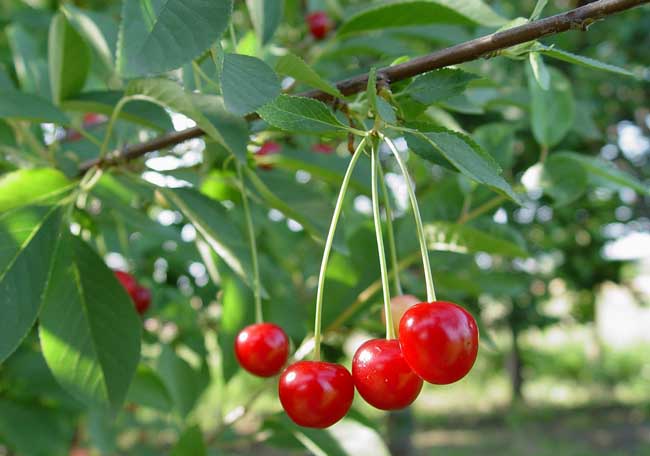
When is the planting time for cherry trees? Cherries are bright and beautiful in color, red as agate and yellow as congealed fat, and the fruit is rich in sugar, protein, vitamins, and various elements such as calcium, iron, phosphorus and potassium, making it widely loved by consumers. Below, the editor has compiled the best time for planting cherry saplings for your reference.
The best time to plant cherry trees is autumn. Because the northern regions have spring drought, traditional spring planting increases the difficulty of water management. Moreover, if spring planting is too early, the temperature is unstable and the plants are prone to frost damage; if spring planting is too late, the buds sprout quickly but roots grow slowly, which can cause seedling death. Autumn planting allows the seedlings to recover and sprout in the same season, and in the following spring they sprout and branch early, making it easy to form strong seedlings. After autumn planting, before the soil freezes, soil should be mounded up to protect against freezing.
Cherry planting should adopt the “small pit, deep planting, shallow covering method”. The traditional fruit tree cultivation method of digging a large pit is not suitable for cherries, because cherry roots are shallow and cannot tolerate waterlogging. If cultivated in a large pit, the soil in the pit is looser than the soil around the pit, which easily causes waterlogging in the rainy season and can cause seedling death in severe cases. The “small pit, deep planting, shallow covering method” means digging out three to four shovelfuls of soil, applying two shovelfuls of farmyard manure, loosening the soil at the edge of the pit and mixing it evenly with the farmyard manure in the pit, then placing the seedling (choose a thick, strong seedling with a well-developed root system), and covering with a layer of shallow soil just enough to bury the original soil mark on the roots. Then press the soil down slightly so that the root crown is about 15 cm below the ground surface, forming a small tree hollow under the seedling. In this way, “deep planting” lowers the center of gravity of the seedling and helps resist lodging, while “shallow covering” facilitates root respiration, allowing the seedling to recover quickly and grow well.
After cherry trees are planted, they should be watered frequently, but avoid heavy watering. Adjust according to the weather: in drought, water often with a small amount; in waterlogging, drain actively, keeping the soil surface around the roots alternately dry and moist.