Kyoho grape pest and disease control methods and key technical points
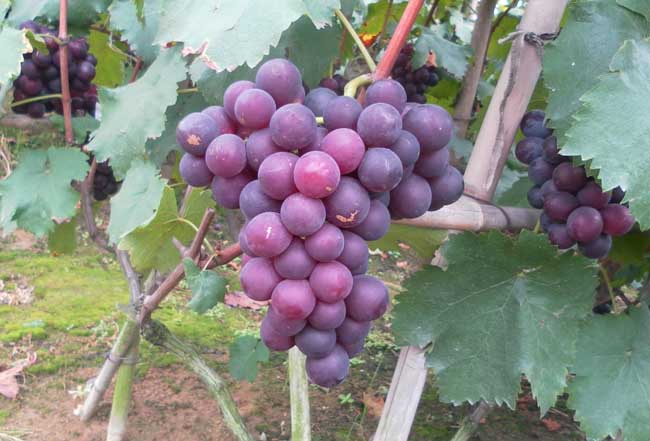
Kyoho grape is one of the main cultivars in production, with strong adaptability, good disease resistance and cold resistance, and a liking for fertilizer and water. It was introduced to China in 1959 and has been widely promoted across the country, becoming a main cultivar deeply welcomed by fruit growers. Below, let us take a look at Kyoho grape pest and disease control methods!
1. Downy mildew: In spring and autumn, in areas with little wind, much fog, much dew and much rain, the disease is relatively severe. Systemic fungicides can be selected for control, such as: metalaxyl plus cymoxanil formulations, metalaxyl-M, flumorph, propamocarb, fosetyl-aluminium, metalaxyl, etc.
2. Anthracnose: It mainly damages nearly ripe fruit, so it is also called “late rot” fungus. It infects the fruit stalk and rachis, and the berries at the tip of clusters near the ground are affected first. The pathogen mainly overwinters as mycelium in one-year-old canes in the tree body. In the following spring, it spreads in large quantities with wind and rain.
3. White rot: Grape white rot is commonly known as “water rot” or “cluster rot”, and is an important fungus that occurs frequently. Generally, high temperature and abundant rain favor the epidemic of the disease. In rainy years, it often occurs together with anthracnose and causes great losses. The occurrence of white rot is closely related to rainwater. If the rainy season comes early, the disease also occurs early; if the rainy season comes late, the disease also occurs late. After this disease occurs in an orchard, there is often a peak of infection after each rain. Combine control with that of anthracnose.
4. Black pox: Abundant rain and high humidity are important conditions for the occurrence and epidemic of the disease. Abundant rain and high humidity favor conidial formation, spread and germinating infection. Especially when the plant is young and tender, if there is cloudy, rainy and humid weather, the disease will occur severely.
5. Gray mold: Gray mold is an important disease that seriously affects grape growth and storage. In spring, it is the main disease causing flower cluster rot. When it is epidemic, the damage rate to flower clusters of susceptible cultivars reaches more than 70%. Ripe fruit is also often rotted by this disease during storage, transport and sale. It is a disease that must be controlled before and after flowering, especially before flowering.
6. Green plant bug: It belongs to Hemiptera, Miridae, and is also known as flower leaf bug, small stink bug, etc. It damages after sprouting. In orchards with green plant bug damage (as long as it is after sprouting), the earlier the control, the better.
7. Scarab beetle: The larvae of scarab beetles are called white grubs and live in the soil. They are major underground pests, gnawing the root crown of seedlings and causing slow growth, or the root crown is bitten off. Adult scarab beetles suck grape fruit, which not only affects fruit growth and reduces yield, but also affects grape quality.
8. Flea beetle: Adults eat leaves, and young flea beetles eat roots. Before flowering, they damage leaves.
9. Red spider mite: The grape red spider mite is one of the pests with a very great threat to grape production. Because its generations overlap, it can cause damage throughout the entire growth period, causing early defoliation of grapes, poor berry coloration, low sugar content, decreased quality, and even failure to ripen. In severe cases, it causes widespread fruit drop, a large reduction in yield, poor maturation of new shoots, and susceptibility to freezing injury.