Where is the origin of Kyoho grapes? Let us learn about the origin of this variety
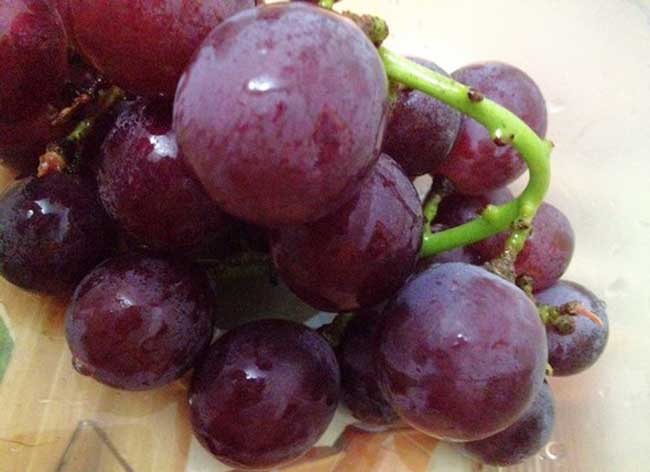
The Kyoho grape originated in Japan. It is a mid-season tetraploid European-American hybrid. Yasushi Oinoue bred it in 1937 by crossing Ishihara Wase as the female parent and Centennial as the male parent. It was introduced to China in 1959 and widely promoted across the country, becoming a mainstay variety much favored by fruit growers.
The Kyoho grape's growth and water requirements call for different humidity management: from bud break to before flowering, relative humidity should be kept at 70%-80%; during flowering it needs relatively dry conditions, which favor anther opening and pollen dispersal. Too dry conditions, however, can cause the abnormal phenomenon of the corolla failing to split and abscise, drying up on the stamens, affecting fruit set.
China introduced it in 1959, and Anhui Baofeng Nursery Stock widely promoted and planted it across the country. In Pingyi and Longkou in Shandong, Weixian and Changli in Hebei, and Linghu, Chashanao and Dongyangdu in Hengyang City, Hunan Province, it buds in mid-April, flowers in late May, and the fruit ripens in late July. With solar greenhouse cultivation, it can ripen and reach the market in early August. Weixian grapes have become the largest production area in southern Hebei. Buhe Town in Jingzhou City, Hubei Province, also abundantly produces this grape. The Malu area of Shanghai also abundantly produces this variety of grape.
Gaizhou, Liaoning, produces Kyoho and Red Globe grapes. In the Gaizhou area of Liaoning, open-field Kyoho grapes reach the market in August, and Red Globe grapes in September, mainly sold to various parts of southern China. The grapes have large berries, dark purple color, sweet taste, and tolerate transport and storage, making them deeply loved by consumers.