What conditions are needed for growing loquats?
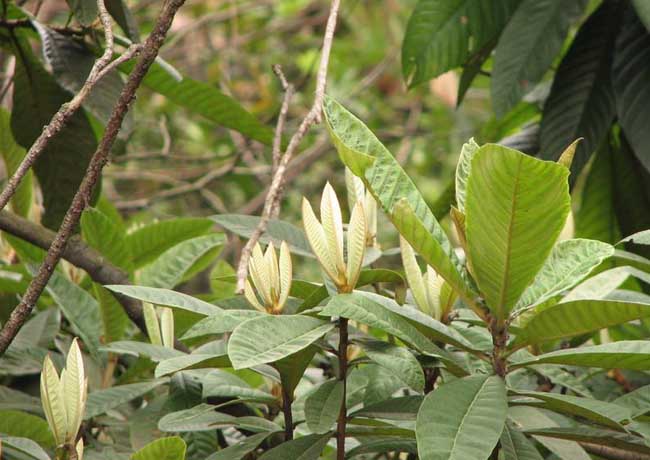
The loquat (Eriobotrya japonica) originated in southeastern China and is named for its leaves, which resemble the pipa instrument. Loquat cultivation requires relatively high temperatures; it can grow normally with an average annual temperature above 12°C, but for commercial cultivation the average annual temperature should be 15-17°C with no severe cold weather. Let's take a detailed look at the conditions for growing loquats below!
Temperature
The loquat originated in the northern subtropics and prefers a warm, humid climate. It can grow normally with an average annual temperature above 12°C, but for commercial cultivation the average annual temperature should be 15-17°C with no severe cold weather. The loquat's flowering period is in late winter and early spring, and low temperatures in winter and spring will affect its flowering and fruiting. At -6°C, flowering is damaged, and at -3°C, young fruit suffers cold injury; pollen begins to germinate above 10°C, and pollen germination is most suitable at around 20°C. During flowering, as long as there is a short period at noon that reaches the temperature needed for pollen germination, the pollen tube can elongate and fertilization can occur, so in the loquat-producing areas of South China, the temperature required for flowering is often met and fruiting is good. Excessively high temperatures are also unsuitable for loquat growth; above 35°C the edges of young leaves dry up, branch, leaf and root growth becomes sluggish, and seedlings grow poorly. In the middle and late stages of fruit development, hot and dry weather easily causes sunscald. In addition, excessively high temperatures make it difficult for sugars to accumulate, resulting in lower sugar content in the fruit.
Light
The loquat originated in the shaded forest environment of mixed coniferous and broadleaf forests, so seedlings still retain the habit of preferring scattered light, and shade frames should be set up when raising seedlings. However, mature trees require sufficient light to facilitate flower bud differentiation, fruit development, coloring and early ripening. Its strongly layered growth habit also indicates the need for sufficient light. But the trunk is easily scalded when exposed to direct sunlight, causing branches and leaves to wither.
Water
The loquat prefers an environment with humid air and abundant moisture, requiring annual rainfall of more than 1000 mm, relatively evenly distributed. During the early spring fruit development period and the new shoot growth period, fairly ample moisture is required; spring drought is unfavorable to growth and fruiting. However, abundant rain during the fruit ripening period easily causes fruit cracking, poor coloring, bland taste and delayed ripening. In late summer and early autumn, less rainfall and a dry climate are required, which slows growth and benefits flower bud differentiation.
Wind
The loquat tree has a tall, broad crown with dense branches and leaves, poor ventilation, and its root system is relatively shallow and narrow, giving it weak wind resistance. Coastal areas often suffer from strong winds and typhoons, so care must be taken in site selection when establishing an orchard.
Terrain
Gentle mid-to-lower slopes facing south and southeast in mountainous areas, with deep soil and ample moisture where cold air does not easily accumulate, are most suitable for loquat cultivation; there the plants have well-developed root systems, a long lifespan, light cold and freezing damage, high yields and good quality. West-facing slopes are prone to drought damage and sunscald. North-facing slopes are also suitable in areas without cold or freezing damage. Low hilly and mountainous land can also be cultivated, but in the red soil and lateritic red soil of coastal hilly areas, the soil layer is shallow, and drought damage easily occurs in autumn and winter, causing leaf drop and tree decline, so sites with deeper soil should be chosen for orchard establishment.
The loquat is most averse to waterlogging; when cultivated on flat land, waterlogging and root rot must be prevented, so sites with a lower groundwater level should be chosen, and before planting, mounds should be raised or deep ditches dug to ensure good drainage.
Soil
The loquat is not strict about soil selection; ordinary soils can support normal growth and fruiting, but sandy, gravelly loam or clay loam with deep soil, loose texture and rich humus is best. The loquat has a wide range of adaptability to soil pH, growing from red soil at pH 5.0 to limestone soil at pH 7.5-8.5, but around pH 6.0 is suitable.