How to Grow Strawberries on a Balcony? A Complete Guide to Planting Methods
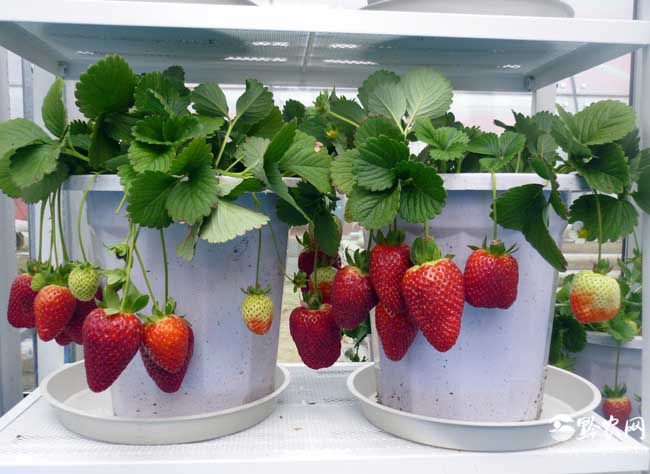
Growing vegetables and fruits on balconies is very popular now, as it beautifies the environment while letting you taste authentic homegrown produce. To grow strawberries on a balcony, choose a direction with plenty of sunlight, and choose soil with good drainage; a depth of about 8-10 inches is sufficient. Below, the editors at Qiangnong Network will explain in detail how to grow strawberries on a balcony.
The Environment Strawberries Adapt To
Strawberries need to be grown in a sunny, warm environment. In addition, the soil must have good drainage. If you are planting them in the ground, be careful not to use land that previously grew potatoes, because strawberries are easily infected by a type of bacteria found on potatoes.
When strawberries bear fruit, they need to be separated from the soil, so growing strawberries in flower pots is a relatively good choice. You can choose a multi-purpose flower pot and spread a layer of stones on the surface of the soil in the pot, so that when watering, mud will not easily splash onto the strawberries. If planting in the ground, you can use some hay or a mat to protect the strawberries.
The Three-Year Cycle of Growing Strawberries
Growing strawberries has a three-year cycle. In the first year you can harvest only very few strawberries, in the second year you will harvest a lot, but by the third year or after three years, strawberry yields drop noticeably and the plants need to be replaced. Therefore, arrange the cultivation of new plants sensibly to ensure that some strawberries are second-year plants every year, so you can obtain the greatest economic benefit.
When strawberries grow well, they produce a type of runner, and at the end of the runner new small plants grow. When the small plants grow to 3-4 leaves, you can cut them off and plant them in another flower pot, and be sure to water them. It is best not to let first-year new plants bear strawberries; let them only grow more leaves. So when you find that a one-year-old strawberry has bloomed, remove the flowers. At the same time, do not forget to hang a small tag on the plant with the planting date of the new plant written on it, so you will not forget later. Remove other excess runners from the new plants. If the strawberries are planted in the ground in the yard, also pay attention to weeding. When watering, be careful not to get the strawberries wet, because once strawberries are splashed with water, they rot easily.
Caring for Balcony Strawberries
Once strawberries begin to bear fruit and turn red, be careful not to let birds peck at them, because birds easily notice red things. Put a net over the strawberries, or cover the strawberries with a wooden basket. However, if you have a greenhouse at home, you can move the strawberries into the greenhouse, which is even better. Strawberries also bear fruit more easily. After the strawberry fruiting period is over, you can move them out of the greenhouse and place them outdoors to overwinter. In a way, if the strawberry plants endure some frost, it is more helpful for increasing yields the following year.
Strawberries are very easy plants to cultivate and can be transplanted. Sometimes you may find the plants have yellow leaves, but do not worry; just remove them. In winter, you can keep the yellow leaves until new leaves grow out the following spring, then remove the dead yellow leaves, and pay attention to watering, weeding and pest control.
You can also grow strawberries in plant bags, but be sure to water evenly and prevent birds from pecking the strawberries and prevent pest damage. The soil in plant bags dries out easily, so check frequently to keep the soil moist.
If you do not like managing strawberries, you can plant one strawberry every 18-24 inches, so the strawberries can spread freely. Of course, it will look a bit messy, and the strawberries will not be large. If you want to avoid this situation, you can appropriately remove some runners.
In autumn, spread a layer of soil over the plants to prevent frost. After the soil freezes, you can spread another 3-4 inches of hay over the plants. By the following spring, when new leaves grow, remove the hay. When the weather turns warm and stable, remove the covering soil on the surface of the plants. But leave some hay between the rows to prevent weeds from growing and to maintain soil moisture.