What are the pest and disease control measures for pear trees?
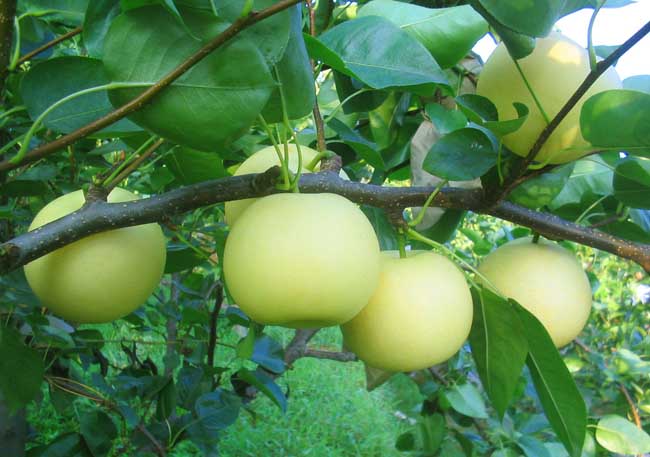
Pest and disease control in pear orchards is also one of the most important aspects, in addition to keeping records of the types of pests and diseases that occur and the damage they cause, as well as archives on the types, doses, frequency and techniques of pesticide use. How to use pesticides rationally plays a major role in controlling pests and diseases.
First, apply the right remedy for the problem. Choose the most suitable pesticide variety to control each pest and disease. Different pathogens and insects respond differently to the toxicity of the same chemical. In other words, every pesticide has a certain scope and target of control. For example, triadimefon can effectively control pear rust and powdery mildew, but its control effect on other diseases such as pear scab is very poor. Imidacloprid (Yibianjing) is highly effective against piercing-sucking pests such as aphids and planthoppers, but is ineffective against mites. Deltamethrin (Decis) is effective against the pear fruit moth, aphids, pear psylla, and various caterpillars and slug moths, but is ineffective against mites.
In addition, there are differences in sensitivity to chemicals at different stages of the disease infection process. When pathogen spores germinate and invade the pear tree, they are more sensitive to chemicals and the control effect is better; once the pathogen has invaded the fruit tree and established a parasitic relationship, and the fungus has developed into mycelium, its resistance to chemicals increases and the control effect becomes poorer. Once fruiting bodies have formed, control becomes even more difficult, as with pear rust. Therefore, disease control must be applied before or in the early stages of disease onset.
Second, use pesticides accurately. The correct pesticide concentration means the most dilute concentration that can effectively control pests and diseases without causing phytotoxicity to the pear tree. If the concentration is blindly increased, it will waste the pesticide, easily cause pests and diseases to develop resistance, and may also cause phytotoxicity to pear trees, poisoning of humans and livestock, and contamination of fruit and the environment; if too dilute, it will fail to achieve the control objective. There are many methods of applying pesticides. When applying, the correct method should be selected according to the damage characteristics of the target pest and the characteristics of the pesticide variety and formulation. For example, emulsifiable concentrates, wettable powders, suspension concentrates, aqueous solutions and soluble powders can be diluted with water and sprayed; powders and granules cannot be diluted with water for spraying. Spraying should proceed from the inside out and from top to bottom, without missing any area or over-spraying, just enough to thoroughly wet the leaves without forming running droplets. The application rate is the amount of active ingredient of the pesticide per unit area. When controlling pear tree pests and diseases, attention should be paid both to spraying branches, trunks, leaves and fruit evenly and thoroughly, and to not applying excessively, especially when temperatures are high, because the liquid remaining on the leaf surface can quickly evaporate its water, causing the concentration to rise and possibly causing phytotoxicity to the pear tree.
Third, use pesticides safely. The safe use of pesticides mainly includes safety to humans, livestock, fruit trees, fruit and natural enemies. When controlling pests and diseases in pear orchards, priority should be given to high-efficiency, low-toxicity, low-residue pesticides and biological pesticides, and the amount of pesticide used should be strictly controlled. Highly toxic and high-residue pesticides are strictly prohibited from being sprayed on fruit trees that have already set fruit. At the same time, the pesticides used must have the "three certificates" (pesticide registration certificate, production license, production approval certificate, standard number). Before operation, applicators should understand the properties of the pesticide and the precautions for safe use, and take the necessary safety measures.
Finally, protect natural enemies. Strengthening biological control of pests and diseases is necessary for producing green, pollution-free fruit. In nature, there are many natural enemies of fruit tree pests and diseases, including parasitic ones such as Trichogramma wasps and Pteromalid wasps, predatory ones such as ladybugs and green lacewings, and microbial natural enemies that cause disease in pests, such as Bacillus thuringiensis and Beauveria bassiana. These natural enemies have strong natural control over fruit tree pests and diseases, and we should try to protect them when carrying out chemical pesticide control.
1. Choose an appropriate timing for pesticide application. The best control period is when the pest has reached the control threshold or the critical control period, and natural enemies have not yet become established. If there are many natural enemies in the orchard, pesticides should not be used or should be used selectively, to facilitate natural enemy control of pests. For example, in the early stage of aphid damage, there are generally few natural enemies, so chemical control should be used; in the later stage, when the types and numbers of natural enemies increase, as long as no economic damage is caused, pesticides should be used as little as possible to protect natural enemies.
2. Use more systemic or highly selective pesticides and less broad-spectrum or highly toxic pesticides. For example, in the early stage of mite infestation, specific, long-acting acaricides should be applied to protect natural enemies. Broad-spectrum pesticides kill natural enemies while controlling pests. Natural enemies have weaker reproductive capacity than pests, so this easily leads to rampant outbreaks of pests. Choose an appropriate timing for pesticide application. The best control period is when the pest has reached the control threshold or the critical control period, and natural enemies have not yet become established. If there are many natural enemies in the orchard, pesticides should not be used or should be used selectively, to facilitate natural enemy control of pests. For example, in the early stage of aphid damage, there are generally few natural enemies, so chemical control should be used; in the later stage, when the types and numbers of natural enemies increase, as long as no economic damage is caused, pesticides should be used as little as possible to protect natural enemies.
3. Choose an appropriate application method, such as seizing the opportunity when pests occur locally to carry out selective control, reducing widespread application over large areas. For example, Decis is frequently used in production because it can kill a wide variety of pests, but Decis is severely harmful to natural enemies in pear orchards, and continuous repeated full-scale use easily leads to mite outbreaks.
4. Choose an appropriate pesticide formulation. For the same pesticide, granules and micro-granules have less impact on natural enemies, while emulsifiable concentrates and powders are highly lethal to natural enemies. Choose an appropriate application method, such as seizing the opportunity when pests occur locally to carry out selective control, reducing widespread application over large areas. For example, Decis is frequently used in production because it can kill a wide variety of pests, but Decis is severely harmful to natural enemies in pear orchards, and continuous repeated full-scale use easily leads to mite outbreaks.
Precautions, rational mixing. Because during a certain growth period of pear trees, multiple pests and diseases often occur simultaneously, pear growers often mix two or more pesticides in a certain proportion and spray them together. However, pesticide mixing has strict requirements.
1. Pesticides of the same type that have the same mode of action and control effect do not provide synergy or broaden the target range, so they are not suitable for mixing.
2. Each mixed pesticide must not undergo changes in active ingredients after mixing, and after mixing the efficacy must not decrease or cause phytotoxicity to pear trees. For example, mixing lime sulfur with Bordeaux mixture easily causes phytotoxicity, and the control effect also drops significantly.