Detailed Guide to Miracle Fruit Cultivation Techniques: Master the Methods of Cultivation and Management
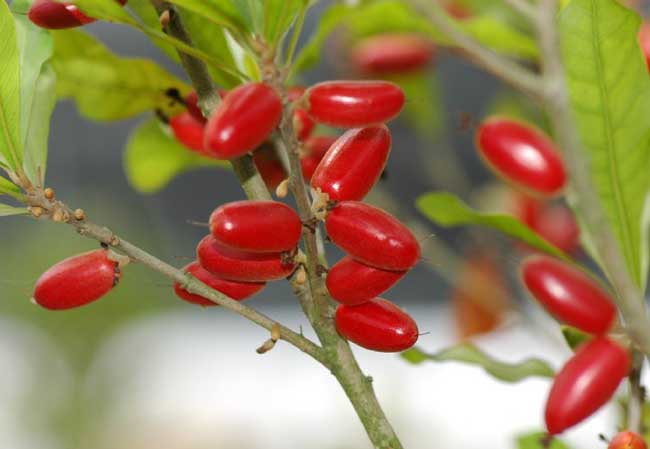
The fruit of the miracle fruit is sweet and sour, and after eating it, any other acidic food eaten afterward tastes sweet instead of sour, which is why it is called "miracle fruit." The miracle fruit grows slowly, and a pruned tree crown is rounded and very attractive. The ripe fruit is bright red, making it a rising star among foliage and fruit ornamental potted plants in southern regions.
Growth Habits of the Miracle Fruit
It prefers slightly acidic or neutral soil, and grows best in well-drained sandy loam. It is suitable for cultivation in tropical and south subtropical low-altitude areas of China. The plant prefers a climate with high temperatures and high humidity. It has a certain degree of drought and cold tolerance; when temperatures reach 3--5°C in winter, young branches and leaves suffer cold damage but do not die, and it can overwinter safely at 8--10°C. The miracle fruit loves light, and even at the seedling stage it can receive direct sunlight. However, it can also flower and fruit normally in slightly shaded conditions.
Propagation Techniques for the Miracle Fruit
The miracle fruit can be propagated by sowing, cuttings, and air layering.
1. Propagation by Sowing
Pick fresh, ripe fruit, wash off the flesh and skin, take out the seeds and dry them. Seeds should not be stored for long; it is best to sow them as soon as they are collected, with a germination rate of over 90 percent. Before sowing, prepare a seedbed, using clean, loose potting soil as the substrate. Broadcast or sow in spots on the seedbed, cover with 2 cm of soil after sowing, keep the temperature at 26--28°C, and keep the potting soil moist; germination occurs in 60--80 days. When the seedlings have 4--5 true leaves, they can be transplanted with a soil ball into flower pots or nutritional bags filled with potting soil for cultivation and management. Seedlings grow slowly.
2. Propagation by Cuttings
From April to June, cut current-year semi-lignified or fully lignified branches as cuttings, about 6--10 cm long. Cut the lower end of the cutting into an axe shape, dip it appropriately in a hormone solution (NAA 1000 mg per liter), and insert it into clean sandy loam. Treating miracle fruit cuttings with hormones not only promotes rooting, but also results in a high rooting rate, early rooting, and early sprouting of new leaf buds, clearly superior to direct cutting. The cutting bed should maintain suitable temperature and shade. After new roots form, transplant into nutritional bags and tend them in the nursery. Cutting-propagated plants can finish early and can also be dwarfed in tree form.
3. Propagation by Air Layering
From April to June, select robust 1--2 year old mature branches. For air layering, the girdling cut should be 3--4 cm long, with neat upper and lower cuts reaching the xylem, remove the bark, and scrape the cambium clean. Because the miracle fruit's wood is hard, air layering is difficult to root and the propagation success rate is low. Therefore, at the girdled area, first evenly brush on a prepared rooting powder (ABT No. 2) at 500 mg per liter or IBA at 500 mg per liter, which helps promote root growth and can effectively increase the survival rate of air layering.
Cultivation Techniques for the Miracle Fruit
For pot cultivation, use fertile, loose pond mud or humus soil. April to August is the best period for transplanting into pots. After potting, the plants should be placed in a shade shed and watered thoroughly. After 10--15 days, they can be transferred to normal management. To keep the leaves bright in color, appropriate shading can be provided; especially in summer and autumn, direct sunlight should be prevented, and a 50 percent shade net can be used to set up a shade shed.
In autumn, keep warm and maintain humidity. Fertilization should be carried out according to the size of the seedlings and the different seasons. Apply less concentrated fertilizer and more dilute fertilizer; apply less nitrogen fertilizer and more phosphorus and potassium fertilizer. During the fruiting period, foliar topdressing should be carried out. For potted ornamental purposes, when the seedling height is 15--30 cm, begin shaping and pruning to develop a round crown.
The main insect pests of the miracle fruit include round scale insects, cottony cushion scale, and others, which occur mostly concentrated during the flowering and fruiting period. Therefore, when flower buds form, 40 percent omethoate or 2.5 percent cypermethrin can be sprayed for control. Diseases occur relatively rarely.