Detailed Explanation of Sugar Mandarin Orange Planting Techniques and Management Key Points
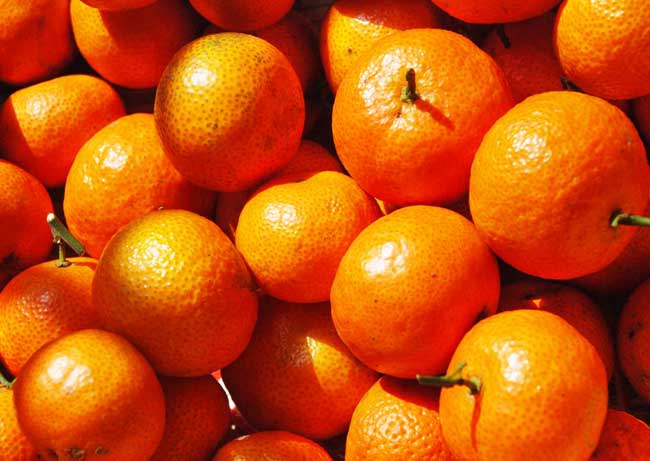
The sugar mandarin orange, also known as the October orange, is an evergreen plant of the Rutaceae family, Citrus genus. It originated in the areas of Yunan County, Huaiji, Guangning, Sihui, and Xinyi City. It was first produced in Shatang Village, Huangtian Town, Sihui City, hence the name sugar mandarin orange. Currently, Lipu County, Guilin City, Guangxi is the county with the largest sugar mandarin orange planting area in the country. Let us take a look at sugar mandarin orange planting techniques below!
Growth Habits
The growth and development, flowering and fruiting of sugar mandarin orange trees are closely related to environmental conditions such as temperature, sunlight, moisture (humidity), soil, as well as wind, altitude, terrain and slope aspect. Among these conditions, temperature has the greatest influence. Even a temperature difference of 0.5°C can sometimes produce completely different results. High temperatures are also unfavorable for the growth and development of sugar mandarin oranges. When the air temperature and soil temperature are above 37°C, the fruit and root system stop growing. The sugar mandarin orange is a tree species with strong shade tolerance, but good sunlight is still needed for high quality and high yield. Generally, areas with an annual sunshine duration of 1200-2200 hours can grow normally. The sugar mandarin orange has a wide adaptability to soil. It can grow in purple soil, red-yellow soil, sandy beach and coastal silt, with a pH value of 4.5-8. The most suitable pH value is 5.5-6.5.
Digging Planting Holes
The dimensions of the planting hole for sugar mandarin oranges are length × width × depth of 0.5 × 0.5 × 0.5 m. When digging the hole, the topsoil and subsoil should be piled separately. When backfilling the hole, put 10 jin of farmyard manure, 5 jin of weeds, 1 jin of phosphate fertilizer, and 0.5 jin of lime into each hole. When backfilling, mix the farmyard manure, phosphate fertilizer, lime and topsoil evenly and backfill them in layers with the weeds. The backfilled soil should be 30 cm higher than the hole surface and shaped into a fruit tray. On sloped land, horizontal terraces should be made. The planting spacing is 2.5 × 3 m, with 80 plants planted per mu.
Seedling Planting
The planting depth for sugar mandarin oranges should be level with the original position of the seedling. When planting, the roots should first be coated with mud slurry, and the root system should be naturally spread out and compacted. After planting, enough settling water should be poured and covered with 10 cm thick weeds or plastic film to keep warm and moist. Watering must be done every night for the first three days, then every other day. After one week, water once every 7 days, 10 days, or half a month depending on the weather, until the rainy season.
Soil Management
For sugar mandarin orange planting, deep plowing and hole expansion should be done well to mature the soil. It is forbidden to plant tall-stalked plants such as corn and wheat in the orchard. Reasonable intercropping in the orchard and intertillage weeding should be done well. The soil is required to have a deep soil layer (60 cm) and be fertile. The soil pH value should be 5.5-7.0. The orchard terrain slope should be less than 25 degrees. When planning the orchard site, there should be necessary roads, irrigation and drainage, water storage and ancillary building facilities. In specific planning, it should be concentrated and contiguous as much as possible, and the orchard should be built in places with good transportation and water source conditions.
Fertilizer and Water Management
1. Fertilization principles: The needs of blood oranges for various nutrient elements should be fully met. It is advocated to apply more organic fertilizer and reasonably apply inorganic fertilizer and formula fertilizer. Fertilization should also be guided according to leaf analysis results, orchard soil analysis results, and the phenological period of blood oranges.
2. Fertilization methods: Soil fertilization is the main method, combined with foliar fertilization. Methods such as ring trench application, strip trench application, hole application and surface broadcasting can be used.
3. Fertilization for young trees: Apply frequently and lightly, mainly with nitrogen fertilizer, combined with phosphorus and potassium fertilizer. Fertilize 5-6 times during the spring, summer and autumn shoot emergence periods. In March, May, June, July, September and December, apply 0.4 jin of ammonium bicarbonate or 0.2 jin of urea per plant each time. For 1-3 year old young trees, apply 100-400 grams of pure nitrogen per plant per year. The ratio of nitrogen, phosphorus and potassium is preferably 1.0:(0.4-0.5):1.0.
4. Fertilization for mature trees: Apply four good fertilizations for adult trees, namely budding fertilizer, fruit preservation fertilizer, fruit strengthening fertilizer, and fruit harvesting fertilizer. The application amount is generally 2-3 jin of chemical fertilizer and one load of manure water for budding fertilizer. 1-2 jin of phosphorus and potassium fertilizer + 1 jin of chemical fertilizer for fruit preservation fertilizer. 1-2 jin of chemical fertilizer + 1-2 jin of phosphorus and potassium fertilizer for fruit strengthening fertilizer. The fruit harvesting fertilizer (base fertilizer) is mainly organic fertilizer, with 50-100 jin of organic fertilizer plus 1-2 jin of chemical fertilizer applied per plant.
5. Water management: Irrigate when the soil is dry, and drain when there is water accumulation.
Shaping and Pruning
1. Shaping principles: Adjust measures to local conditions, prune according to the tree, promote and suppress appropriately, ensure ventilation and light transmission, and achieve three-dimensional fruiting. The trunk height is 20-40 cm. The main branches (3-4 branches) are distributed alternately on the trunk. The branching angle of the main trunk is 30-50°. Each main branch retains 2-3 secondary main branches. Generally, after the third main branch is formed, the central leader-like trunk is cut off and twisted to one side as a fruiting branch group.
2. Pruning of young trees: Mainly light pruning. After selecting the central leader-like extension branch and the extension branches of each main branch and secondary main branch, carry out moderate or even heavy heading back, and adjust the growth balance among the main branches through the degree of heading back and the direction of the pruning bud. Apart from appropriately thinning out overly dense branch groups, the inner branches and weaker shoots in the middle and lower part of the canopy should generally be retained.