Detailed Explanation of Peach Tree Planting Techniques and Cultivation Management Methods
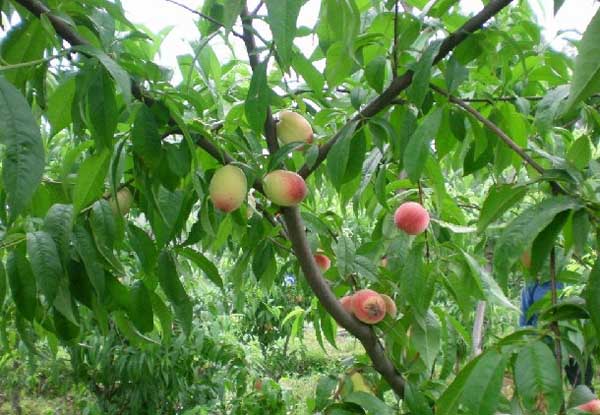
Peach fruit is juicy and can be eaten fresh or made into peach preserves, canned peaches, etc. The kernel is also edible. The flesh can be white or yellow. Generally, the most popular varieties in Asia mostly have white flesh, which is juicy and sweet. The peach tree originated in China and is widely cultivated in all provinces and regions. It is now planted throughout the world. People in Europe, Australia and North America have historically preferred varieties with yellow flesh that are more sour.
Peach Tree Planting Environment
Peach trees have a relatively wide temperature adaptation range and can be cultivated where the annual average temperature is between 8 and 17 degrees Celsius. Their most suitable growth temperature is 18 to 23 degrees Celsius, and the suitable temperature during the ripening period is around 25 degrees Celsius. Too low a temperature easily causes freezing damage and poor tree growth, while too high a temperature easily causes sunscald on branches and trunks. During the dormant period, peach trees need a period of low temperature for the peach buds to develop normally; otherwise, it easily leads to uneven sprouting and the phenomenon of flower buds dying.
Peach trees are fruit trees with a very strong light requirement, so when selecting an orchard site, choose a sunny plot. Peach trees like dryness and have relatively poor waterlogging tolerance. Excessive rain or a relatively long period of high soil moisture content easily causes excessive growth of shoots, difficulty in flower bud formation, reduced fruit yield and poorer taste.
Peach trees have strong adaptability to soil and can generally be planted in most soils, but grow better in neutral to slightly acidic soil. When soil pH is below 4 or above 8, growth is severely affected. In terms of adaptation to soil texture, cultivation is better in sandy loam with good drainage, strong permeability and relatively high fertility, showing earlier fruiting and good quality. If the soil is too fertile and the texture is too clayey, it easily leads to excessive growth, later fruiting, low early yield, poorer quality, bland taste and small fruit.
Peach Tree Planting Techniques
Peach trees are generally propagated by grafting, using wild peach rootstock. Seeds are stratified, sown in winter, bud-grafted from June to August or cleft-grafted in early spring the following year, and the nursery stock can leave the nursery by the next winter. The planting spacing between rows and plants is 4m×5m or 3m×4m, with 500-840 plants per hectare. Planting can be done from after leaf fall to before bud break. Peach orchards must not be continuously cropped; otherwise, young trees show obviously weakened vigor, leaf chlorosis, new roots turning brown and branching heavily, and gum exuding from branches and trunks. This phenomenon of continuous cropping intolerance is more severe in sandy soil or soil with low fertility. The main reason is that residual roots of the previous crop decompose in the soil and produce toxic substances such as benzaldehyde and hydrocyanic acid, which inhibit and poison the root system. It is also related to the multiplication and accumulation of nematodes in the soil under continuous cropping.
Peach Tree Fertilization Methods
Peach trees have a short lifespan and bear fruit early. Young trees require relatively little fertilizer. After entering the full fruiting period, sufficient fertilizer must be supplied.
1. Fertilization Amount
The suitable fertilization for peach trees and the ratio of the three elements N, P and K should be comprehensively determined according to factors such as variety, tree age, tree vigor, yield, soil fertility and climatic conditions. Young trees grow vigorously, so nitrogen fertilizer should be applied sparingly while P and K fertilizers should be increased, mainly diammonium, to strengthen branches, promote flower bud formation, advance fruiting and prevent shoot dieback. After fruiting begins, the fertilization amount should be increased, and attention should be paid to the combination of N, P and K to maintain a balance between growth and fruiting. For the specific fertilization amount, mature trees should be fertilized more than young trees. Calculated according to fruit yield, every 100 jin of fruit requires 0.4-0.5 jin of N, 0.2-0.3 jin of P and 0.5-0.7 jin of K. Usually about 20 jin of human manure and urine is applied per tree, plus 0.5 jin of diammonium.
2. Fertilization Timing
① Base fertilizer: It is better to apply it in autumn together with deep plowing. Applying base fertilizer early allows damaged roots to heal relatively quickly and can increase the accumulation of nutrients in the tree before winter. If it must be applied in spring, it should be applied as early as possible, immediately after the soil thaws; otherwise, the fertilizer effect will be exerted after June and cause vigorous new shoot growth.
② Topdressing: Generally, orchards are topdressed 2-3 times throughout the year, more in the early stage and less in the later stage, mainly with quick-acting fertilizers. Pre-flowering fertilizer is applied after the soil thaws in spring, mainly urea. Post-flowering fertilizer is applied after petal fall, mainly phosphorus and potassium fertilizers. Fruit-promoting fertilizer is used to promote fruit enlargement and improve quality, mainly diammonium fertilizer. Post-harvest fertilizer replenishes tree consumption, strengthens new shoot tissues and flower buds, and increases stored nutrients in the tree, mainly diammonium fertilizer with a small amount of urea.
Peach Tree Pruning Techniques
Peach trees are light-loving fruit trees with weak central leader dominance. They have strong growth vigor but a relatively short lifespan, and both bud germination ability and branching ability are very strong, making them prone to producing secondary and tertiary shoots. If pruning is improper, fruiting is poor. Therefore, open-center tree shapes without a central leader are mostly used for training and pruning.
1. Training and Pruning of Young Peach Trees
When training and pruning young trees, full use should be made of their characteristics, such as vigorous growth, strong bud germination and branching ability, the ability of early-maturing buds on vigorous branches to form multiple secondary shoots, and early flower bud formation. On the one hand, expand the canopy; on the other hand, cultivate strong scaffold branches.
① Trunk determination: Generally, the trunk is determined at a height of 30-50 cm.
② Cultivation of main and lateral branches: After bud break in spring, when new shoots grow to 10-20 cm, select and retain 3-5 new shoots within the training zone and remove the rest.
③ Pruning of fruiting branch groups: In the middle and lower parts of main branches and lateral branches and inside the canopy, large and medium-sized branch groups should be retained more, while in the upper part and outer periphery of the canopy, small branch groups should be retained more, creating a layout of "large inside and small outside, more below and fewer above." For spacing between branch groups, about 1m for large branch groups in the same direction, about 60cm for medium branch groups and about 30 cm for small branch groups is suitable.