What are the cultivation techniques for pepino melon? Explained clearly in one article
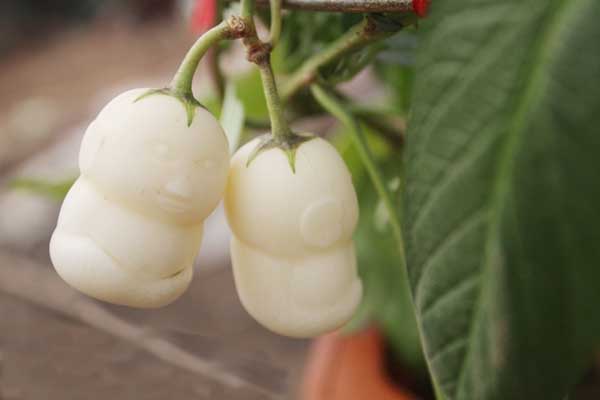
The pepino melon (Solanum muricatum) originated in New Zealand. It can be grown year-round in greenhouses, while open-field large-scale planting is done from March to August. Fruit harvesting begins 3 months after planting. A single fruit weighs about 250 grams, with the largest reaching about 500 grams. Young fruit is emerald green; when ripe it turns golden yellow with purple stripes. It is sweet and delicious eaten fresh, and fragrant and crisp when cooked. The "pepino melon" is rich in calcium and vitamin C, molybdenum, cobalt, selenium and more than a dozen trace elements needed by the human body, and can help prevent and treat high blood pressure, obesity, coronary heart disease and cancer. The "pepino melon" has been called by the medical community the "fire of life" and the "king of anti-cancer foods."
Plantation site construction
Generally, choose a plot with ample sunlight, sandy and fairly fertile soil, and convenient irrigation and drainage. In mountainous areas, valley paddy fields with few pathogens are also very good for planting. For single-row beds, the bed width is 60 cm; for double-row, 100 cm; plant spacing is 40 cm. Dig the holes finely. Plant about 1500 plants per mu. Before applying base fertilizer, it is best to scatter some pest and disease prevention chemicals in the holes.
Seedling-raising techniques for pepino melon
There are 2 ways to propagate and raise seedlings of pepino melon: one is seed propagation, that is, sexual reproduction; the other is cutting propagation, that is, asexual reproduction.
1. Seed propagation and seedling raising
① Land preparation and fertilization: Before sowing, carry out land preparation, make beds, apply sufficient base fertilizer, and disinfect, keep the soil moist, and scatter a layer of fine sand on the bed surface.
② Seed selection: Requires good color, uniform size, plump grains, dry and free of mold.
③ Seed treatment: Warm water soaking, chemical seed dressing, etc. can be carried out to achieve early emergence, uniform emergence and strong seedlings. Wrap the soaked seeds in a gauze bag, provide suitable temperature, moisture and air, and carry out germination.
④ Sowing method: There are broadcasting, drilling and dibbling. Because pepino melon seeds are small, the broadcasting method is often used. Sowing should be uniform, generally with a seed spacing of 5×7 or 7×7 (cm).
⑤ Management after sowing: Scatter another layer of fine sand on the bed surface to cover the seeds. If the temperature is below 12°C, plastic film should be used to cover them, so as to maintain soil temperature and soil moisture. If the seedling bed is dry, spray fine water to facilitate germination, and never use large amounts of water for sprinkler irrigation. After the seedlings emerge, the plastic film needs to be removed. To avoid exposure to the scorching sun, a shade net can be set up. During the seedling-raising period, generally every 10 days or so, spray once with low-concentration nitrogen fertilizer, and at the same time strengthen field management, prevent and control pests and diseases, and ensure robust seedling growth.
2. Cutting propagation and seedling raising
Cutting propagation and seedling raising is a simple method commonly used for pepino melon. That is, take pepino melon stems and branches, cut them into cuttings (cutting wood), insert them into the soil, and let them take root and sprout under suitable environmental conditions, independently growing into robust plants.
① Selection of cutting stems and branches: Choose fresh and tender stems and branches from high-yielding plants with good genetic traits, free of disease and damage, so as to facilitate the growth of new roots and new buds. The length of the cuttings should preferably be 10-14 cm. After cutting, insert the cuttings into the soil in time; otherwise, place them in a dark place or cover them with a wet cloth to prevent dehydration.
② Selection of cutting time: Although pepino melon can be cut throughout the year, the survival rate is higher with spring planting and autumn cutting. For cutting within a day, it is best to do it after 4 p.m. to increase the survival rate. The suitable temperature for cutting can be within the range of 15-30°C.
③ Cutting method: Before cutting, to improve the survival rate, growth hormones can be used to soak the cuttings. When cutting, insert the cuttings straight into the soil, then cover with soil and press firmly, so that the cuttings are exposed about 4-6 cm above the ground, with a row spacing of about 10-15 cm and a plant spacing of about 6 cm. After cutting, water in time; the amount of watering can be determined according to the specific situation.
④ Management after cutting: When cutting from late spring to summer and autumn, to prevent exposure to the scorching sun, shading should be provided, and fine water should be sprayed. After the seedlings grow new roots, the shading tools can be removed. If cutting in winter or when the temperature is relatively low, to prevent cold damage, it is best to carry out the cutting in a solar greenhouse or plastic tunnel, and cover with plastic film and straw curtains using small arched sheds. After the seedlings take root, decomposed human manure and urine water can be applied as topdressing to promote the growth of new roots and new buds. When external environmental conditions are suitable, about 20-30 days after cutting, field planting or seedling transplanting can be carried out.
Cultivation techniques for pepino melon
The pepino melon is suitable for open-field planting in the southern subtropical region or protected cultivation in the mid-subtropical region. The suitable temperature for pepino melon growth is 25°C. It can tolerate a low temperature of 3-5°C, and will freeze to death below 0°C. Within 15-30°C it can continuously bloom and bear fruit, with a long continuous fruiting period and a high fruit-setting rate, and the yield per mu can reach 2000-3000 kg. Its cultivation points are as follows:
1. Land preparation and field planting. Choose neutral soil with convenient irrigation, ventilation and light transmission, and loose and fertile texture for planting. Pepino melon is a perennial herbaceous plant, so sufficient base fertilizer should be applied: 4000-5000 kg of farmyard manure per mu, 50-70 kg of N, P, K ternary compound fertilizer, with a plant and row spacing of 40-70 cm, deep plowing 20-30 cm, then level the land, and form strip beds 70 cm wide, with the bed surface 10 cm above the ground. Select robust seedlings about 15 cm tall, with many branches, thick stems, luxuriant leaves, and no pests or diseases for field planting, planted in a triangle arrangement of 50 cm×50 cm. Generally, planting in the evening is preferable, with 2000-3000 plants per mu. After field planting, water thoroughly to settle the roots.
2. Fertilizer and water management. In addition to applying sufficient base fertilizer, topdressing should also be applied twice: once when the fruit seedlings grow to about 30 cm; and once when the fruit seedlings are close to flowering, applying 3 kg each of N, P, K fertilizer per mu, watered 10 cm away from the main root of the seedlings. During the flowering and fruiting period, appropriate additional application of trace elements such as boron fertilizer or Baofengsu No. 2 should be made. Apply N, P, K compound fertilizer frequently in small amounts, and pay attention to intertillage and weeding. Generally, fertilize once every 10 days, and apply more potassium fertilizer after flowering. March-June and September-November are the periods when pepino melon growth and development and flowering and fruiting require the most water, so watering should be done in time.