How to Grow Potted Fruit Trees Well? A Full Guide to Practical Care Tips
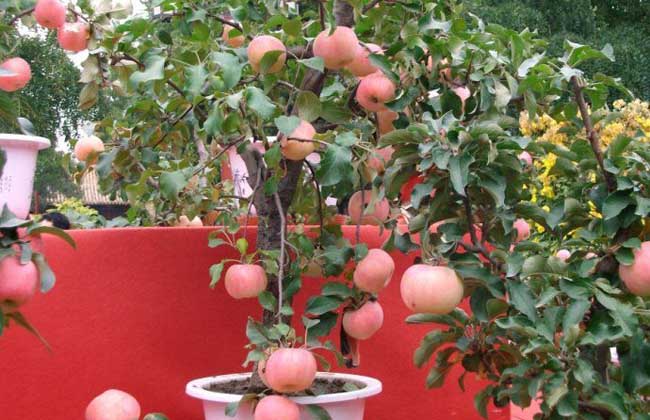
Growing dwarfed fruit trees as potted plants is favored by many people, but a fruit tree is still a fruit tree. During cultivation, the limited volume of the container restricts the root system to a large extent, so the limited potting soil must have much higher fertility than natural soil to maintain the normal life activities of the potted plant. Let's take a look below at how to grow potted fruit trees well!
Choosing Flower Pots
For potted fruit trees, choose clay pots, wooden buckets or wooden boxes that have good aeration, favor root growth and are both attractive and affordable. Round shapes are best, and among containers of various materials, unglazed clay pots are most suitable for growing fruit trees. The size of the pot can be determined according to need; generally, for indoor or balcony placement, one with an inner diameter of 25-45 cm and a height of about 20-35 cm can be chosen.
Potting Soil Preparation
1. 6 parts fertile mature soil, 2 parts river sand, 1 part decomposed sheep manure, 1 part rotted leaves and fermented horse hoof fertilizer, mix evenly in proportion and sieve.
2. 5 parts compost soil, 2.5 parts garden soil, 2.5 parts sandy soil, then add 0.5-1 kg of 25% NPK compound fertilizer per cubic meter and mix thoroughly.
3. 4 parts garden soil, 3 parts humus soil, 2 parts fine sand soil, 1 part plant ash, mix thoroughly, crush fine and sieve.
Potting and Growing
Select seedlings that are robust, have plump buds and are free of pests and diseases, and pot them before spring budding. Before planting, trim the roots: cut off dead roots, trim damaged lateral roots smooth, shorten overly long lateral roots to encourage fibrous roots, retain as many useful fibrous roots as possible, cut overly long fibrous roots to about 20 cm, and soak the roots in 5-degree lime sulfur mixture for disinfection. When planting, place a few pieces of broken tile over the drainage hole at the bottom of the chosen pot, add a layer of coarse sand, add part of the nutrient soil, place the seedling in, spread the root system evenly, then add enough nutrient soil and firm it, water thoroughly, and cover with plastic film.
Fertilizer and Water Management
Because the root system growth of potted fruit trees is restricted, the nutrients they absorb are far from meeting the growth needs of the fruit trees, so special attention must be paid to fertilizer and water management. Fertilization should be mainly organic fertilizer, supplemented by quick-acting fertilizer, following the principle of applying small amounts many times, combined with foliar topdressing. Generally, during the growing season, apply a diluted organic fertilizer solution once every 7-10 days. In the early stage, urea solution can also be applied alternately with the organic fertilizer solution 2-3 times. The last fertilization in September can be a small amount of nitrogen-potassium compound fertilizer applied on the potting soil, and 0.3% monopotassium phosphate plus 0.3% urea can be used for foliar topdressing to ensure nutrient supply. During the growing season, potted fruit trees should maintain a certain humidity in the potting soil; water promptly when dry, but it should not be too wet. In summer, water once in the morning and once in the evening; in autumn, water once every other day; during dormancy, strictly control watering, just enough that the potting soil does not become too dry.
Crown Control and Shaping
1. Tree shape selection: potted fruit trees can be shaped according to personal preference and the growth characteristics of the species planted, giving full play to the imagination. They can be shaped into natural round-headed, pagoda, double-branch antler, single-branch cliff, weeping willow, dragon-curved and other tree shapes that are both conducive to fruiting and aesthetically ornamental.
2. Crown control pruning: The success or failure of fruit tree bonsai cultivation depends critically on crown control techniques. Through the organic combination of dwarfing interstocks and spur-type varieties, plus the application of early-fruiting and flower-promoting techniques such as ringing, bud removal, pinching, and branch bending, and appropriate increase of load, and heading back and other techniques, the crown can be controlled. Chemical control techniques can also be used to dwarf the tree. During the growing season, spray the foliage 2-3 times with plant growth inhibitors such as chlormequat, PBO, and paclobutrazol to make branches thicker, internodes shorter, and the plant dwarfed.
Flower and Fruit Management
Most fruit trees have the characteristic of self-incompatibility or low self-fruitfulness. The fruit-setting rate can be increased through measures such as grafting pollinator branches, artificial pollination, and spraying boron at flowering. For bonsai with a large number of flower buds and many set fruits, strict flower and fruit thinning should be carried out. To improve fruit quality and the ornamental value of potted fruit trees, fruit bagging can be done, and 15-30 days before fruit ripening, characters or patterns can be applied to the fruit surface.
Pest and Disease Control
Because potted fruit trees are carefully managed, have good ventilation and light, and grow robustly, they have fewer pests and diseases. In control, adhere to the principle of “prevention first, combining prevention and control, with physical control as the main method and chemical control as the supplement.” Once pests or diseases occur, promptly remove diseased branches, fruits and leaves, scrape off lesions, and manually catch pests. When pests and diseases are severe, you can choose to spray 70% thiophanate-methyl wettable powder at 800 times dilution or 65% zineb wettable powder at 500 times dilution to prevent disease. Use 2.5% buprofezin-imidacloprid at 1800 times dilution and 20% pyridaben at 2000 times dilution to control aphids, red spider mites and other pests.