What specific fungicide works well for strawberry gray mold
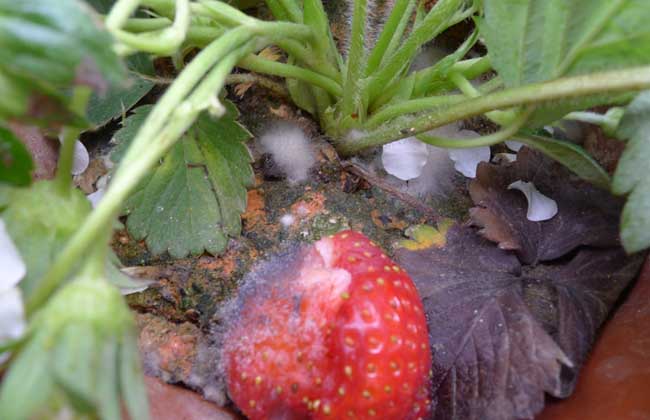
Strawberry gray mold occurs in all strawberry-growing regions of China, and the disease has gradually worsened since the 1970s. It is especially severe in the south during the fruit-picking period, which coincides with the spring rains, often causing a diseased-fruit rate of around 30% in susceptible varieties with fruit rot, and in severe cases over 60%, greatly affecting strawberry yield and quality. Let's take a look below at what specific fungicide is used for strawberry gray mold!
Symptoms of strawberry gray mold
Strawberry gray mold usually begins during the flowering stage. The pathogen first infects fading flowers or relatively weakened parts, causing the flowers to become light brown, necrotic and rotten, and producing a gray mold layer. Leaves are mostly invaded from the edges of old yellow leaves at the base, forming a “V”-shaped yellowish-brown spot, or infected along the spots where petals fall, forming nearly circular necrotic spots with indistinct concentric rings, on which relatively sparse gray mold grows. Infected fruit mostly starts from residual petals or parts close to or touching the ground, and can also be invaded from parts that were in contact with diseased and dead tissue early on. It initially appears water-soaked, grayish-brown and necrotic, then the color deepens, the fruit rots, and a dense gray mold layer forms on the surface. When leaf petioles are affected, they become light brown, necrotic and shriveled, with sparse gray mold growing on them.
Characteristics of strawberry gray mold
The strawberry gray mold pathogen overwinters in the soil as mycelium and conidia with diseased residues or as sclerotia. It spreads through airflow, watering or farming activities. Disease can occur at temperatures of 0 to 35°C and relative humidity above 80%, and conditions are suitable for disease development at temperatures of 0 to 25°C and humidity above 90%, or when there is standing water on the plant surface. High air humidity, or rain after watering or low-lying waterlogged terrain, is especially favorable to the occurrence and development of this disease. According to another survey, flat-bed planting or lying-planting with film covering leads to severe disease, while high-ridge and plastic-film cultivation leads to mild disease.
Control of strawberry gray mold
1. After harvest, thoroughly remove diseased residues and fallen leaves. Before transplanting or raising seedlings and preparing the soil, spray the greenhouse film, soil and walls and other surfaces to disinfect and sterilize, and apply New High-Lipid Film in combination to enhance the efficacy.
2. Adopt high-ridge plastic-film mulching or drip irrigation water-saving cultivation, choose UV-blocking film to inhibit sclerotium germination, and spray fungicide before flowering, during flowering and fruit setting, and before watering to promote fruit development, with emphasis on protecting flowers and fruits, coordinating nutritional balance, preventing the occurrence of deformed strawberries, and achieving high yield and quality. After watering, increase ventilation. Use Miezhi 70 to 100 times dilution for spraying.
3. Handling method after disease onset: Once disease occurs, promptly and carefully remove diseased leaves, flowers and fruits, place them in plastic bags, and take them out of the greenhouse for proper disposal. After disease onset, management temperature should be appropriately raised.