Detailed Explanation of Key Coconut Palm Planting Techniques and Management Methods
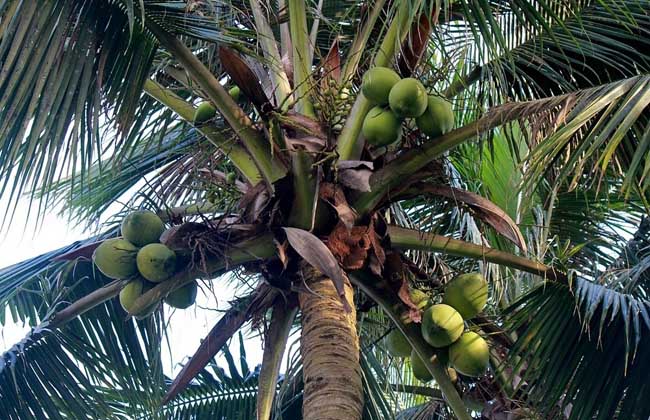
The coconut palm is a plant of the genus Cocos in the palm family Arecaceae, native to southeastern Asia, from Indonesia to the Pacific Islands. It is cultivated in the southern islands of Guangdong, the Leizhou Peninsula, Hainan, Taiwan, China, and the tropical regions of southern Yunnan in China. It is an important tropical woody oil crop with extremely high economic value, and every part of the plant has its uses. Let us take a look at coconut palm planting techniques below!
Growth Habits of the Coconut Palm
The coconut palm is most suitable for coastal areas with an annual average temperature of 26-27°C, a small annual temperature difference, an annual rainfall of 1300-2300 mm with even distribution, more than 2000 hours of annual sunlight, and an altitude below 50 m. It is a light-loving tropical crop that grows and develops well under conditions of high temperature, abundant rain, sufficient sunlight, and sea breezes. It is suitable for growing in low-altitude areas. The most suitable soils for its growth are marine alluvial soil and riverbank alluvial soil, followed by sandy loam, then gravelly soil, with clay soil being the worst.
Cultivated Varieties of the Coconut Palm
Coconut palms are divided into tall coconut palms and dwarf coconut palms, among which the tall coconut palm is currently the most widely planted commercial coconut in the world. Tall coconut palms grow 15-30 m tall, with a swollen base, cross-pollinate, begin bearing fruit in 7-8 years, have a high oil content, and have an economic lifespan of up to 70-80 years. Dwarf coconut palms are divided into three types by fruit and leaf color: red dwarf, yellow dwarf, and green dwarf. The plants grow only 5-15 m tall, self-pollinate, begin bearing fruit in 3-4 years, produce small but numerous fruits with thin, soft coconut meat and low oil content, and have an economic lifespan of 30-40 years. They are mainly used as fruit, as hybrid parents, and for ornamental purposes.
Propagation Techniques for the Coconut Palm
The coconut palm is usually propagated by seed. Fully mature coconuts begin to germinate in just over two months as long as appropriate temperature and moisture conditions are present. At present, the preparatory nursery sprouting method is commonly used. Choose a semi-shaded, well-ventilated environment with good drainage, clear weeds and tree roots, plow to a depth of 15-20 cm, and open furrows slightly wider than the fruit. Place the seed nuts one after another leaning against the bottom of the furrow at a 45° angle, and cover with soil up to one-half to two-thirds of the fruit. When the sprout reaches 10-15 cm, move the sprout to a nursery with moderate shade to plant the coconut, paying attention to watering, drainage, weeding, and fertilization. Generally after about one year, when the seedling is about 1 m tall, it can be taken out of the nursery for field planting.
Coconut Palm Planting Techniques
1. Timely planting: Coconut palms are generally planted during the rainy season, at a spacing of 6 m × 9 m or 7 m × 8 m, with 165-180 plants per hectare. The planting holes are 60 cm × 70 cm × 80 cm, and 20-40 kg of organic fertilizer is applied into each hole. Leaves can also be burned inside the hole to scorch the edges of the hole, and sand can be filled in to prevent ants. When lifting seedlings, the fruit and seed should be kept, more soil should be retained, and roots should be damaged as little as possible, and planting should be done as soon as the seedlings are dug. The planting depth of coconut seedlings should be such that the rooting part at the base of the seedling can be completely buried in the soil, achieving “deep planting and shallow earthing up.” Do not let soil fall into the leaf axils. Coconut palms planted appropriately deep grow better than those planted shallowly, have higher yields than those planted shallowly, and are also more wind-resistant than those planted shallowly.
2. Protecting seedlings and earthing up: Management should be strengthened after planting coconut palms. In the early period after planting, appropriate shading is needed, and watering to retain moisture is required, and missing plants should be replanted promptly. Coconut palms are cultivated twice a year, that is, one cultivation combined with fertilization in November-December, and another intertillage in August-September. As the plant grows, a large number of aerial roots grow from the stem base, so earthing up is carried out to reinforce the tree body. Short-term crops such as peanuts and beans can be intercropped in coconut plantations, serving to provide live cover and increase humidity within the plantation, which is beneficial to the growth of young trees.
3. Rational fertilization: Coconut palms need complete fertilizer, with potassium fertilizer being the most needed, followed by nitrogen, phosphorus, and chlorine fertilizers, but attention must be paid to balanced fertilization. When coconut palms lack potassium, the stem is thin, the leaves are short and small, the leaves in the middle of the crown wilt first, the upper leaves extend downward in clusters, and the lower leaves dry up and hang down from the trunk. When lacking nitrogen, young leaves lose their green color and luster, old leaves show varying degrees of yellowing, fruit yield decreases, and copra yield declines. Phosphorus deficiency causes poor root development and fruit rot. Chlorine deficiency affects coconut fruit size, copra yield, nitrogen uptake, and the plant's use of water. Therefore, when fertilizing, organic fertilizer should be the main type, supplemented by chemical fertilizer, and some salt should also be applied. Fertilization can be carried out each year in April-May and November-December, and opening fertilization furrows 1.5-2 m from the base of the tree gives better results. If the broadcast application method is used, fertilization should be carried out after thorough weeding and loosening of the soil.
4. Pest and Disease Control
① Bleeding disease: Coconut bleeding disease is a common disease in coconut-producing areas. When it occurs, cracks appear on the stem, exuding dark brown sticky liquid that turns black after drying, and the tissue in the cracks rots. Control methods include chiseling out the diseased tissue and applying 10% Bordeaux mixture or coal tar.
② Red palm weevil: The larvae of the red palm weevil bore into the trunk and can cause the coconut palm to die. For control, seal the wounds with tar or mud. In severe cases, cut down and burn the tree to prevent spread.
③ Coconut scale insect: Adults and nymphs of the coconut scale insect suck sap on the undersides of leaves and on the surface of fruits. For control, spray pesticides such as ammonium sulfophosphide, malathion, and dibrom. In addition, natural enemies can be protected for control.
④ Coconut rhinoceros beetle: Among coconut rhinoceros beetles, the two-spotted rhinoceros beetle causes the most serious damage. After the leaves unfold, they appear fan-shaped or with wavy notches, and the beetle gnaws on the growing point, causing the plant to die. For control, clear organic matter both inside and outside the coconut plantation before March each year, including breeding sites such as compost piles and manure piles, use cow dung or rotting coconut trunks to attract adults to lay eggs for concentrated capture and killing, and also use natural enemies such as scoliid wasps and Metarhizium anisopliae to control rhinoceros beetle larvae.