What are the conditions for growing coffee trees? A detailed explanation of the environmental requirements
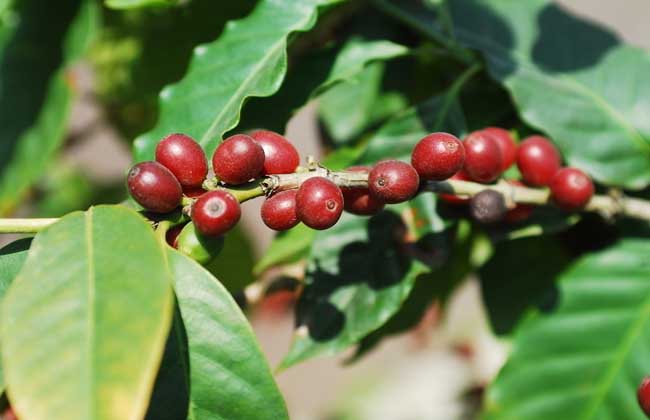
The coffee tree is a perennial horticultural cash crop. It is a perennial evergreen shrub or small tree of the genus Coffea in the family Rubiaceae, with the characteristics of fast growth, high yield, high value and wide market. Its ideal growing grounds are mostly located in countries between the Tropic of Cancer and the Tropic of Capricorn that have high mountain terrain. It originated in tropical Africa, and has been introduced and cultivated in South China and Southwest China. Let us take a look below at the conditions for growing coffee trees!
Growth habits of the coffee tree
The coffee tree likes mild, not scorching daytime temperatures, and less than two hours of direct sunlight. Therefore, if there is a lack of the daily afternoon rain showers or dense fog, local farmers must interplant many taller trees in the coffee plantation to provide shade. At night it hopes for an environment of around 10°C, but the temperature must not be too low, because too much warmth will make the coffee berries develop too quickly and fail to produce hard, high-quality coffee beans that are small and rich in flavor, while if it gets cold enough to frost, the tree will freeze to death.
Conditions for growing coffee trees
The most ideal growing conditions for coffee trees are a temperature climate with temperatures between 15-25°C, and the annual rainfall must reach 1500-2000 mm, and at the same time the rainfall timing must match the coffee tree's flowering cycle. Of course, in addition to the coordination of seasonal rainfall, well-drained fertile soil containing volcanic ash is also required. In addition, although sunlight is an indispensable element for the growth and fruiting of coffee, excessively strong sunlight will inhibit the growth of coffee trees, so each producing area usually plants some shade trees as well. As for the most ideal altitude, it is 500-2000 m. From this it can be seen that the conditions for cultivating high-quality coffee are quite strict; sunlight, rainfall, soil, temperature, as well as the method of harvesting the coffee beans and the production process will all affect the quality of the coffee itself.
History of coffee tree cultivation
In fact, in 525 BC, the Arabs began to grow coffee, and the Arab region also began to favor chewing roasted coffee beans. In 890 AD, Arab merchants sold coffee beans to Yemen, and the Yemeni people made coffee beans into a beverage for the first time. In the 15th century, coffee was introduced to Europe and Asia, and then quickly to the Americas. By the 18th century, coffee was widely grown in tropical and subtropical regions around the world and became one of the world's three major beverages. Coffee's annual sales volume jumped to first place among the three major beverages, 3 times that of cocoa and 4 times that of tea. Although the world has a history of cultivating coffee for more than 2000 years.
China has only a few hundred years of experience in cultivating coffee. In 1884, Taiwan, China began to introduce coffee. In the early 20th century, overseas Chinese brought coffee back from Malaysia and planted it in Hainan Province. Only later did the tropical and subtropical provinces and regions in the south gradually begin to plant coffee. Although the cultivation time is relatively short, the coffee of China's Hainan Province and Yunnan Province has outstanding quality and unique charm, and enjoys a high reputation internationally. After some foreign merchants buy it at a low price, they process it and resell it to the international market, where it becomes an expensive world-class beverage. Particularly prominent is the small-bean coffee grown in Yunnan Province. Because Yunnan has a large temperature difference between day and night, which is favorable for the accumulation of its internal substances, it tastes rich but not bitter, aromatic but not harsh, with a high oil content and a fruity note, and has thus been praised by coffee merchants at home and abroad as “the best quality coffee in the world”.