Key Points and Methods of Jujube Tree Pruning Explained
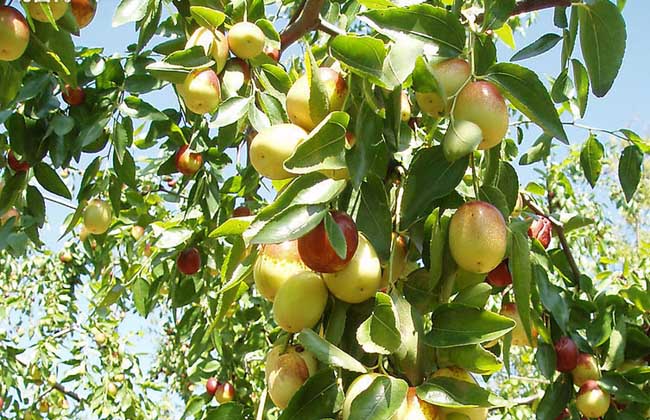
Winter pruning of jujube trees is an important technical measure in jujube tree management. It is generally carried out after leaf fall and before bud break, but to prevent the pruning cuts from drying out, pruning should be done somewhat later, generally from early March to early April before the jujube trees bud. When pruning, different measures should be adopted according to the growth characteristics of jujube trees at different age stages and the level of management.
Pruning of Neglected Trees
1. Pruning principles: Long-neglected jujube trees mostly have no proper shape, with unclear main and secondary branches, tangled small branches, old branches and scorched tips, many flowers but few fruits, and low yield. Therefore, when pruning, the principle of both taking into account the current yield and gradually carrying out renovation should be followed.
2. Pruning methods: First thin out overly dense branches, and remove the overly dense skeletal branches that are severely aged, weakened and have no prospect for development. Then, the retained skeletal branches should be dealt with according to the situation. Thin out or cut back those that are too dense, drooping or dried up. Cutting back should not be too severe, so as not to affect the yield too much. After the skeletal branches are dealt with, as many small branches in the inner canopy as possible should be retained, so as to ensure fruiting capacity. For the existing water sprouts on the tree, select those with vigorous growth and good direction to train them, so as to replace the aged skeletal branches and expand the tree canopy. Excessive water sprouts should also be properly removed, and the remaining ones should be appropriately shortened or headed back according to the available space, and trained into fruiting branch systems.
Trunk Determination and Training of Young Trees
1. Trunk determination: After young jujube trees are planted, because growth is relatively slow and in the early stage they do not reach the required thickness or grow vigorously enough, it is not necessary to cut them back; leave more branches to let them thicken and gain height as quickly as possible. When the tree height reaches 1.5-2 m and the trunk diameter reaches 2-3 cm, cut off the top at an appropriate height, which is trunk determination. Generally, in pure jujube orchards the trunk is determined at 1-1.2 m, in intercropping orchards at 1.2-1.4 m, and in densely planted orchards trunk determination may be omitted. The 15-25 cm below the cut is the training zone. In the training zone, remove 4-5 secondary branches from the base to promote the main buds on the trunk to sprout new jujube heads, so as to train main branches.
2. Training: In the second year after trunk determination, select one upright and thick-growing branch as the central leader, and keep 3-4 branches with good direction and suitable angle in the lower part as the first tier of main branches; remove all the others. After these branches grow strong, in the third to fourth years, use the same branch-promoting method as for trunk determination to furnish side branches and the second tier of main branches on the main branches.
Pruning of Fruiting Jujube Trees
The fruiting and renewal stage is mainly about delaying tree senescence and delaying fruiting, so the method of cutting back is mostly used. Some drooping skeletal branches are cut back, and other weakened branches are correspondingly cut back as well. Generally, they are cut back to jujube spur-like buds with stronger vitality. After the skeletal branches are cut back, new jujube heads are promoted to grow, which can gradually be trained into main branch extension branches and side branches, filling the inner canopy and filling space. If renewal branches appear on the skeletal branches, they can be cut back directly to the renewal branches.
1. Jujube trees in the initial fruiting stage: Pruning of jujube trees in the initial fruiting stage is mainly to reduce nutrient consumption and increase yield, so overly dense vegetative branches other than the central leader, main and side branches and large fruiting branches should be thinned out; those with space should be retained, and the terminal buds should be removed.
2. Jujube trees in the full fruiting stage: Pruning of jujube trees in the full fruiting stage is mainly to maintain good ventilation and light transmission conditions in the canopy, make the density of branches and leaves appropriate, allow fruiting branches to bear fruit in large quantities, and carry out planned rejuvenation and renewal of fruiting branch systems, so that fruiting branches maintain a longer fruiting life. First, remove large water sprouts, whorled, crossing, parallel and overlapping branches. Second, thin out and shorten weak and overly dense branches. Third, head back and appropriately cut back large skeletal branches. Fourth, train vigorous fruiting branch systems and fruiting mother branches.
Renewal Pruning of Old Trees
Renewal pruning of old trees is a pruning measure for trees in different degrees of senescence, and corresponding renewal pruning measures should be adopted according to the number of effective jujube spurs. When renewing old trees, attention should be paid to the relationship between main and subordinate branches, and it should be carried out in sequence. Pruning cuts should be coated with grafting wax to prevent the wounds from cracking and rotting from rain. Skeletal branch renewal should be completed in one go and should not be carried out in batches in rotation. Most importantly, renewal pruning should be carried out on the basis of strengthening underground fertilizer and water management.
1. Light renewal: When there are 1000-1500 effective jujube spurs, the method of light cutting back can be adopted, cutting off 1/3 of the total length of each skeletal branch, which can strengthen tree vigor and allow continued fruiting.
2. Medium renewal: When there are 500-1000 effective jujube spurs, the method of moderate cutting back can be adopted. On each skeletal branch, select strong-growing, outward-extending spurs and latent buds and saw off 1/2 of the total length, so as to promote the sprouting of new branches. At the same time, strengthen tree management and rest the tree for 1-2 years (without ringing), which can restore tree vigor and allow normal fruiting.
3. Heavy renewal: Generally, when there are 300-500 effective jujube spurs, the method of heavy renewal should be adopted. Likewise, select strong spurs and latent buds and saw off 2/3 of each skeletal branch, so as to promote the sprouting of new branches and re-form the tree canopy. Then strengthen management both above and below ground, and after resting the tree for 2 years (without ringing), normal fruiting can be restored.