How to propagate a ginkgo tree? A detailed explanation of common propagation methods
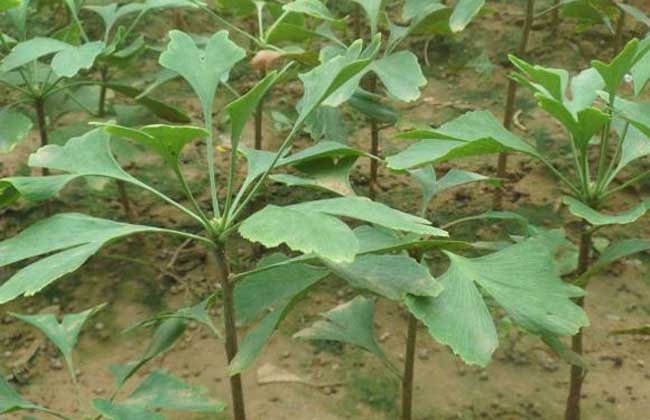
Ginkgo prefers deep loam soil that is moderately moist but well drained. It is suited to growing in subtropical monsoon regions with relatively favourable water and heat conditions. It can grow well in both acidic and calcareous soils, but neutral or slightly acidic soil is most suitable. It does not tolerate waterlogged ground and is relatively drought tolerant, though it grows poorly in overly dry places, on rocky hillsides or in waterlogged low-lying spots. Let us take a look below at the propagation methods for ginkgo trees.
Grafting propagation
Grafting propagation is the main propagation method in ginkgo cultivation. It can bring fruiting earlier and make plants dwarfed, fuller and more productive. Grafting is generally carried out from mid-March to early April using methods such as side-veneer grafting, bark grafting or cut grafting. Scions are mostly selected from 20-30 year old plants with strong growth and abundant fruiting. Generally, branches 3-4 years old bearing about 4 short shoots are chosen as scions. Each plant is usually grafted with 3-5 scions, and fruiting begins 5-8 years after grafting.
Seed propagation
Seed propagation is mostly used for large-scale landscaping seedlings or for making clump-style bonsai. After harvesting the seeds in autumn, remove the outer seed coat and dry the seeds with the fruit coat still attached. They can be sown in winter the same year or in spring the following year. If sowing in spring, the seeds must first undergo mixed-sand stratification to promote germination. When sowing, place the seed embryo horizontally in the sowing furrow. After sowing, cover with 3-4 cm of soil and press firm. The seedlings can grow to 15-25 cm tall in the same year. After leaf fall in autumn, they can be transplanted. Note, however, that the seedbed must be chosen in a well-drained area to prevent waterlogging from rotting the parts of the seedlings near the ground.
Cutting propagation
1. Hardwood cutting: Generally in spring from March to April, cut vigorous, well-developed 1-2 year old branches from the mother plant, cut them into cuttings 10-15 cm long each, and insert them into fine yellow sand or loose soil. After insertion, water thoroughly and keep the soil moist. Roots can form in about 40 days. After surviving, carry out normal management, and transplant in spring of the second year. This method is suitable for large-scale landscaping seedling production and so on.
2. Softwood cutting: In early July, take semi-lignified branches of the current year, cut them into cuttings with two buds per node or three buds per node, soak them in 100 mg/kg ABT rooting powder, then insert them into an air-permeable sandy soil seedbed. Be careful to provide shade and maintain air humidity. After roots develop, transplant with soil attached.
Sucker propagation
Large trees readily produce large numbers of suckers at the base. If allowed to grow naturally for many years, they can form the ginkgo garden landscape known as “a child held in the arms.” If the root suckers are cut off to propagate seedlings, it not only saves seeds but also grows quickly and flowers and fruits earlier. Sucker propagation can use two methods: cutting off existing root suckers for propagation, and digging trenches to cut roots and stimulate new suckers.
1. Cutting off existing root suckers for propagation: Using existing root suckers cut off for propagation is the simplest method. Every year between July and August, first carry out ring-barking at the base of the sucker stem, then mound soil over it. After more than 1 month, new roots can emerge from the ring-barked area. In spring of the second year, they can be cut from the mother plant and planted directly in place.
2. Digging trenches to cut roots and stimulate new suckers: Carry this out in autumn. At that time, at a suitable place near a large ginkgo tree, dig a ring-shaped trench 50 cm deep and 50 cm wide, cut the lateral roots, then fill it back with soil mixed with fertiliser. After 1 year of growth, they can be cut off to form new seedlings. Small seedlings propagated from suckers can be planted directly in place without further cultivation in a nursery. Therefore, although it is called sucker seedling raising, it is in fact sucker planting in place.