Detailed Explanation of Key Points for Citrus Pest and Disease Control Techniques
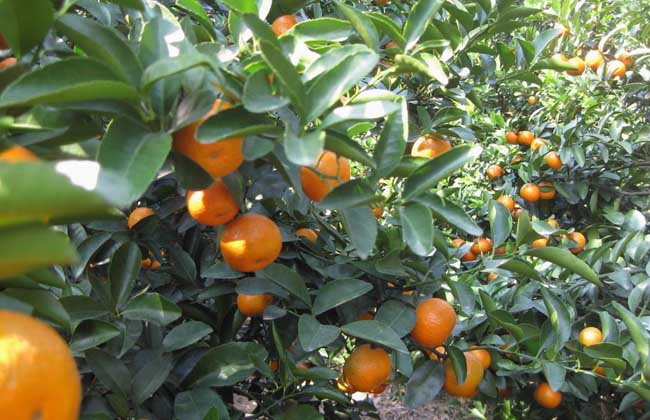
Citrus belongs to the genus Citrus in the family Rutaceae, and prefers a warm and humid climate. Regarding its main pests and diseases and their control: during the growth and development of citrus, when the influence of harmful organisms or adverse environmental conditions exceeds its adaptive capacity, its normal growth and development are inhibited, metabolism is altered, leading to reduced yield, deteriorated quality, and even death. This brings enormous losses to the economic value of citrus and seriously affects the economic income of growers. Therefore, clearly understanding the main pests and diseases of citrus and taking effective measures for prevention and control is the greatest reward for growers. Let us now take a look at citrus pest and disease control techniques!
Citrus Huanglongbing
[Damage Symptoms] Citrus Huanglongbing, also known as yellow shoot disease, is a plant quarantine pest disease in China. Seedlings and young trees die within 1 to 2 years after infection, and mature trees lose their fruiting capacity within 2 to 3 years after infection. In the early stage, symptoms appear on a few new shoots of individual plants, with a small number of yellow shoots mixed into the dark green canopy, commonly known as "inserting golden flowers" or "chicken-head yellow." The leaves on diseased shoots become hard and brittle. Starting from the base of the leaf, the mesophyll turns yellow while the midrib and lateral veins remain green, presenting a mottled yellow-green pattern. The veins swell, and localized areas become corky and cracked, or the entire leaf turns uniformly yellow.
[Control Techniques] ① Strict quarantine: prohibit the introduction of seedlings and scions from diseased areas into new areas and disease-free areas. ② Cultivate disease-free seedlings: establish disease-free nurseries in areas where Huanglongbing and the Asian citrus psyllid do not occur, and select virus-free seedlings. ③ Pest control: promptly control the disease-transmitting vector, the Asian citrus psyllid. ④ Remove diseased plants: strengthen inspection and promptly handle diseased plants.
Citrus Canker
[Damage Symptoms] Citrus canker is a plant quarantine pest both domestically and internationally. Seedlings and young trees are severely affected, causing defoliation and dead branches, and weakening tree vigor. Affected fruit may bear disease scars, reducing quality in mild cases, or drop in severe cases, reducing yield. This disease damages leaves, twigs, and fruit. Lesions initially appear pinhead-sized, yellow, and water-soaked, then expand into nearly circular lesions that are raised on both the upper and lower surfaces of leaves, corky, rough on the surface, grayish-brown, and with crater-like cracking.
[Control Techniques] ① Strictly implement quarantine: soak introduced seedlings and scions in 0.3% ferrous sulfate for 10 minutes. ② Strengthen cultivation management: winter pruning and orchard cleaning. Carry out bud removal and shoot control to reduce disease incidence. Apply fertilizer rationally to control shoots through fertilization. ③ Spray chemicals to protect shoots and fruit: use 77% copper hydroxide wettable powder, 30% copper oxychloride suspension at 800-1000 times dilution, 20% dichloroisocyanuric acid wettable powder at 1000-1500 times dilution, or 20% quinone fungicide wettable powder at 1000-1500 times dilution for spraying.
Citrus Scab
[Damage Symptoms] Citrus scab mainly damages leaves, new shoots, and fruit, causing defoliation and fruit drop. Diseased fruit that does not drop becomes small and deformed, with deteriorated quality, and affected new shoots grow poorly. This disease can only infect young and tender tissues of leaves, shoots, and fruit. Affected leaves initially show water-soaked small spots, which gradually expand, becoming waxy yellow to yellowish-brown, 0.3-2.0 mm in diameter, and corky.
[Control Techniques] ① Seedling quarantine: when newly establishing orchards, quarantine introduced seedlings and scions from other places. Scions and seedlings from other places can be soaked in 50% benomyl wettable powder at 800 times dilution or 40% triadimefon-carbendazim wettable powder at 800 times dilution for 30 minutes. ② Strengthen cultivation management: in winter, combined with pruning, cut off diseased branches and leaves, collect fallen branches and leaves on the ground and burn them together, then immediately spray chemicals on and under the tree for prevention. Strengthen fertilizer and water management to promote uniform shoot emergence, shorten the tender stage of young fruit, and reduce opportunities for pathogen infection. ③ Chemical spray control to protect young shoots, leaves, and young fruit. Options include 30% copper oxychloride suspension at 600 times dilution, 40% triadimefon-carbendazim wettable powder at 800 times dilution, or 50% prochloraz-manganese complex at 1000 times dilution for spraying.
Citrus Anthracnose
[Damage Symptoms] Citrus anthracnose often causes extensive defoliation, dead shoots, and fruit drop in citrus trees, leading to weakened tree vigor, reduced yield and quality, and even death of branches and entire plants.
[Control Techniques] ① Strengthen cultivation management: deep plowing and soil improvement, avoid excessive application of nitrogen fertilizer, increase application of organic fertilizer and phosphorus and potassium fertilizers, timely drainage and irrigation, and do well in frost prevention and control of other pests and diseases. ② Winter orchard cleaning: prune diseased and dead branches, leaves, and mummified fruit, remove fallen leaves and diseased fruit on the ground, and burn or deeply bury them in a centralized manner. ③ Chemical spray control: spray during the young leaf stages of spring, summer, and autumn shoots, the young fruit stage, and the fruit enlargement stage. Options include 25% prochloraz emulsifiable concentrate, 24% fenbuconazole suspension, 43% mancozeb suspension at 1000 times dilution, or 25% bromothalonil emulsifiable concentrate at 500-800 times dilution for spraying.
Citrus Nematode Disease
[Damage Symptoms] Citrus nematode disease mainly damages the root system of plants. When plants are affected, it causes tree decline in mild cases, and wilting and death of the entire plant in severe cases. Affected root tissues grow excessively due to stimulation, forming root galls of varying sizes, with sparse root hairs. The above-ground parts of diseased plants show smaller and yellowing leaves. In severe cases, leaf margins curl, leaves dry up and drop, twigs wither, and the entire plant dies.