Which regions are citrus producing areas distributed in? Detailed introduction to the main producing areas
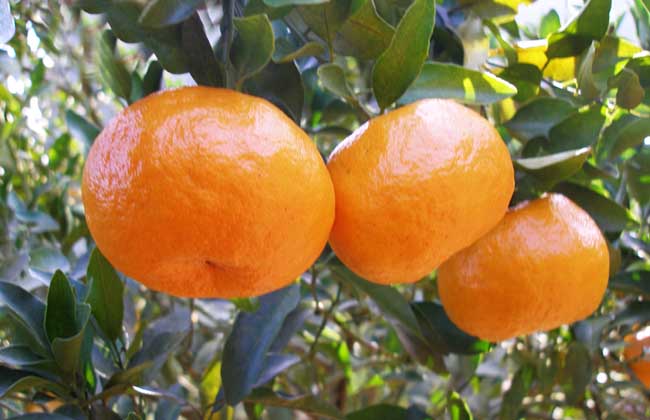
Citrus prefers a warm and humid climate, and is slightly more cold-tolerant than pomelo, sour orange, and sweet orange. The Rutaceae subfamily Aurantioideae is distributed between 16° and 37° north latitude. China is one of the important places of origin for citrus, with abundant citrus resources and many excellent varieties, and a cultivation history of more than 4000 years. Let us take a look at the distribution of citrus producing areas below!
Citrus producing areas in China
Citrus in China is distributed between 16° and 37° north latitude, with the highest altitude reaching 2600 m (Batang, Sichuan), from Sanya in Hainan Province in the south, to Shaanxi, Gansu, and Henan in the north, from Taiwan Province in the east, to the Yarlung Zangbo River valley in Tibet in the west. The economic cultivation areas are mainly concentrated between 20° and 33° north latitude, below an altitude of 700-1000 m.
Nationwide, citrus production includes 19 provinces (municipalities and autonomous regions), including Taiwan Province. Among them, the 10 provinces (municipalities and districts) that mainly produce citrus are Zhejiang, Fujian, Hunan, Sichuan, Guangxi, Hubei, Guangdong, Jiangxi, Chongqing, and Taiwan, followed by Shanghai, Guizhou, Yunnan, Jiangsu, and other provinces (municipalities). Shaanxi, Henan, Hainan, Anhui, and Gansu and other provinces also have plantings.
There are 985 counties (cities and districts) growing citrus nationwide.
Citrus producing areas in the world
Citrus in the world is mainly distributed in areas south of 35° north latitude. It prefers warmth and humidity, and in regions with large water bodies that raise temperatures, it can advance northward to 45° north latitude. There are 135 countries in the world producing citrus, with an annual output of 102.822 million tons and an area of 10.73 million mu, both ranking first among all fruits.
Brazil ranks first in citrus output, with 24.2526 million tons, the United States ranks second, with 16.3352 million tons, China ranks third, with 10.78 million tons, followed by Mexico, Spain, Iran, India, Italy, and other countries.
Conditions of citrus producing areas
1. Environmental factors: The growth and development, flowering, and fruiting of citrus trees are closely related to environmental conditions such as temperature, sunshine, water (humidity), soil, as well as wind, altitude, terrain, and slope aspect.
2. Effects of low temperature: Among the conditions of citrus producing areas, temperature has the greatest impact. Even a temperature difference of 0.5℃ can sometimes produce completely different results. The growth and development of citrus require a temperature of 12.5-37℃. In autumn, flower bud differentiation requires day and night temperatures of about 20℃ and about 10℃ respectively. The soil temperature for root growth is roughly the same as that of the aboveground part. Too low a temperature will freeze citrus. Sweet orange at -4℃ and Wenzhou mandarin at -5℃ will cause branches and leaves to freeze. Sweet orange below -5℃ and Wenzhou mandarin below -6℃ will freeze large branches and trunks. Sweet orange below -6.5℃ and Wenzhou mandarin below -9℃ will freeze the plants to death.
3. Effects of high temperature: High temperature is also unfavorable to the growth and development of citrus. When the air temperature and soil temperature are higher than 37℃, the fruit and root system stop growing. Temperature also has an obvious effect on fruit quality. Within a certain temperature range, usually as temperature increases, sugar content and soluble solids increase, acid content decreases, and quality improves.
4. Effects of light: Citrus is a tree species with strong shade tolerance, but good sunshine is still needed for high quality and high yield. Generally, areas with an annual sunshine duration of 1200-2200 hours can grow normally. For example, compared with the Chongqing citrus producing area, which has less sunshine, South China, which has good sunshine and abundant heat, has higher fruit sugar content, lower acid content, and a higher sugar-acid ratio.
5. Rainfall conditions: Generally, tropical and subtropical areas with an annual rainfall of about 1000 mm are suitable for citrus cultivation, but due to uneven distribution of annual rainfall, irrigation is often needed. The suitable relative soil moisture content is 60%-80%. Below 60%, irrigation is needed. Excessive rain, causing water accumulation in the soil or a high groundwater table, and poor drainage in citrus orchards, will cause root death. Citrus trees require an air relative humidity of about 75% as suitable.
6. Soil conditions: Citrus has a relatively wide range of adaptability to soil. It can grow in purple soil, red-yellow soil, sandy beach, and coastal mudflat with a pH value of 4.5-8, and a pH value of 5.5-6.5 is most suitable. Citrus root growth requires a relatively high oxygen content, and soil with loose texture, good structure, organic matter content of 2%-3%, and good drainage is most suitable.