What are the growing conditions for passion fruit? A detailed explanation of its environmental requirements
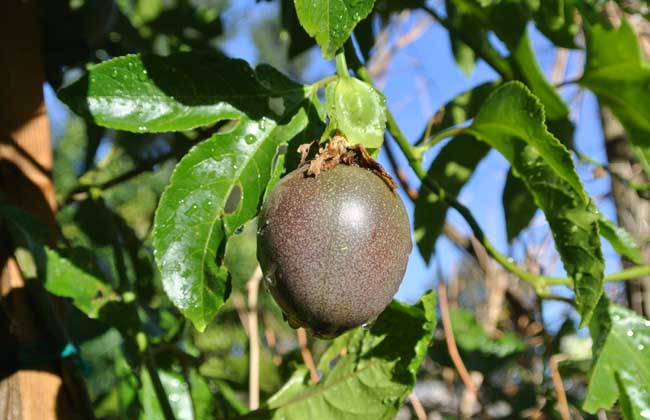
Passion fruit has long been known as the "king of beverages." Its juice can be processed into pure, high-quality natural drinks that are not only uniquely flavored and nutritious but also nourishing and healthful, helping with digestion. Demand on the market exceeds supply, and it can also be processed into fruit syrup, jam, jelly, and candied fruit. Let us take a look below at the growing conditions and growing costs of passion fruit!
Growing conditions for passion fruit
Passion fruit adapts to being grown in areas where the minimum winter temperature stays above 0°C. In southern regions, flowering begins in February to March, with the plant growing and flowering at the same time, and fresh fruit basically ripens throughout the year. In areas where the winter temperature drops below 0°C, protected cultivation in a greenhouse is required. It is also possible in cold seasons to cut back the passion fruit seedlings and move them together into a plastic greenhouse, then move them to open-field cultivation around Qingming, where they will bear fruit the same year, and move them back into the greenhouse in winter.
Planting time for passion fruit
Under normal circumstances, plant in February or March in spring, using high-quality cuttings for establishment. If water and fertilizer are sufficient and management such as pruning and pest control is appropriate, flowering can begin one after another around the end of May. After natural pollination or artificial supplementary pollination, the fruit develops for 50-60 days and is roughly mature after the end of July, when harvesting can begin.
If seedlings grown from seed are used for planting, after planting in spring with appropriate management, only a small number of flowers will open around September or later, and fruit development takes more than 70 days. Therefore, it will not be until November or later that a small amount of fruit matures and is available for harvest.
Growing costs for passion fruit
1. Project investment estimate (calculated for planting 1 mu, amounts in yuan): land rent 30 yuan/year, land preparation 50 yuan, fertilizer 100 yuan, materials 150 yuan, labor 100 yuan, seedlings 330 yuan, totaling 760 yuan; adding other unpredictable expenses, about 800 yuan per mu.
2. Estimated output value per mu
① Estimated output value per mu in the current year: calculated at an average minimum yield of 20 jin per plant and a minimum market price of 1.50 yuan/jin, 110 plants × 20 jin/plant × 1.5 yuan/jin = 3300 yuan. Profit and tax per mu = 3300 - 800 yuan = 2500 yuan. Planted in the current year, income begins in half a year, and profit can be made in the same year. Moreover, the input-output ratio exceeds 1:3, making the benefit very considerable!
② Estimated output value per mu in the second year: because investment in seedlings, materials, land preparation, and so on is saved, fruit yield also increases noticeably, with output per mu reaching 3000-5000 jin. The output value reaches more than 4000 yuan, and net profit exceeds 3500 per mu, with the benefit even more remarkable. Even if in the future all fruit is sold at the factory raw material price of five mao per jin, the output value would still be around 2000 yuan, and profit per mu would be no less than 1000 yuan, so the economic benefit remains very significant.