Detailed Explanation of Loquat Planting Technical Points and Management Methods
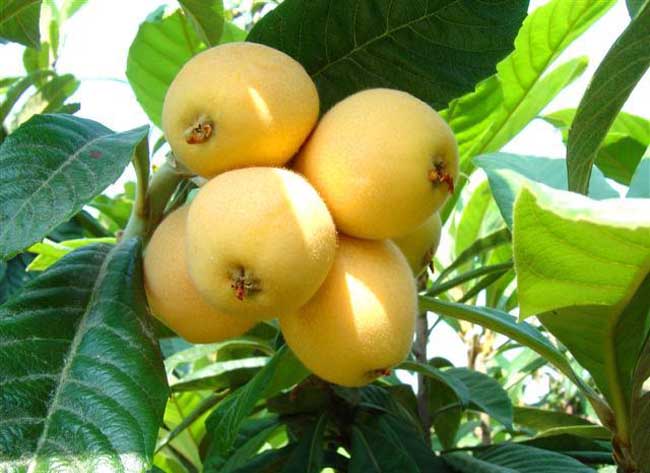
Loquat tastes delicious and contains various nutrients such as fructose, glucose, iron, calcium, and vitamins A, B, and C. Traditional Chinese medicine holds that loquat fruit has the effects of moistening the lungs, relieving cough, and quenching thirst, and it can generally be eaten by most people. When eating loquat, it must be peeled. Besides being eaten fresh, loquat flesh can also be made into canned fruit in syrup or brewed into wine. According to the "Compendium of Materia Medica," "loquat can moisten the five viscera and nourish the heart and lungs." Every part of the loquat is useful; besides the fruit, loquat flowers and loquat seeds each have their own effects. Loquat is a subtropical evergreen fruit tree, more cold-tolerant than citrus. It can be planted in areas where the annual average temperature is above 12°C-15°C, the winter temperature does not drop below -6°C, and the annual rainfall is above 1000 mm.
Orchard Establishment
1. Selection of orchard site: First, choose a location with convenient transportation to establish the orchard. Loquat has strong adaptability to soil, but deep, fertile, slightly acidic soil with a pH of around 6-6.5 is best.
2. Soil improvement in the orchard: Since loquat has a shallow root system, weak spreading ability, and poor wind resistance, we must carry out deep plowing and soil improvement, or trench green manuring, or large-hole green manuring, and plant the seedlings on the trenches or large holes (if the soil layer is less than 50 cm, blasting should be used for soil improvement). Thereafter, every year expand the holes outward, deep plow, and bury green manure to improve soil aeration and fertility, guide roots deep into the soil, enhance root growth, expand root distribution, make the plants grow robustly, and increase wind resistance. For flat land or clay soil, a drainage trench 40 cm wide and 50-60 cm deep should be opened every 2-4 rows.
3. Seedling planting
① Planting time: In areas where winters are colder, loquat should be planted in spring to avoid frost damage. In most areas of the south, where winters are warm, planting can be done from September to March of the following year, but October-November is best.
② Seedling treatment: Before planting, the seedlings must be soaked in a fungicide such as carbendazim for 15-30 minutes, soaking the seedlings up to more than 10 cm above the graft union. This is one of the key measures for improving the survival rate. Dip in mud slurry before planting. Loquat leaves are large and transpiration is high, so when planting, cut off 1/2-2/3 of all leaves and remove all tender shoots. Spray water on the leaves 3-4 times a day.
③ Planting density: For dwarf, dense, early-bearing orchards, planting can be done at spacings of 1 by 3 m or 1.5 by 2 m (222 plants planted) and 2 by 3 m (111 plants per mu).
④ Planting method: When planting, distribute the root system evenly and press soil in layers, just covering the root crown, and keep the root crown 10-20 cm above the surrounding ground. Then build a soil ridge around the plant, and within the ridge water with settling water, 20-25 kg per plant. It must be watered sufficiently and thoroughly; this is the key to improving seedling survival rate. After the water has seeped into the soil, cover with a layer of fine soil, and finally cover the tree basin within a 1 square meter area with plastic film to maintain soil moisture and increase ground temperature. If there is prolonged drought after planting, continue watering.
Fertilization Management
Loquat is an evergreen fruit tree with luxuriant leaves and abundant flowers, and its fertilizer demand is greater than that of deciduous fruit trees. Nitrogen, phosphorus, and potassium should be used in combination. Young trees are mainly given nitrogen and phosphorus fertilizers, while mature trees are also given potassium fertilizer. Fertilization time must be determined in conjunction with the growth of shoots and roots. Loquat shoots have 4 peak flushes a year, mainly: spring shoots (February-April), summer shoots (May-June), autumn shoots (August-September), and winter shoots (November-December), with spring, summer, and autumn shoots being the main ones. The root activity of loquat and the growth of aboveground shoots show an obvious alternating phenomenon. Generally, roots grow about 2 weeks earlier than shoots, with 3-4 growth peaks a year, namely from late January to early March for the first, which has the largest growth amount; from mid-May to mid-June for the second; from mid-August to September for the third; and from October to late November for the fourth. In combination with the growth characteristics of roots and shoots, mature orchards generally need only three fertilizer applications per year.
1. The first application is spring shoot fertilizer, applied in early to mid-February, when the root system is at its first growth peak, making nutrient absorption easier. Its main role is to promote spring shoots and enlarge the fruit. Since spring shoots can become the current year's fruiting shoots and the base shoots for summer and autumn shoots, this fertilization is relatively important, accounting for about 30% of the whole year, mainly with quick-acting fertilizers. Potassium fertilizer is also applied at this time to promote young fruit expansion. Per mu, apply 30 kg urea, 15 kg superphosphate (phosphate fertilizer), 30 kg potassium sulfate (potassium fertilizer), and about 1000 kg human and livestock manure water.
2. The second application is summer shoot fertilizer, applied from mid-May to early June after fruit harvest (for late-maturing varieties, apply before harvest). This is when the root system is at its second growth peak. Its main role is to promote summer shoots and promote flower bud differentiation in July-August. Since summer shoots emerge abundantly and uniformly, and most can form fruiting mother branches in the same year, promoting summer shoots is the main measure to ensure high yields year after year. Therefore, the amount of fertilizer applied this time is very large, accounting for about 50% of the whole year, using quick-acting chemical fertilizers combined with organic fertilizers. All phosphate fertilizer is applied (to favor flower bud differentiation). Generally, apply 100 kg urea, 30 kg phosphate fertilizer (superphosphate), and 2000 kg-3000 kg organic fertilizer per mu.
4. The third application is autumn fertilizer or pre-flowering fertilizer, applied from September to early October, after heading and before flowering, accounting for about 20% of the whole year. Its main purpose is to promote good flowering, improve fruit set, and increase cold resistance for overwintering, mainly with slow-acting fertilizers. Apply 10 kg urea and 1000-1500 kg organic fertilizer per mu.
5. Fertilization for young trees follows the principle of light and frequent application. From planting survival to bud break, apply the first fertilizer, mainly quick-acting nitrogen fertilizer plus quick-acting phosphate fertilizer and clear manure water. Thereafter, apply fertilizer once every 1 month until October. For the first application, apply 2.5 kg urea, 5 kg superphosphate, and 250 kg clear manure water per mu, increasing month by month thereafter. In the second year, apply fertilizer once each in February, April, June, August, and October. After the seedlings survive planting and sprout in spring, from April to May, about every 10 days, spray once with potassium dihydrogen phosphate plus Yunda 120 or brassinolide, plus fungicides and insecticides for disease and pest control, for 4-5 consecutive sprays. Adopting this technical measure is extremely critical for improving the seedling survival rate.