If you want to grow mint this year, there is one thing you must know in advance
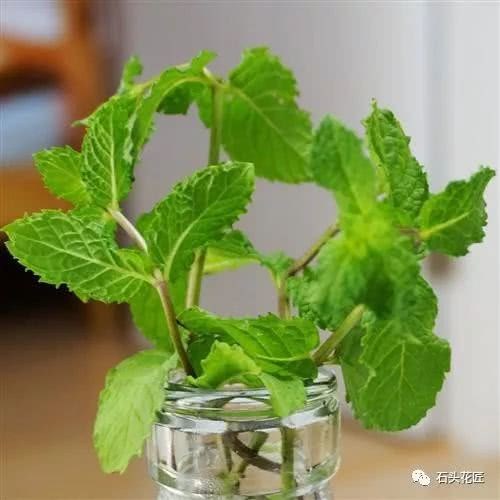
As midsummer arrives, I have recently seen many gardening friends preparing to grow their own mint, and some have also asked about the methods and precautions for growing mint. You saw that Shitou wrote in the title: when the time comes, don't blame me for not warning you about the "headache." Surely some people cannot help but wonder: is mint bad for human health?
Let me answer everyone solemnly: mint is not bad for human health. On the contrary, mint can refresh the mind, clear the air, and when applied to insect bites it can disinfect and relieve itching. What is truly a "headache" is that mint is so easy to grow, with such strong survival and reproductive ability, especially when planted in the ground. Once it blooms and sets seed, the next year it grows like a weed. If you do not want it, it is very hard to clear it out in one go.
One gardening friend shared that last year they planted mint in the ground in their yard. That year it grew very well and was indeed very easy to grow, with a fresh fragrance all around. In the end it even bloomed and set seed. As a result, this year when they wanted to plant something else, they cleared the mint away, but every time they cleared it completely, within a few days small mint seedlings would sprout again. After many rounds of effort, it still was not cleared out completely.
When it comes to this sort of thing, many people are half doubtful: is it really that scary? Below is an introduction to mint's survival ability:
Mint is a perennial plant, and its root system is very dense, generally located 5-10 cm below the soil surface. Generally, when the ambient temperature is lower than 2°C, the plant will wither, but its root system can grow normally in environments from -30°C to 30°C. Yes, that's right, it can still overwinter safely at minus thirty degrees Celsius. Mint also has strong adaptability to its growing environment and can survive in both dry and moist conditions. Then there are its seeds. Gardening friends who have sown mint surely know that mint seeds are very small, but their germination rate is very high. So once mint blooms and sets fruit, the seeds scatter on the ground, and a large number of them sprouting the next year is inevitable.
Therefore, I suggest that when growing mint, if you do not want it to grow out of control, it is best to use container planting (sowing or cuttings both work). This way you can control the spread of mint's root system very well, and container plants are generally a bit easier to manage.
There is one more point: if the mint blooms and you do not need seeds, you can directly prune the plant and let it send out new shoots and grow again. Once it blooms and sets seed, it becomes very difficult to control.
So when growing mint, on the one hand you need to grow it well, and on the other hand you also need to keep it under control.