What are the growing requirements for cherries? A detailed guide
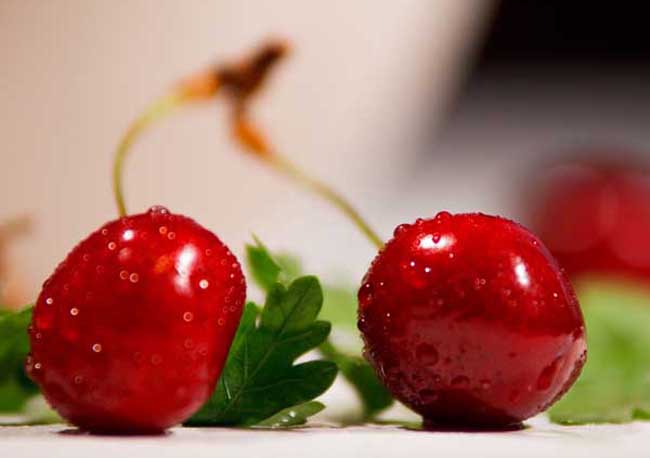
Cherries: "cherry" is the transliteration of the English word cherry. In Taiwan, China, Guangdong and Hong Kong, China, it is transliterated as "cherry". But it does not refer to the small, red-skinned, thin-skinned Chinese cherry; rather, it refers to imported cherries from American countries such as the United States, Canada and Chile, which are large and thick-skinned. China currently has also introduced cherry trees, but they have not yet reached a large scale. The environmental conditions required for growing cherries include the following:
Temperature
The cherry is a deciduous fruit tree that likes warmth and cannot tolerate cold. The Chinese cherry originated in the Yangtze River basin of our country and adapts to a warm, humid climate, with weak cold resistance, so it is mostly cultivated in the Yangtze River basin and in areas of northern China with a relatively warm microclimate. Sweet cherries and sour cherries originated in West Asia and Europe and adapt to a relatively cool, dry climate, and are more suitable for cultivation in North China, Northwest China and southern Northeast China. But high temperatures and dryness in summer are unfavorable for the growth of sweet cherries. The minimum winter temperature must not be lower than -20; excessively low temperatures will cause longitudinal cracking of large branches and gummosis. In addition, flower buds are susceptible to frost damage. If the temperature drops below -3°C during the flowering period, the flowers will suffer frost damage, so when developing cherries, it is not advisable to do so in overly cold areas.
Water
Cherries are very sensitive to moisture conditions; they are neither drought-resistant nor waterlogging-tolerant. In the cultivation areas of the Chinese cherry, apart from the southern provinces where rainfall is abundant, the north mostly chooses hillside and valley areas with a relatively humid microclimate for cultivation. Judging from the distribution of sweet cherry cultivation areas around the world, most are chosen near river systems or coastal zones. The main cultivation areas of sweet cherries in our country are currently mostly distributed in Shandong Yantai, Liaoning Dalian and other places around the Bohai Bay. These two places are close to the sea, with annual rainfall of 600-900 mm, and the air is relatively humid. However, this does not restrict the cultivation of sweet cherries in areas with low rainfall, such as the sweet cherry production areas of Washington State in the United States, Yakima and Wenatchee, where annual rainfall does not exceed 250 mm and rainfall during the growing season does not exceed 150 mm. The sweet cherry production areas of Ukraine are mainly distributed in summer drought areas along the Black Sea coast, with annual rainfall not exceeding 300 mm and little rainfall from July to September, but these areas have suitable temperatures, sufficient light and good irrigation conditions, so sweet cherries grow well and are of high quality and high yield. Like other stone fruits, cherries require relatively high oxygen in the root system. If there is too much soil moisture and insufficient oxygen, it will affect the normal respiration of the root system, and the tree cannot grow and develop normally, causing root rot and gummosis, and in severe cases leading to tree death. If the rain is heavy and drainage is not timely, and the cherry tree is submerged in water for 2 days, the leaves will wilt but not fall off; the leaf wilting cannot recover and may even cause the whole tree to die.
Light
The cherry is a light-loving tree species, especially the sweet cherry, followed by the sour cherry and the downy cherry, while the Chinese cherry is relatively shade-tolerant. When light conditions are good, the tree is robust, the fruiting branches have a long lifespan, the flower buds are plump, the fruit-setting rate is high, the fruit ripens early, the color is good, the sugar content is high, and there is less acidity. When light conditions are poor, the tree tends to grow excessively, the branches inside the canopy weaken, the fruiting branches have a short lifespan, the fruiting part moves outward, the flower buds develop poorly, the fruit-setting rate is low, the fruit colors poorly, ripens late, and is of poor quality. Therefore, when establishing an orchard, one should choose sunny slopes or semi-sunny slopes, the planting density should not be too high, and the branch angles should be opened up to ensure light conditions inside the canopy and achieve ventilation and light penetration.
Soil
Sweet cherries are suitable for cultivation in sandy loam or gravelly loam with deep soil layers, loose soil texture, good aeration and relatively strong water retention. When cultivated in heavy clay soil, the root system is shallow, and the tree is not drought-resistant, not waterlogging-tolerant and not wind-resistant. Cherry trees are very sensitive to the degree of salinization, and the suitable soil pH is 5.6-7, so cherries should not be planted in saline-alkali areas.
Cherries are very prone to crown gall disease. If there are crown gall pathogens and nematodes in the soil, crown gall disease is easily transmitted. In old orchards where cherries, peaches, plums and apricots have been planted, there are many crown gall pathogens in the soil, so it is not suitable to plant cherry trees, and even less suitable to use them as nurseries for developing cherries. If the saplings have crown gall disease, it will cause even more serious consequences.
Wind
The root system of cherries is generally relatively shallow, and their wind resistance is poor. Strong winds in severe winter and early spring easily cause branch dieback and frost damage to flower buds; strong winds during the flowering period easily dry the stigma mucus and affect insect pollination; typhoons in summer and autumn will cause branch breakage and tree lodging, resulting in even greater losses. Therefore, in areas invaded by strong winds, windbreaks must be established, or areas with a good microclimate should be chosen for orchard establishment.