Detailed Explanation of Banana Cultivation Techniques: A Complete Analysis of Planting and Management Essentials
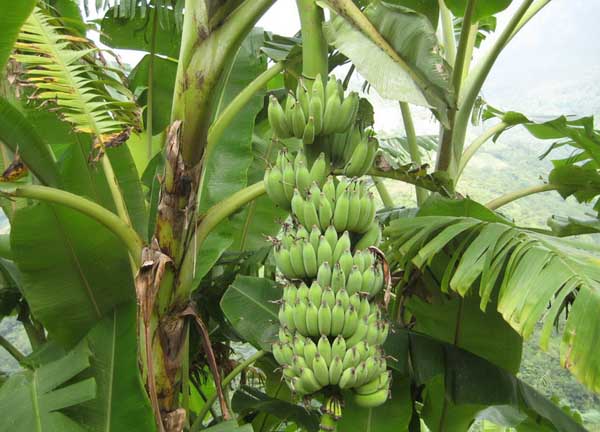
Bananas originated in Southeast Asia, and are cultivated in Taiwan, China, Hainan, Guangdong, Guangxi, and other regions of our country. Bananas are fragrant and nutritious, can be harvested year-round, and are also highly valued in temperate regions. After the banana plant fruits, it dies, and suckers growing from the rhizome continue to propagate; each root stock can survive for many years, and offspring are propagated by transplanting the roots.
Banana Growth Habits
Bananas prefer hot and humid climates, and grow vigorously in deep, loose-textured, well-drained soil. Irrigation-based cultivation has also been successful in semi-arid areas similar to southern Jamaica. Wild bananas are grown from seed, while cultivated bananas can be propagated by division using suckers and pseudostems; the first harvest takes 10-15 months, after which harvesting is almost continuous.
1. Soil and Water
Banana roots are delicate, and the plant is fairly strict about soil selection; poorly aerated, poorly structured heavy clay soil or poorly drained soil is extremely unfavorable to root development. With a clay content<40%、地下水位在1m以下的砂壤土,尤以冲积壤土或腐殖质壤土为适宜。实践证明,如土壤物理性状不好,即使肥水供应十分充足,也难以促进香蕉正常生长。土壤pH值4. 5~7.5都适宜、以6. 0上为最好,因5.5以下土壤中镰刀菌繁殖迅速而凋萎病易于侵害。盐性环境香蕉虽不甚敏感,但土壤含可交换性钠离子若超过300mg/L.时也不适宜。降雨量以每月平均100mm最为适宜,低于50mm即属干燥季节,香蕉因缺水而抽蕾期延长、果指短、单产低。如蕉园积水或被淹,轻者叶片发黄、易诱发叶斑痫、产量大降,重者根群窒息腐烂以致植株死亡。
2. Temperature
In most distribution areas, the annual average temperature is above 21°C, with a few around 20°C. Bananas require high temperatures and high humidity; the growth temperature is 20-35°C, with 24-32°C being most suitable, and the minimum should not be lower than 15.5°C. Bananas are afraid of low temperatures and are sensitive to frost and snow; their cold tolerance is weaker than that of plantains and Fenjiao (a type of banana). The critical temperature at which growth is inhibited is 10°C; when it drops to 5°C, the leaves suffer cold damage and turn yellow; at 1-2°C, the leaves die. The fruit suffers cold damage at 12°C, and after ripening the peel is grayish-yellow, affecting its commercial value.
3. Wind
Banana leaves are large, the pseudostem is fragile, and the roots are shallow, making the plant prone to wind damage. At a wind speed of 25-30 km/h, leaves are torn and petioles are snapped; at 65 km/h, the pseudostem breaks or the entire plant is blown over; at 100 km/h, an entire banana plantation can be destroyed.
Banana Distribution
China is one of the ancient countries in the world that cultivate bananas, and most of the banana varieties mainly grown abroad were introduced from China. Bananas are distributed in tropical and subtropical regions within 30° north and south latitude in the Eastern, Western, and Southern Hemispheres. There are 130 countries in the world that cultivate bananas, with Central America producing the most, followed by Asia. In China, bananas are mainly distributed in Guangdong, Guangxi, Fujian, Taiwan, China, Yunnan, and Hainan, with small amounts also cultivated in Guizhou, Sichuan, and Chongqing.
In Guangxi, the main production areas are Lingshan, Pubei, Yulin, Nanning, and Qinzhou;
In Guangdong, the main production areas are Zhanjiang, Maoming, Zhongshan, Dongguan, Guangzhou, and Chaozhou;
In Taiwan, China, bananas are mainly grown in Kaohsiung and Pingtung, followed by Taichung and Taitung and other places;
In Fujian, they are mainly concentrated in Zhangpu, Pinghe, Nanjing, Changtai, Zhao'an, Hua'an, Yunxiao, Longhai, Xiamen, Nan'an, Putian, Zhangzhou (Tianbao), and Xianyou and other counties (cities, districts);
In Hainan, bananas are mainly distributed in Danzhou, Chengmai, Sanya, Dongfang, and other places, with Dongfang having the highest yield.
Banana Propagation Methods
Bananas exhibit parthenocarpy and usually have no seeds, so cultivation relies on asexual propagation. However, wild bananas do have seeds and are propagated by seed.
1. Sucker Propagation
Sucker propagation is a relatively common traditional seedling-raising method in banana cultivation. It mainly uses sword suckers (red bamboo shoots) and lüyi suckers for propagation. Suckers used for division as planting stock generally need to be more than 40 cm tall.
① Red bamboo shoot: large at the head and small at the tail, shaped like a bamboo shoot or sword, hence also called sword sucker. It generally emerges in November of the previous year, and when the weather warms up after the Beginning of Spring that year, it appears above ground and is red; it is usually used for planting in March, April, and May of that year. After planting, its characteristic is that it produces leaves first and then grows roots.
② Lüyi sucker: lüyi suckers generally emerge in August, September, and October of the previous year. Due to drought and cold, they do not grow, and when winter comes their leaves wither. Because of low temperature and lack of water, the upper part grows slowly while the lower part accumulates nutrients, so they are rich in nutrients, shaped small on top and large at the bottom, and have many roots; they are generally used for planting in February and March. After planting, they first develop roots and then send out leaves.
2. Tuber (Corm) Propagation
Tuber propagation is mainly a propagation method used to cultivate a large number of sprouts and seedlings in a short period. Using the underground stem of a plant that has not yet flowered or fruited, or of a large sucker (sprouting in October-November) as material, the best time for cutting into pieces is from November to January of the following year; most can sprout, and by April, May, and June, when the seedlings are 40-50 cm tall, they can be planted. The advantages of this propagation method are that it can reduce pests and diseases, has a high survival rate, and produces uniform growth and fruiting; the young plants are shorter than those from sucker propagation and are more wind-resistant, but it has the disadvantage of low yield in the first generation.
For the method of propagating by cutting the underground stem into pieces, first cut off the aboveground part of the plant, dig up the corm, leave the pseudostem 12-15 cm high, then cut the corm into small pieces, each weighing about 120 g or more, each with one strong bud eye; coat the cut surfaces with plant ash for preservation, then place the pieces flat on the bed at a spacing of 15 cm between plants and rows, with the bud eyes facing up, and cover with soil and grass, followed by fertilization and management. One week before the sprouts leave the nursery, spray an equal-amount Bordeaux mixture twice in succession to prevent leaf spot disease. If bunchy top disease seedlings are found, they should be pulled out promptly, and lime should be scattered for disinfection to prevent contagion. In places with severe nematode damage, first scrape off the blackened, rotted outer skin of the underground stem, soak it in hot water at 54-55°C (or 5% formaldehyde) for 20 minutes to kill the nematodes, and then raise the seedlings.