Detailed Explanation of Key Technical Points for Growing Fruit Corn
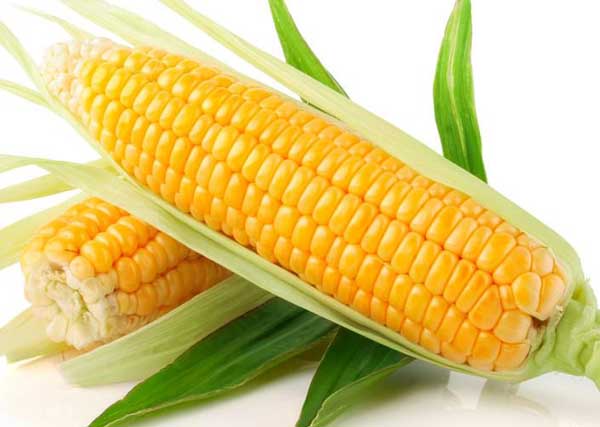
Fruit corn is a type of sweet corn suitable for eating raw. Compared with ordinary sweet corn, its main characteristics are thin skin, abundant juice, crisp texture and sweetness. It can be eaten directly raw or cooked, and is suitable for fresh consumption as well as processing into quick-frozen or vacuum-packed products. In addition, besides the edible ear, the stalks and leaves of fruit corn are high-quality feed for livestock, so its development potential is great. Growing fruit corn can yield an output value of about 3,000 yuan per mu, which can help adjust the agricultural planting structure and increase farmers' economic returns. However, it is highly technical. Through several years of growing fruit corn, our farm has summarized the following fruit corn cultivation techniques.
Variety Selection
Fruit corn is mainly marketed as a fresh fruit or vegetable using young tender ears, or made into canned products. It is advisable to choose varieties with strong adaptability, uniform ears, good quality and high purity, and to pay attention to combining early-, mid- and late-maturing varieties so as to provide a steady supply of raw material to the market and processing plants. Selecting excellent varieties is very important, as they greatly affect crop yield and marketability. Varieties such as Lima No. 1 and Lima No. 2, which have high sweetness and good quality, can all be planted.
Preparations for Sowing
1. Isolation Requirements
The sweetness of fruit corn is controlled by recessive genes. If it cross-pollinates with ordinary corn or with sweet corn of a different type, the xenia effect will occur, turning it into ordinary corn, losing its sweetness and affecting quality. Therefore, fruit corn must be grown in isolation from other corn varieties. Isolation methods include spatial isolation, temporal isolation and barrier isolation. Generally, the spatial isolation distance is 300 m; for temporal isolation, sowing is usually staggered by more than 20 days; villages, woods, hills and other barriers can also be used for isolation. Spatial isolation is best.
2. Land Selection and Preparation
Choose land with medium to high fertility that is flat, has uniform soil fertility and good irrigation conditions. Before sowing, water thoroughly to build up soil moisture; one week later, carry out fine rotary tillage and level the land so that the surface is flat and fine, with no exposed stubble and no clods sticking up, so as to facilitate smooth seedling emergence.
3. Applying Sufficient Base Fertilizer
When plowing, evenly broadcast 50 kg of organic compound fertilizer and 40 kg of urea per mu, but be careful to keep the seed separate from the fertilizer.
4. Laying Plastic Mulch
Where conditions permit, mulched planting can be carried out. In places where spring is dry, with little rain and much wind, and rainfall is concentrated in July-September, mulched planting gives relatively good economic returns. This is because mulching can both raise soil temperature and allow earlier sowing, bringing the product to market sooner, and also prevent water evaporation, maintain soil moisture and reduce production costs. Plastic mulch can be laid by hand or with a mulch-laying machine. Generally, the belt spacing is 100 cm, the ridge width is 80 cm, and the ridge height is 15 cm. The plastic film should be pulled straight and tight, laid flat, and the edges covered firmly with soil. Every 2 m, press a windbreak strip of soil on top to prevent the film from being blown up by the wind.
5. Seed Selection
Before sowing, sun the seeds on a sunny day for 1-2 days to improve the germination rate and germination vigor, then select them carefully, removing mixed and damaged grains, and strictly prevent other seeds from being mixed in. If other ordinary corn is mixed in, and since ordinary corn grows vigorously and produces a large amount of pollen, after cross-pollination the quality of the fruit corn will decline greatly, and it may even no longer be sellable as fruit corn.
Sowing at the Right Time
In order to improve economic returns, it is best to bring the product to market during the off-season for vegetables. Thus, determining the sowing date according to market demand and climatic conditions is particularly important. Generally, sowing can begin when the average surface temperature is stable at 13°C and the soil temperature at 5 cm reaches above 11°C. The speed of fruit corn germination is also closely related to soil moisture. When the temperature is constant, within the optimal moisture range, germination is faster when there is more soil moisture.
If growing under plastic mulch, plant 2 rows per ridge, with a plant spacing of 35-40 cm and 3,500-4,000 plants per mu. For open-field planting, keep about 4,000 plants per mu, ensuring full and uniform stands and rational close planting. Because its seed coat is wrinkled, its starch content is low and its ability to push through the soil is weak, use manual dibbling or mechanical sowing, sowing 3-4 seeds per hole at a depth of 4-5 cm. Fruit corn is mainly grown for selling fresh ears or for canning. When planting, sow in batches and stages so that fresh ears reach the market in early, middle and late batches, or reasonably arrange the sowing time according to the processing capacity of the factory and the required volume in different periods, ultimately obtaining relatively high economic returns.
Field Management
1. Seedling Stage Management
Check for and fill gaps in the seedlings early. Because sowing is relatively early, soil temperature is low and emergence is slow, so check the seedlings promptly to ensure a full stand of strong seedlings. Generally, 7-10 days after sowing, if missing plants or broken rows are found, replant promptly with seeds that have been soaked to promote germination, so as to ensure sufficient density. Thin and finalize the seedlings at the right time. The purpose of thinning is to prevent seedlings from crowding each other, thereby promoting robust individual development. Final thinning is actually the last thinning, and it affects both density and seedling vigor. Generally, thin the seedlings at 4-5 leaves and finalize them at 6-7 leaves, with a final stand of 3,500-4,000 plants per mu.
2. Cultivation and Weeding
Cultivation and weeding help raise soil temperature, conserve soil moisture and improve nutrient conditions. Cultivation and weeding should follow the principle of shallow-deep-shallow. The first shallow cultivation is done at 4-5 leaves, generally about 3 cm; deep cultivation is done at 7-8 leaves, generally about 10 cm; after jointing, carry out one more shallow cultivation together with hilling to enhance the plants' lodging resistance.