How to Grow Passion Fruit? A Complete Analysis of Key Planting Techniques
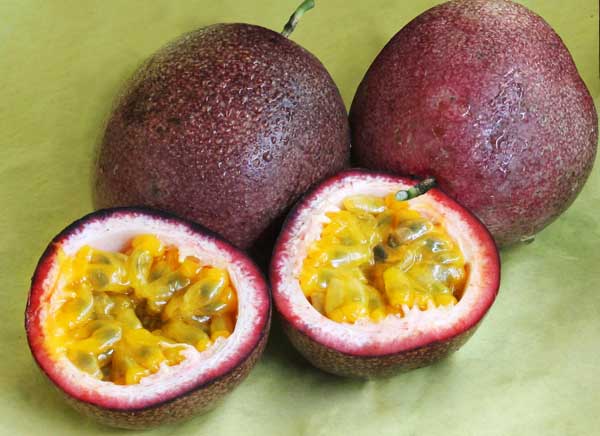
Passion fruit, also known as egg fruit, is a tropical and subtropical perennial evergreen vine of the Passifloraceae family, native to southern Brazil. It has peculiar leaf shapes, brightly colored flowers, and stays evergreen year-round. Its fruit is an oval berry, weighing 60-120 grams per fruit, with clear yellow juice and a delicate fragrance. It has the rich aroma of more than ten kinds of fruit, including pomegranate, pineapple, strawberry, lemon, mango, and sour plum, with a special flavor, hence the name passion fruit. Passion fruit is rich in protein, fat, and niacin, as well as sugars, vitamins, and various compounds such as phosphorus, calcium, iron, and potassium, plus 17 kinds of amino acids, making it highly nutritious. Passion fruit has long been known as the "king of beverages." Its juice can be processed into pure natural high-quality drinks that are not only unique in flavor and rich in nutrition but also nourishing and health-building, aiding digestion, and are in short supply on the market. It can also be processed into fruit syrup, jam, jelly, and candied fruit. The whole passion fruit plant is a treasure: the seeds contain 25% oil, and the oil quality is comparable to sunflower oil, suitable for use as edible oil; the pectin extracted from the peel is a good stabilizer and thickener for food processing; the roots, stems, and leaves can all be used as medicine, with effects such as reducing inflammation and relieving pain, invigorating blood and strengthening the body, and lowering blood lipids and blood pressure; the essence extracted from passion fruit is a good additive for pastries and alcoholic beverages.
The passion fruit planting industry and processing industry are thriving and have great development potential. Passion fruit planted in the same year bears fruit in the same year, with each plant producing about 110 jin of fruit and an income of about 10,000 yuan per mu, and it can yield returns continuously for ten years. Therefore, growing passion fruit is a path to wealth with low investment and quick returns.
Environmental Requirements
1. Temperature. The most suitable growth temperature for passion fruit is 20°C-30°C. Generally, it grows well at temperatures not lower than 0°C. At -2°C, the plant will suffer severe damage or even die. Areas with an annual average temperature above 18°C are most suitable for planting.
2. Water. Passion fruit grows best under conditions of annual rainfall between 1500-2000 mm that is evenly distributed. For commercial development and planting areas, annual rainfall should not be less than 1000 mm.
3. Light. As a tropical fruit, passion fruit likes ample sunlight to promote vine growth and nutrient accumulation. Long-day conditions are favorable for passion fruit flowering. In areas with 2300-2800 hours of annual sunshine, passion fruit has good vegetative growth, more nutrient accumulation, fast vine growth, early fruiting, and high yield.
4. Soil. Passion fruit has strong adaptability and does not demand much from the soil. However, for large-scale production, the soil layer should be at least 0.5 m deep, and the soil should be fertile, loose, and well-drained, with a soil pH of 5.5-6.5 being suitable.
Variety Selection
The passion fruit varieties currently widely planted include purple passion fruit, yellow passion fruit, and hybrids, but the fruit-setting rate through natural pollination is about 10%-29.6%, so artificial pollination is needed. The purplish-red passion fruit introduced from Hawaii, USA, has a natural pollination fruit-setting rate of 60%, and also has high sugar content (14.4%-21.9%) and vitamin C (49 mg per 100 g of pulp), strong aroma, and high yield. It is harvested in the same year it is planted, with a yield of more than 2000 kg per mu.
Orchard Establishment
1. Site selection and land clearing. For passion fruit planting and development, the orchard site should be selected in areas with relatively convenient transportation, facing the sun and sheltered from the wind, and with a thicker soil layer. It can be gentle sloping land, platform land, or flat land, requiring deep, relatively fertile soil, good drainage, and preferably irrigation conditions. Deep, fertile, and loose sandy loam is more suitable. Heavy clay soil, tight sandy soil, cold sandy soil, and places prone to erosion are not suitable for planting unless improved first. Full reclamation or hole reclamation can be used. For concentrated contiguous orchards, sloping land should be converted into terraced land, with a bed width of more than 1.1 m, sloping inward, and a small ridge 20 cm high and 30 cm wide built along the outer edge of the planting belt. Orchard drainage and irrigation and the road system should also be planned at the same time.
2. Trellising. Passion fruit is a climbing plant and depends on trellis support for normal growth. Trellis types include flat-topped trellis, vertical fence type, "V"-shaped and "gate"-shaped fence type, etc. Generally, the trellis height should be 1.8-2 m. Trellis materials can be cement posts, stone posts, wooden posts, bamboo poles, wooden poles, iron wire, etc.
3. Digging holes. Planting hole spacing is 4×5 m, with 25 plants per mu. Hole depth is 60×60×60 (cm). Apply 25 kg of farmyard manure and 0.5 kg of phosphate fertilizer per hole as base fertilizer.
4. Planting. Passion fruit can be planted in all four seasons, but spring and autumn are most suitable. Planting should be done on cloudy days or sunny days after rain. When planting seedlings, old leaves should be properly pruned off, and the nutrient bag should be broken open and removed, not buried in the soil. When setting the seedlings, mix an appropriate amount of decomposed organic fertilizer with sandy loam soil evenly to use as planting soil or covering soil. When planting, straighten the root system, fill soil in layers, and press firmly. Water the roots promptly after planting. For newly dug planting holes, when planting, the seedling root crown should be slightly 8-10 cm above the ground surface. After planting, arrange a tree basin and cover with grass or film to preserve warmth and moisture.
Orchard Management
1. Fertilization. For newly planted passion fruit, nitrogen fertilizer should be the main type in the early stage to promote plant growth. After planting, roots begin to grow in 10-15 days. A 0.5% dilute urea solution or dilute human manure and urine can be applied, and thereafter applied once every 20 days, with 5 kg of decomposed human manure and urine or 0.1 kg of compound fertilizer per plant each time. Each year, apply 20-30 kg of farmyard manure, 0.6-0.7 kg of urea, 0.6-0.9 kg of phosphate fertilizer, and 1.2-1.3 kg of potassium fertilizer per plant. Farmyard manure and phosphate fertilizer should be composted and decomposed, then applied in trenches around the Beginning of Spring. Urea and potassium fertilizer should be applied once a month during the flowering and fruiting period, with 0.3-0.4 kg of mixed fertilizer per plant.