Detailed Explanation of Litchi Cultivation Techniques: Cultivation and Management Key Points Explained in One Article
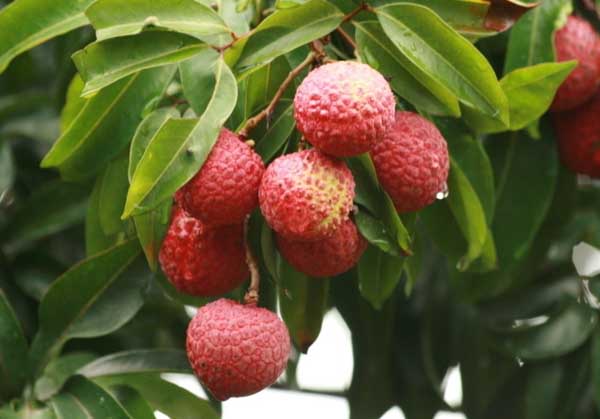
Litchi originates from southwestern, southern and southeastern China, with cultivation being most extensive in Guangdong, Guangxi and southern Fujian. It is also cultivated in southeastern Asia, and there are records of its introduction in Africa, the Americas and Oceania.
Construction of a Litchi Plantation
1. Choose a good site. For high-yield litchi cultivation, it is ideal to choose hilly or sloping land with an open terrain, a slope below 30 degrees, loose and fertile soil, and a water source as the development plantation.
2. Do good planning. For the selected site, variety selection must be carefully carried out, along with planning of divisions, roads, irrigation and drainage systems, fertilizer storage areas, shelterbelts and auxiliary buildings, so as to facilitate standardized management of the orchard.
3. Reasonably determine planting density. Generally, for hilly land, a row and plant spacing of 3.5×3.5 m or 3.5×4 m, with 50-60 plants per mu, is a relatively reasonable density.
4. Dig large holes and apply sufficient base fertilizer. For orchards reclaimed on hilly land, according to the row spacing specifications, form contour terrace strips or contour trenches. Then, according to the selected plant spacing, dig planting holes at fixed points. The specifications of the holes are 1 m in length, width and depth, and for each hole apply 40 kg of composted and fully decomposed organic fertilizer such as garbage fertilizer, green manure, barnyard manure, and pig and cattle dung as base fertilizer.
5. Plant carefully. When planting, hold the seedling with one hand and gently backfill fine soil with the other, covering to about 2 cm above the roots, water thoroughly to settle the roots, then continue backfilling. When the backfilled soil is about 10 cm above the ground, form a tree basin, then cover with thatch or stem grass to retain moisture. Set up a support beside the seedling to prevent wind from shaking the seedling loose and causing death. After planting, water once every 3 days on sunny days, pay attention to drainage to prevent waterlogging on rainy days, and check survival after 30 days and replant in time.
Management of Young Litchi Trees
On the basis of improving survival rate, increase root mass, expand the range of root growth and increase the green leaf layer, cultivate strong and evenly distributed scaffold branches, expand the canopy, and lay a foundation for early fruiting and high yield.
1. Fertilization should follow the principle of frequent but light application. Soil fertilization begins one month after planting. Within two to three years, the main goals are to increase root mass, promote shoots and strengthen shoots. It is advisable to follow "two fertilizers per shoot" or "three fertilizers per shoot": when the terminal bud of the branch begins to swell, apply quick-acting fertilizer mainly composed of nitrogen to promote normal growth of new shoots. When the new shoot has basically stopped elongating and the leaf color changes from red to light green, apply the second fertilizer to promote rapid greening of the branch, improve photosynthetic efficiency, thicken the branches and thicken the leaves. After the new shoot turns green, apply the third fertilizer to accelerate maturation of the new shoot, shorten the shoot period and facilitate multiple new shoot flushes. The amount of fertilizer depends on soil properties and the size of the young tree. After planting, when the tree is small and has few roots, apply about 25-30 g of compound fertilizer, 20-25 g of urea, 15-20 g of potassium chloride and 50-75 g of superphosphate per plant each time, either separately or mixed; when mixed, reduce the amounts as appropriate. From the second year onward, the amount of fertilizer should be increased accordingly, by about 40-60% over the previous year. In addition, according to tree growth conditions, foliar fertilizer can be sprayed during periods of rapid shoot growth. Commonly used ones include 0.3%-0.5% urea, 0.3%-0.5% monopotassium phosphate, 0.3%-0.5% magnesium sulfate, 0.02%-0.05% borax, 0.05%-0.1% boric acid, 0.1%-0.6% zinc sulfate and 1%-3% superphosphate extract. 2. Irrigation and drainage. Young litchi has few and shallow roots and is greatly affected by high moisture in the surface soil. One-year-old litchi saplings often show "dieback" phenomenon, especially for air-layered seedlings that have already sprouted one or two new shoots after planting and then had water management relaxed; the "dieback" is even more serious. Therefore, attention should be paid to watering and moisturizing in dry weather, and preventing water accumulation in the tree basin in rainy weather.
3. Loosening and improving the soil. Litchi mycorrhizae are aerobic, and only loose and aerated soil can promote root development. Tillage in young orchards is mostly carried out in combination with intercropping, with soil loosening and weeding six or seven times a year. From the second year onward, deep plowing should be carried out in hilly litchi orchards, combined with the application of organic fertilizer to expand holes and improve the soil. For litchi orchards with a high water table, attention should be paid to adding foreign soil and earthing up to thicken the soil layer.
4. Interplanting and ground cover. Young and maturing litchi orchards should make full use of space for interplanting and relay intercropping. Soil cover can lower soil temperature in summer, keep warm in winter, prevent drought and retain moisture, reduce weed growth and increase soil organic matter. Covering methods can include planting green manure and growing grass, then cutting and covering the soil surface in the dry season, or burying it in the root-zone soil layer. Dead cover usually uses field weeds, crop stalks, etc. to cover the tree basin, with a thin layer of soil on top.
5. Training and pruning young litchi trees. Training and pruning should focus on cultivating 3-4 main branches so that their growth angles are appropriate and their distribution is even. The pruning principle is to prune lightly rather than heavily, mainly removing crossing branches, overly dense branches, curved branches, weak and small branches, and flower spikes that are not allowed to bear fruit, so that nutrients are effectively used to expand the canopy. Branches that may or may not be pruned should be temporarily retained. Pruning should be carried out before new shoots sprout. Training and pruning can use methods such as branch pruning, pinching, branch bending, branch hanging and propping open.
6. Cold protection and tree protection. If the temperature drops below -2°C in winter, frost damage will occur, especially for young trees that flush many shoots, stop growing late, and have shoots and leaves that are not fully matured before the cold arrives, resulting in low cold resistance. Measures can include promoting early full maturation of the last shoot and preventing winter shoots from sprouting after November; covering the top of the young tree canopy with rice straw to prevent frost; piling grass and leaves in the litchi orchard and, according to forecasts, smoking before frost arrives to prevent frost; and covering the soil surface within the root growth range with green manure, crop branches and leaves, or garbage, then covering with a thin layer of mud.
Management of Fruiting Litchi Trees
1. Scientific fertilization. 6 According to recent research on the mineral nutrition of litchi, for a 15-20-year-old tree producing 100 kg of fresh fruit, the annual fertilizer requirement is: N 1.6-1.9 kg, P2O5 1.2-2.0 kg, K2O 2.5-3.5 kg. Annual fertilization is mainly divided into three periods.