Where is sugarcane produced? Main producing regions and origins explained
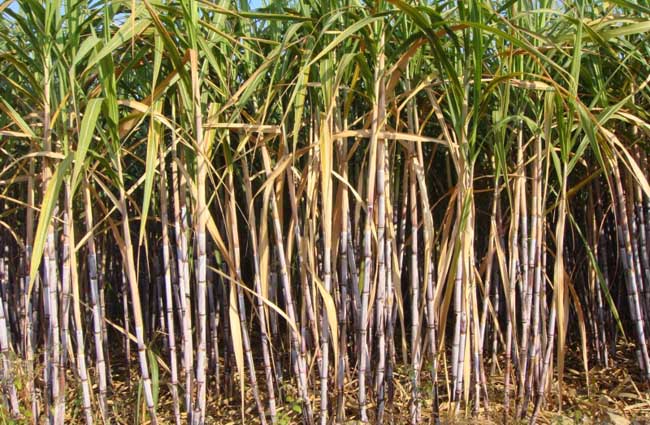
Sugarcane originated in India and is now widely grown in tropical and subtropical regions. The country with the largest sugarcane planting area is Brazil, followed by India, with China in third place; other countries with large planting areas include Cuba, Thailand, Mexico, Australia, and the United States. China's sugarcane regions are mainly distributed across Guangxi (accounting for 60% of national output), Guangdong, Taiwan, China, Fujian, Sichuan, Yunnan, Jiangxi, Guizhou, Hunan, Zhejiang, Hubei and other provinces (autonomous regions). Sugarcane can also be grown in some parts of northern China, with successful cultivation only in parts of Liaoning, Hebei, Shandong, and Tianjin.
The origin of sugarcane may be New Guinea or India, and it later spread to the Malay Archipelago. It was introduced to southern China around the time of King Xuan of Zhou in the Zhou Dynasty. In the pre-Qin era, "zhe" referred to sugarcane; the character "zhe" for sugarcane did not appear until the Han Dynasty, and the pronunciations of "zhe" and "zhe" may come from the Sanskrit sakara. From the 10th to the 13th century (Song Dynasty), sugarcane was widely planted in the provinces south of the Yangtze River; throughout Indochina and the Malay Archipelago, such as Chenla, Champa, Srivijaya, and Sujidan, sugarcane was also widely grown for sugar production.
When Alexander the Great campaigned eastward into India, one of his generals said that India produced a grass that could yield honey without bees. In the 6th century AD, Khosrow I (the Immortal Soul), king of the Sasanian Empire in Iran, introduced sugarcane to Iran for cultivation. From the 8th to the 10th century, sugarcane cultivation spread throughout Iraq, Egypt, Sicily, the Iberian Peninsula, and other places. Later, Portuguese and Spanish colonists brought sugarcane to the Americas.
By use, it can be divided into fruit sugarcane and sugar sugarcane; by outward shape, it can also be divided into "Black King Kong" sugarcane and "Black Green Kong" sugarcane. Fruit sugarcane is sugarcane intended specifically for fresh eating, and it has characteristics such as being relatively easy to tear, low in fiber, moderate in sugar content, crisp stalks, juicy and delicious, good taste, as well as thick stalks, long nodes, and an attractive stalk shape. Sugar sugarcane has a higher sugar content and is the raw material used for making sugar, generally not sold for fresh eating on the market. Because its skin is hard and its fiber is coarse, its taste is relatively poor, and it is only occasionally eaten fresh in producing areas.