Detailed Guide to Citrus Planting Techniques and Orchard Management Methods
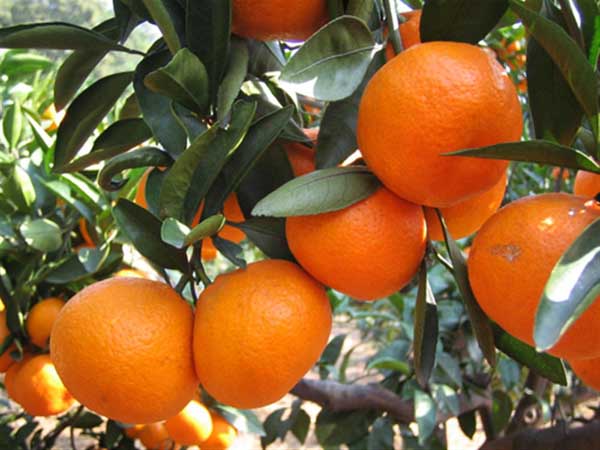
Citrus fruits are rich in nutrients and excellent in color, aroma and taste. They can be eaten fresh and also processed into various processed products, mainly juice. Citrus ranks first among all fruits in production, and citrus juice accounts for 3/4 of fruit juice, making it highly favored by consumers. Citrus is long-lived, high-yielding and stable-yielding, and highly profitable. It is the most important tree species among fruit trees in southern China and plays a major role in helping fruit farmers escape poverty and become prosperous and in rural economic development.
Seedling Raising Techniques
1. Rootstock seedling cultivation
The seedling nursery should be chosen in a location with convenient transportation, flat terrain, a water source, and a gentle slope of 5° or less, or in paddy fields with convenient drainage and irrigation. It requires deep soil, good structure, and sandy loam or loam soil with a pH value in the range of 5.5 to 6.5. Water source and air pollution should be avoided, and it should be far from old citrus orchards. The rootstock should be a variety or type that adapts to local soil and climatic conditions, has strong affinity with the main cultivated variety, grows normally, has a well-developed root system, strong stress resistance, can bear early, produce high and stable yields, and be of high quality after grafting, and is free of quarantine pests and diseases. In Guangdong, Guangxi and Hainan, sweet orange, mandarin orange and ponkan mostly use sour orange, red tangerine (Jiangxi red tangerine) and red lemon as rootstock; in recent years, ponkan and navel orange using trifoliate orange as rootstock have shown early bearing and high yield. In Fujian, red tangerine is used as rootstock for mandarin oranges, and citrus is also used as rootstock for ponkan, mandarin orange and sweet orange. In Taiwan, China, mandarin orange and ponkan mostly use sour orange and red lemon as rootstock. In Guangdong, Guangxi and Fujian, pomelo rootstock is mostly sour pomelo. To obtain rootstock seeds, collect mature fruits, use a specially made fruit-splitting board or a small knife to cut them longitudinally into 6-8 segments, and squeeze out the seeds. Then put them into a bamboo basket or coarse cloth bag, add a small amount of plant ash, rub gently, and then rinse with water to remove fruit residue and pectin from the seed coat. Spread the cleaned seeds in a cool, ventilated place; they can be sown once the seed coat turns white. Fresh sowing is best; otherwise, dry storage or sand storage should be used for preservation. The seed content of rootstock fruits and the sowing rate. The sowing site should be carefully cultivated, fully plowed and harrowed to break up the soil, and sufficient base fertilizer should be applied evenly. Generally, 3750-4500 kg of pig manure, cow manure or high-quality compost, 225-375 kg of superphosphate, and 375-450 kg of lime are applied per hectare. Sowing methods include broadcast sowing and drill sowing. After sowing, the seedbed soil should be kept moist. After the seedlings grow 3-4 true leaves, water fertilizer should be applied frequently and lightly, and attention should be paid to the prevention and control of anthracnose, damping-off and citrus leaf miner and other pests and diseases. Rootstock seedling transplanting is divided into two types: newly planted seedlings and old planted seedlings. Newly planted seedlings are sown in the first winter or the following spring, transplanted from May to mid-July of the following year at a spacing of 20 cm × 12 cm, grafted in winter and spring, and leave the nursery in autumn; the entire seedling raising period is two years. This method requires strengthening fertilizer and water management so that the rootstock grows rapidly and can leave the nursery in time. Old planted seedlings sown in winter are transplanted in the autumn and winter of the following year or in the spring of the third year at a spacing of 25 cm × 12-15 cm; those sown in spring are transplanted in autumn and winter or after the spring shoots mature in April-May of the following year. After 9-15 months of growth, winter-spring grafting is carried out, and the entire seedling raising period is two years.
2. Cultivation of grafted seedlings
Grafting can be done in all four seasons, but it is best before the Beginning of Spring. With warm winters and well-developed branches, grafting can be done earlier; otherwise, it should be delayed. For rapid seedling raising, summer grafting and autumn grafting can also be used, and should be carried out on sunny, warm days. Grafting is not suitable in rainy days when the soil is too wet or in weather with strong north winds. Summer and autumn grafting should avoid windy and rainy days and midday when sunlight is strong. For grafting methods, Guangdong, Guangxi, Fujian, Hainan and other places mostly use single-bud cut grafting or single-bud side grafting, with a survival rate of more than 90%. Grafted seedlings need shaping within the nursery, mainly to determine the trunk height and cultivate a certain number of scaffold branches. Summer shoots are topped to promote autumn shoots. In hot regions, topping is generally carried out around the Beginning of Autumn; in places where the Cold Dew wind comes early and drought is likely, or where seedlings leave the nursery in late autumn or early winter, it may be appropriately advanced. Topping can be done at the middle-upper part of the first summer shoot, choosing a position with uniform internode spacing and intact leaves, at 25-30 cm above the ground. If the spring shoot exceeds this height, cut it on the spring shoot. After topping, promptly remove scattered autumn shoots that sprout early. Only after most seedlings have 3-6 buds sprouting should shoots be released, so as to maintain balanced branch growth. When buds grow to about 3 cm, select and retain 3-5 strong main branches evenly distributed in all directions, and promptly thin out the rest. The standards for excellent grafted seedlings are: excellent and pure variety, free of huanglongbing and other quarantine diseases, strong branches and trunk, well-healed graft union, new planted seedlings more than 10 cm high (old planted seedlings more than 50 cm high), stem thickness more than 0.8 cm, and 3-5 evenly distributed main branches, leaves dark green and glossy, main root more than 15 cm long, with the largest number of fibrous roots of uniform thickness and bright yellow color, and balanced growth of the aboveground and underground parts of the whole plant.
3. Virus-free seedling cultivation. Hot regions have high temperature and high humidity, and citrus diseases, especially dangerous diseases, pose an extremely great threat. Raising virus-free seedlings is an important way to solve this problem. The main methods are:
(1) Heat treatment. Rootstock seeds are treated with hot water at 56 degrees C for 50 min; scions are treated with steam at 50 degrees C for 45 min; seedlings before spring sprouting are treated with steam at 49 degrees C for 50 min.
(2) Antibiotic treatment. Scions are soaked in streptomycin solution at 700 u/ml for 1 h; soaked in tetracycline solution at 1000 u/ml for 2 h; if the tetracycline solution at 1000 u/ml is heated to 46 degrees C, the soaking time can be shortened to 20 min.
(3) Shoot-tip culture. Using tissue culture technology, after removing the leaf primordia from the shoot tip of the scion variety, take a shoot tip of about 0.1-0.2 mm (a conical meristem without vascular bundle tissue) and place it in an appropriate medium to cultivate into a seedling.
(4) Micrografting. Use heat treatment and test-tube sowing methods to cultivate virus-free rootstock seedlings, then place potted seedlings of the scion variety in an artificial climate chamber (30-40 degrees C) and keep them for 2-4 weeks to promote new shoot growth. When the new shoots grow to several centimeters, take them<0.2mn的生长点嫁接到试管砧木苗上,育成脱毒苗。
Plantation Construction
1. Establishment of citrus orchards on sloping land. In Fujian, Guangxi, and western Guangdong and central and northern eastern Guangdong, citrus is mostly cultivated on mountainous and hilly sloping land. Choose gentle sloping land below 10-30° (preferably below 10°). In the southern subtropical region, southeast or northeast slope aspects are preferable; in tropical regions, north or northeast slope aspects are preferable. It should be close to a water source, convenient for transportation, and far from old citrus orchards or other places where Rutaceae plants grow. Then carry out orchard planning, including plot division, roads and drainage and irrigation system planning, soil and water conservation engineering planning, and windbreak forest establishment. Large orchards use 2-3 ha of the same slope aspect as one plot; in mountainous areas with larger slopes and complex terrain, plots can be nearly strip-shaped rectangles to maintain soil and water and facilitate mechanical cultivation. Generally, the main road of a large orchard is 6-8 m wide, branch roads are 3-4 m wide, and small paths within the area are 1-2 m wide. One longitudinal path is set every 50-100 m, and one transverse path every 20-30 m. The drainage and irrigation system includes three types: contour flood prevention ditches, longitudinal water ditches, and contour transverse drainage (storage) ditches. Contour flood prevention ditches are set above the sloping orchard, with a depth and width of 60-100 cm each, with a gradient of 0.1%-0.2%, and connected to the longitudinal water ditches; longitudinal water ditches are 50-60 cm wide, and contour transverse drainage (storage) ditches are 20 cm deep and 25-30 cm wide. On the inner side of transverse paths and the inner side of terrace surfaces, leave solid soil piers 10 cm lower than the ditch surface every 2-3 m to discharge excess water. For soil and water conservation engineering, terraces are built on slopes above 10°, contour trenching is used below 10°, and on gentler slopes planting can be done along contour lines. The effective range of a windbreak belt is about 20 times the height of the trees in the belt. The main windbreak belt should have no fewer than 4 rows of trees; on gentle slopes it is set on the windward side, and on sloping land and hill land it is built on the ridge top or the watershed at the top of the hill. Secondary windbreak belts can have 1-2 rows of trees and are set along orchard roads, drainage and irrigation systems, and the edges of ponds. Contour horizontal terraces are the best form of soil and water conservation for sloping citrus orchards. When establishing the orchard, the terrace width is determined according to the degree of slope. On steep slopes, single-row planting is generally used, with a terrace surface width of 3-4 cm; on gentler slopes, the terrace width is more than 6 m, and generally two or more rows can be planted. On slopes below 5°, contour trenching can be used for planting.