Detailed Explanation of Key Techniques for High-Yield Cultivation of Feizixiao Lychee
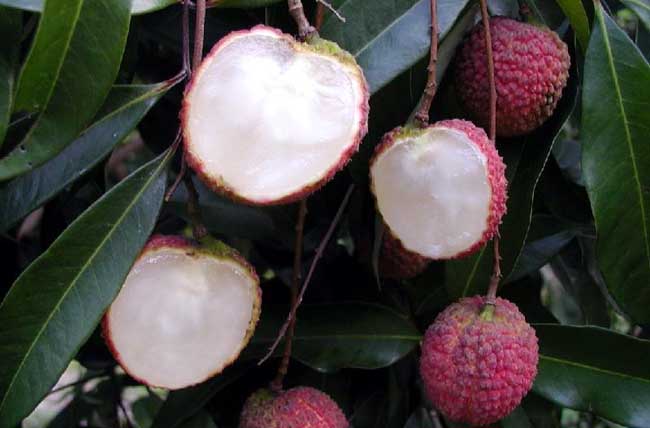
Feizixiao is a variety of lychee, also known by the aliases Luotangpu and Yuhebao. The late Tang dynasty poet Du Mu wrote: "A galloping horse raises dust, the imperial concubine smiles, no one knows it is the lychee arriving." This is how the Feizixiao variety got its name. This variety has large fruit, thick flesh, beautiful color, small seeds and sweet taste, with excellent quality and flavor. In Guangdong and other regions, this variety is one of the high-quality mid-to-early maturing varieties.
Variety Characteristics
Feizixiao lychee was originally an old variety from the Guangdong area (called Old Feizixiao), which generally had shortcomings such as low and unstable yield and poor stress resistance. The Feizixiao we are now actively promoting is a variety selected from superior individual mother trees (called New Feizixiao) by the Guangdong Province Lychee Science Popularization Base through more than ten years of production and scientific research practice. This variety has excellent qualities such as early fruiting, high yield, good yield stability, superior quality and high economic benefit, and is currently the lychee variety with the greatest development potential in Guangdong, Guangxi, Hainan and other places. Its main characteristics:
1. Growth Characteristics
① Vigorous and robust growth, with an open canopy, thick and long branches, and strong uprightness.
② Well-developed taproot and an extensive root system.
③ Leaves are long and elliptical; under conditions of sufficient fertilizer and water, young trees can flush 6-7 rounds of shoots per year.
④ Large inflorescences, long flowering branches and abundant flowers.
2. Fruiting Characteristics
① Early fruiting: generally trees bear fruit in the third year after planting (as young seedlings), which is 4-5 years earlier in coming into production than the existing local Wuye and Lanzhu varieties.
② High yield: there are 3-4 rounds of female flowers throughout the flowering period, and the number of female flowers generally accounts for 30-40% of the total flowers; it adapts relatively well to adverse climate and has a high fruit-setting rate. According to data from the Guangdong Province Lychee Science Popularization Base, planted in May 1987 and coming into production in 1989, the average annual yield per mu over the five years from 1989 to 1993 reached more than 863 kg, achieving high and stable yields year after year.
③ Superior quality: large fruit, small seed, thick and crisp flesh, fresh and sweet taste, with an edible rate of 76.4-80%.
④ Good price: the general market price is 2-3 times higher than that of other lychee varieties.
⑤ Easy to manage: through cultivation measures such as dwarfing, close planting and retractive pruning, tree height is generally controlled at about 2.5 m, which facilitates the daily management of the lychee trees and reduces production costs.
Promoting Shoots and Controlling Shoots
Promoting shoots and controlling shoots means promoting autumn shoots and controlling winter shoots. Because Feizixiao lychee has a well-developed root system and vigorous growth, it can flush 5-6 rounds of shoots per year. Generally, retractive pruning of 30-50 cm is carried out within 15-20 days after fruit harvest; after retraction, if fertilizer and water are sufficient, generally two rounds of shoots can be flushed, with the last autumn shoot emerging from late September to early October. It matures from late October to early November; such autumn shoots have a high flowering rate as fruiting mother branches for the coming year and are the foundation for high yield.
1. Girdling to Control Shoots
① Girdling time: after retractive pruning, the shoots that emerge are generally relatively uniform and neat; for individual shoots that emerge earlier or later and are not uniform, manual bud removal can be used to control them. When the second autumn shoot emerges from late September to early October and becomes fully mature from late October to early November, girdling can be carried out in batches.
② Girdling tool: this experimental base uses a carpenter's girdling knife (paper-cutting knife), grinding off part of the tip of a new blade.
③ Girdling method: generally, a relatively straight and level part is selected on the main trunk 20-30 cm above the ground for a complete ring of girdling. The girdling depth should be controlled between the bark and the phloem, without damaging the xylem of the trunk.
2. Chemical Control of Shoots
① Spraying time: the spraying time is the same as the girdling time, carried out when the second autumn shoot is fully mature.
② Chemical varieties: commonly used chemicals include ethephon, paclobutrazol, etc.; the dosage should be determined according to tree growth conditions and the weather and temperature at the time of spraying. According to comparative trials at the base, in dwarfed and closely planted orchards, chemical shoot control is less effective than manual girdling for shoot control.
Promoting Flowers and Preserving Fruit
1. Delaying the Flowering Period and Improving Quality
Through several years of production and scientific research practice, the second batch of flowers gives the highest fruit-setting rate for young Feizixiao lychee. Therefore, when the first flower panicle emerges in early February, all of it is removed, which can delay the flowering period, shorten the inflorescence length and increase the proportion of female flowers. For example, after the second flower panicle emerges from late February to early March, excess inflorescences are thinned and the panicles are shortened (generally leaving 15×15 cm), so as to reduce nutrient consumption of the tree and improve panicle quality.
2. Focusing on the Flowering Period and Improving the Fruit-Setting Rate
If the climate during the flowering period is normal, when the inflorescences are in full bloom in mid-April, the second batch of flowers is the most ideal; if adverse climate factors (such as excessive rain, high humidity, excessively high or low temperatures, etc.) cause a very low fruit-setting rate, then to obtain a certain yield that year, the key is to focus on the third and fourth batches of flowers. The experimental orchard at the mountain edge encountered this situation during the 2000 flowering period, and its main measures were: ① timely disinfection and sterilization to reduce sources of disease; ② applying fertilizer both below and above ground; because after two rounds of female flowers have opened, the tree has consumed a large amount of nutrients, so tree nutrient regulation must be carried out by heavily applying compound fertilizer to the soil and spraying the foliage with quick-acting foliar fertilizers such as plant nutrient solution, promoting the third and fourth batches of flowers to open from late April to early May; the fruit-setting rate of these flowers can still reach more than 80%, laying the foundation for stable and high yield that year.