How to Grow Mandarin Oranges for High Yield? A Detailed Guide to Cultivation Techniques
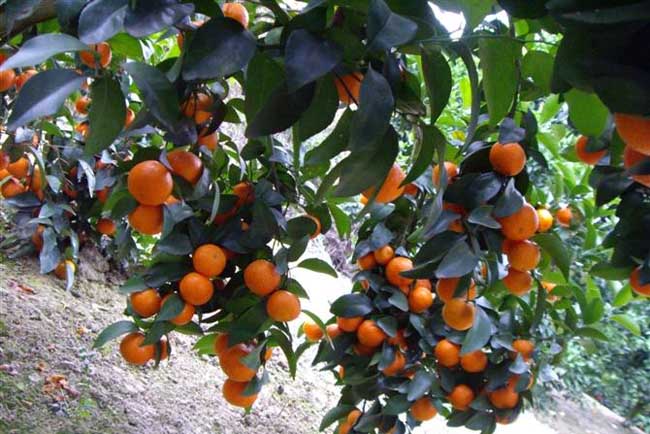
Mandarin oranges are characterized by early fruiting, high yield, and pure sweet flesh that melts in the mouth. They suit the consumption habits of Chinese people, and their market price is 1—2 times higher than other citrus fruits. The main cultivation and management techniques for mandarin oranges are introduced below.
Select Pure-Variety, Disease-Free and Pest-Free Strong Seedlings
For the strain, early-maturing varieties have good quality and high yield. Seedlings using trifoliate orange as rootstock are dwarfed, early-fruiting and high-yielding; seedlings using sour orange as rootstock grow upright and vigorously, and come into production late. The seedling height should exceed 40 cm, the thickness should be above 0.5 cm, with no quarantine pests or diseases (canker disease, huanglongbing), well-developed fibrous roots, and good compatibility between the scion and rootstock.
Choose the Right Land and Plant at a Reasonable Density
Mandarin oranges can grow and bear fruit normally in general soil, but to grow fast, fruit early, and achieve high and stable yields, a moist and fertile soil environment is required. Therefore, to develop mandarin orange cultivation, choose paddy fields, dry land, riverside alluvial land, or gully land with convenient transportation, ample water sources, irrigation and drainage capacity, and deep, loose, fertile soil. To achieve early high yields, when planting in fertile paddy fields or dry land, adopt a dwarfed, close-planting method, planting 200—300 trees per mu, with a spacing of 2 m × 1.5 m or 2 m × 1 m. In hilly land, plant about 100 trees per mu, with a spacing of 3 × 2 m. Production practice has proven that dwarfed close planting is an important technical measure for achieving early fruiting and high yield in mandarin oranges. After many years of high yield, the close-planted orchard will develop overlapping shading, and thinning can then be carried out.
Planting Methods
Mandarin oranges are generally planted in spring, in February to March. When developing mandarin oranges on fertile, deep-soil paddy fields or riverside alluvial soil, shallow pits can be dug for planting; for paddy fields, high beds should be built arranged by row and plant spacing. On poor dry land or sloping land, dig deep pits 1 m square, and prepare sufficient base fertilizer: apply 3 jin of phosphate fertilizer, 5 jin of lime, 100 jin of garbage sludge or pond sludge, and 30—50 jin of pig, cattle, or chicken manure per pit. When filling the pit, mix the fertilizer thoroughly with the soil before putting it back into the pit, and build the tree disc about 20 cm above the ground. Before planting, prune part of the branches and leaves of the seedling to reduce water evaporation, cut off the main root, and retain as many fibrous roots as possible. When planting, dig a shallow pit, let the fibrous roots spread out naturally, then backfill soil and compact it; the soil covering height must not bury the graft union. After planting, cover the tree disc with rice straw or other weeds, and water thoroughly to settle the roots. Within one month after planting, keep the soil near the roots moist. When the temperature is high, there is a long clear spell without rain, and the soil is dry, water every day; on rainy days when the soil is moist, no watering is needed.
Management of Young Trees
1. Fertilizer and Water Management
Young tree management centers on fertilizer and water management, to promote root growth, early and rapid shoot growth, and early formation of the tree canopy. Forty days after planting, new roots begin to grow; diluted decomposed manure water at 2—3 times strength can be applied, once every 10 to 15 days, 5 to 10 jin per tree. As the young trees grow, gradually increase the concentration and amount of manure water, and appropriately add urea dissolved in the manure water for application. Starting from the second year of planting, reduce the number of fertilizer applications and increase the amount of manure water
and chemical fertilizer each time: apply 30 jin of manure water and about 3 liang of urea each time. By September, stop applying nitrogen fertilizer and manure water, and apply potassium fertilizer once, with half a jin of potassium chloride per tree, to promote flower bud differentiation. At the same time, pay attention to soil moisture management.
2. Shaping and Pruning
The purpose of shaping is to give the mandarin orange tree a reasonable framework and a good tree shape with evenly distributed branches, so as to facilitate ventilation and light penetration, three-dimensional fruiting, reduce pest and disease damage, and lay the foundation for early fruiting and high yield. Mandarin orange shaping generally adopts the natural open-center form. The method is: after planting, cut back the trunk at 40 cm, and after it sprouts, select and keep 3 branches growing in different directions as main branches, with the main branches at a 45° angle to the vertical line of the trunk. If a main branch is too upright, use rope to widen the branching angle. After the main branches mature, cut them back leaving 30 cm, then select and keep 3 secondary main branches growing in different directions on each main branch. This method can be used thereafter to extend the tree's skeletal branches. Erect branches growing on the skeletal branches such as main branches and secondary main branches should be cut off, while weak branches should be appropriately retained as auxiliary branches. Mandarin oranges have strong sprouting ability and relatively dense branches; generally keep 3 to 4 shoots per flush and thin out all the rest. To make summer shoots and autumn shoots emerge uniformly, remove buds to control shoots: that is, when only scattered branches in the whole orchard have sprouted, remove the tender buds to stimulate lateral bud germination, and only when 80% of the branches in the whole orchard have sprouted should the shoots be released uniformly, which facilitates pest and disease control.
Young Fruiting Trees
1. Fertilizer and water management. Young fruiting trees are fertilized three times: fruit-setting fertilizer. After flowering, the tree body has consumed a large amount of nutrients and needs timely replenishment; apply 50 jin of manure water per tree, or half a jin each of compound fertilizer and urea.
(2) Fruit-swelling fertilizer. July to August is the period of rapid fruit expansion and also the early stage of autumn shoot emergence. Nitrogen, phosphorus, and potassium should be applied in combination: use 1 jin of compound fertilizer and half a jin each of urea and potassium fertilizer per tree.