Detailed Explanation of High-Efficiency Cultivation Techniques for Seedless Watermelon
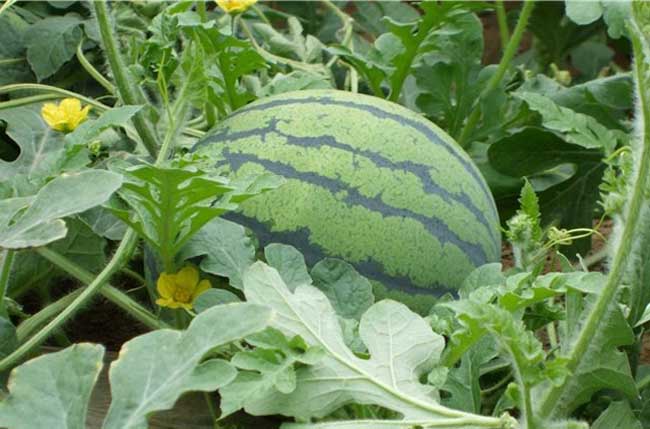
The growth of seedless watermelon is largely the same as that of ordinary watermelon, so its cultivation techniques are similar to those for ordinary watermelon. However, seedless watermelon also has many unique characteristics, such as a low seed germination rate, a low seedling survival rate, slow early growth, vigorous growth in the middle and late stages, pollen abortion, and a low natural fruit-setting rate. Therefore, corresponding technical measures must be taken in cultivation management to achieve high yield and high efficiency.
Melon Field Preparation
Although seedless watermelon is not strict about soil requirements, from the perspective of high yield and high quality, it is still necessary to artificially create a better and suitable environmental condition for its high yield. Because seedless watermelon is afraid of continuous cropping, afraid of waterlogging, afraid of drought, and has a well-developed root system, when selecting a melon field, choose a field with high and dry terrain, abundant sunlight, deep soil layer, good permeability, and convenient drainage and irrigation, so as to ensure the normal growth and development of seedless watermelon. After the soil thaws in early spring, harrow the melon field finely and level it, dig melon furrows according to the predetermined row spacing, with both depth and width of 30 cm. Irrigate enough bottom moisture water, apply 4000--5000 kg of high-quality decomposed farmyard manure per mu in the furrows, 50 kg of nitrogen-phosphorus-potassium ternary compound fertilizer, or 50--60 kg of special watermelon fertilizer, and spray phoxim for disinfection, then close the ridges, make beds, and cover with film. This work should be carried out 5--7 days before transplanting.
Sowing and Seedling Raising
Seedless watermelon seeds have higher temperature requirements for germination and emergence than seeded watermelon, grow slowly before the two-leaf stage, and the seedlings have weak cold resistance, so at present seedling raising and transplanting are generally used for production, and direct seeding cultivation is also carried out in a few places.
1. Seedbed preparation: Build a seedbed in a greenhouse or small arched shed. The seedbed is generally 1.2 m wide, 15-20 cm deep, and 8-12 m long. On the north side of the small arched shed seedbed, use sorghum or corn stalks to make a windbreak. Nutrient soil is generally prepared in a ratio of four parts field soil to one part decomposed stable manure, add an appropriate amount of thiophanate-methyl and trichlorfon for disinfection, mix thoroughly, sieve, put into nutrient pots, and cover with film to increase temperature.
2. Seed soaking and germination acceleration: First pour boiling water and cold water into a clean basin at a ratio of 2 to 1, adjust the temperature to about 55-60°C, put in the seeds and stir quickly until the temperature drops below 40°C, then stop stirring, and continue soaking the seeds for 1-1.5 hours. Remove and rub and wash repeatedly to remove the sticky substances on the seed surface. Because the embryo of seedless watermelon seeds is not fully developed and the seed coat is relatively thick, germination is difficult, so before germination acceleration, shell cracking treatment should be taken to increase the germination rate. Generally use teeth to gently crack open one third of the suture line at the hilum, or use a nail clipper to clip open the hilum, taking care not to damage the seed embryo. Also do not crack the hilum open too much, so as to avoid the seed coat falling off during germination acceleration. Wrap the cracked seeds in a wrung-out wet cloth and place them in a constant-temperature incubator at 33-35 degrees for germination acceleration. After 20--24 hours, pick out the germinated seeds and continue germination acceleration for the remaining seeds. In rural areas, heated kangs, electric blankets, or stoves are generally used for germination acceleration, but temperature and humidity must be well controlled to ensure smooth seed germination. During germination acceleration, special attention should be paid to:
① Maintain suitable humidity; do not add water or rinse at will, to prevent excessive moisture in the germination bed and seeds, which can cause seed or sprout rot, and also do not let the seedbed humidity become too low, to prevent the seeds from drying out.
② Maintain a relatively constant temperature and prevent drastic temperature changes. A sharp drop in temperature or excessively high temperature can cause the germinating seeds to lose their germination ability.
③ Keep the seeds ventilated and breathable; do not carry out germination acceleration in tightly closed, airtight containers or plastic film.
3. Sowing: In North China, it is suitable to sow at the end of March and the beginning of April, and irrigate thoroughly with bottom moisture water the day before sowing. Sowing should be carried out under clear and windless conditions. When sowing in holes, use a small wooden stick to make a small hole in the center of each nutrient pot, then place the seed flat in the seedling soil with the small sprout facing downward and close to the wall of the hole. Sow one seed per nutrient pot, and promptly cover with sieved fine soil, with a thickness not exceeding 1 cm. Start sowing from one side of the seedbed, covering with film while sowing.
4. Seedbed management: The seedling stage of seedless watermelon is generally about 30 days. According to the rules of germination and seedling growth, seedbed management can be divided into three stages: The first stage, from sowing to the cotyledons emerging and slightly unfolding, with the focus of management on increasing temperature and "removing the cap." During the day, keep the temperature at 30-35°C; at night, appropriately add straw curtains for cold protection, and keep the nighttime ground temperature at 18-20°C. Seedless watermelon emerging with the shell is a common phenomenon during seedling raising. Every morning, while the seed coat is moist and soft, use both hands or tweezers to gently remove the seed coat, taking care not to injure the cotyledons and young stem. The second stage, from the cotyledons slightly unfolding to the first true leaf appearing, with the focus of management on controlling water and lowering temperature to prevent high-temperature spindly growth and the formation of tall-legged seedlings. During this period, the daytime temperature should be controlled at about 25°C, and the nighttime temperature at 15-20°C. If the temperature is too high, open the film opening for ventilation to cool down. The ventilation position is generally on the leeward side, and ventilation is generally carried out from about 10 a.m. to about 4 p.m. The third stage, from the seedling breaking the heart to 2-3 true leaves, with the focus of management on temperature and humidity. The seedbed temperature is appropriately raised to 25-30°C, and the ventilation time is appropriately extended. Remove the film 3-5 days before transplanting to harden the seedlings and enhance the stress resistance of the seedlings. Strictly control humidity during the seedling stage. As long as the seedbed has sufficient bottom water, try not to water. If water shortage occurs, use a watering can to sprinkle water on a sunny morning to maintain a certain humidity. Water thoroughly once on the afternoon of the day before transplanting to prevent the soil ball from breaking apart and damaging the roots during transplanting. In addition, promptly remove weeds and spray pesticides to control damping-off disease and various pests.
5. Arrangement of pollinator varieties: The male flowers of seedless watermelon have poorly developed pollen and almost no vitality, and cannot stimulate the development of the female flower ovary. Only with the stimulation of pollen from ordinary watermelon can seedless watermelon grow. For pollinator varieties, it is advisable to choose excellent local main-cultivated seeded watermelon varieties. The skin color of the fruit should differ from that of the seedless watermelon for easy identification. The ratio to seedless watermelon is generally 9-10 to 1. In order to make the flowering periods of the pollinator varieties and the seedless watermelon coincide, the pollinator varieties should be sown 3--5 days later.