When do pomegranates ripen? An introduction to their ripening time
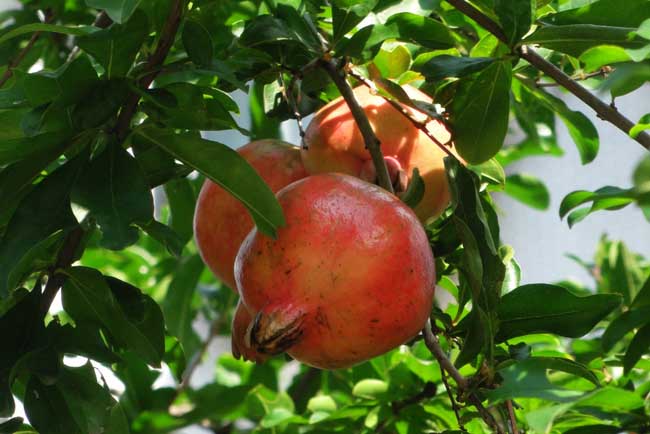
The pomegranate is a deciduous tree or shrub of the genus Punica in the family Lythraceae. The history of pomegranate cultivation in China can be traced back to the Han Dynasty; according to Lu Gong's records, it was introduced from the Western Regions by Zhang Qian. It is cultivated throughout the north and south, with larger planting areas in Anhui, Jiangsu, Henan and other places. Among them, Huaiyuan County in Anhui is the hometown of Chinese pomegranates. Let's take a look below at when pomegranates ripen!
When do pomegranates ripen?
The flowering period of pomegranates is from May to June, and they ripen from September to October. Flowering pomegranates bloom from May to October, and after ripening they become large, multi-chambered, many-seeded berries. Each chamber contains numerous seeds; the outer seed coat is fleshy, bright red, light red or white, juicy, sweet with a touch of sourness, and this is the edible part. The inner seed coat is horny, though some have degenerated and softened, namely soft-seeded pomegranates.
Where are pomegranates grown?
The pomegranate originated in the Balkan Peninsula, Iran and adjacent areas, and is now grown in temperate and tropical regions worldwide. In China, large communities of wild ancient pomegranates are also distributed on the barren slopes along both banks of the Chawo River in the Three Rivers basin at an altitude of 1700-3000 m. The planting area is relatively large in Jiangsu, Henan and other places, and some rather high-quality varieties have been bred. The pomegranate likes a warm, sunny environment; it is drought-tolerant, cold-tolerant and also tolerant of barren soil, but not tolerant of waterlogging or shade. It is not strict about soil requirements, but sandy loam with good drainage is best for cultivation.
Reasons why pomegranates do not bloom
1. The pomegranate is a sun-loving plant, so the place where the potted flower is placed must receive sunlight often; even in summer it does not mind being in the sun all day. Placing the potted pomegranate in a shaded spot is one of the main reasons it will not bloom.
2. The pomegranate should only be watered after the potting soil has dried. Although overly moist potting soil does not affect growth, watering must wait until the soil is dry in order for it to bloom.
3. In ordinary care, apply less nitrogen fertilizer and more phosphorus fertilizer to pomegranates. After fruiting, the fertilizer concentration should be dilute and applied more frequently. Chicken or duck manure or fish offal is often fermented and then diluted with water for use to supply phosphorus fertilizer, but excessive fertilizer causing rampant plant growth is also one of the reasons for failure to bloom and fruit.
4. When the pomegranate reaches its flowering period but shows no flowers, necessary pruning can be carried out, and at the same time the terminal buds at the tips of the branches should be removed. This can both inhibit the plant's endless growth and promote new lateral buds to produce lateral branches. Generally, flower buds appear about one week after pruning.