Detailed Explanation of Hami Melon Cultivation Techniques and Management Methods
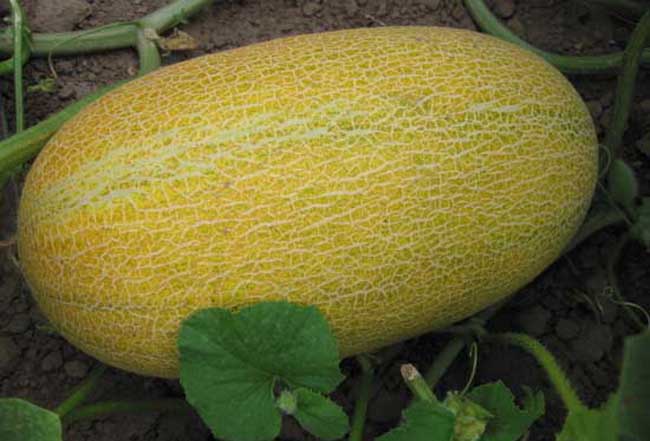
Hami melon is a variation of the melon. Also known as snow melon and tribute melon, it is a class of excellent melon varieties, with round or oval fruit shapes, produced in **. It is sweet in taste and large in fruit size, and the one produced in Hami is the most famous, hence the name Hami melon. Because it tastes sweet and also belongs to the honeydew melon category, Hami melon is often mistakenly written as "honey melon" (“hamigua”).
Pre-Sowing Preparation
1. Land selection and land preparation. Melon fields are best as fallow land or abandoned land; land that has previously grown melons requires a crop rotation period of more than five years; the previous crop is preferably a grain crop; and it is strictly forbidden to plant Cucurbitaceae, Fabaceae, or Solanaceae crops around the melon field. The melon field should be selected with soil of medium or higher fertility; the soil texture is preferably loam or sandy loam; the soil organic matter content should be above 1.0%; available phosphorus content 10 ppm; available potassium content 150 ppm; alkaline hydrolyzable nitrogen 50 ppm; total salt content around 0.5%; and soil pH between 7 and 8. The melon field is best subjected to summer plowing and autumn plowing before the new year, with a plowing depth of more than 25 cm, and winter irrigation to help suppress alkali and mature the soil, and to eliminate weeds and overwintering pests.
2. Applying base fertilizer and opening melon trenches. After the beginning of spring, mark out trench lines along the contour lines of the melon field, with a trench spacing of 4-4.5 m and a trench length not exceeding 30 m. Open fertilizer trenches on both sides 60 cm from the center line of the melon trench, with a trench depth of more than 25 cm. Apply 2000 kg of high-quality decomposed organic fertilizer per mu, plus an appropriate amount of chemical fertilizer mixed evenly. Chemical fertilizer amounts: ammonium nitrate 20 kg, triple superphosphate 25 kg, or diammonium phosphate 20 kg, ammonium nitrate 15 kg, humic acid compound fertilizer 50 kg, or humic acid compound fertilizer 100 kg. After the fertilizer is applied into the trench, mix it evenly with soil. Open trenches along the center line of the melon trench, with a trench depth of 0.5-0.6 m, an upper width of 0.9-1 m, and a bottom width of about 30 cm. The melon trenches are required to be level, straight, and consistent in the water line, with no large clods of soil or plant roots and stems.
3. Pre-sowing irrigation. Irrigate 5-7 days before sowing. Irrigating well before sowing is the key to ensuring uniform and complete seedlings, and it must be watered sufficiently and thoroughly; generally above 80 cubic meters per mu.
4. Mulching with plastic film. Select transparent film or silver-gray film 70-90 cm wide to cover both sides of the melon trench, laying it upward along the trench wall at a distance of 10 cm from the trench bottom. The plastic film is required to fit closely against the ground and the trench wall, and to be pressed flat, tight, and firm. Generally, the film is laid first and then sowing is done. To avoid the harm of late frost, sowing can be done by digging holes first and then covering with film, but the film must be broken in time to free the melon seedlings. Otherwise, it is likely to cause seedling burn and missing plants.
5. Selecting improved varieties. The currently approved new varieties Xinmiza No. 7 (8601), Xinmi No. 11 (86-1), Xinmi No. 13 (New Queen), Xinmi No. 15 (Xiangfeimi), and Xinmi No. 23 (Jinmibao) should be selected.
6. Seed treatment. Before sowing, do a good job of seed selection. Both variety purity and seed germination rate should be above 95%. Soak seeds in 200-fold formalin for 2 hours, then rinse with clean water 2-3 times. In areas where viral diseases occur severely, seeds can be mixed with a 2% aqueous solution of trisodium phosphate, or seed dry-heat sterilization can be used, that is, first treat at a constant dry heat of 40°C for 24 hours, then treat at 70°C dry heat for 5 days, and then carry out germination acceleration before sowing. To prevent underground pests, after the above seed treatment, 100-fold liquid of 50% zinc sulfur phosphorus emulsifiable concentrate can be evenly sprayed on the seeds, left to stand in a cool place for 1-2 hours, and then sown.
Sowing
Sow at the appropriate time. Generally, sowing can be done after the late frost has passed and when the soil temperature at a depth of 10 cm below the soil surface is stable at about 14°C. For melon fields using plastic film mulching, sowing can be done around April 20. If plastic film mulching is not used, the sowing period can be appropriately postponed. For winter melons intended for storage, the sowing period can be delayed to around May 20.
The sowing method can adopt hole sowing by punching holes. Along the water mark line of the melon trench, dig holes manually, with hole spacing depending on the maturity of the variety. For early and medium-maturing varieties with single-vine pruning, the plant spacing is 0.45 m; for medium-late and late-maturing varieties with double-vine pruning, the plant spacing is 0.6 m. The sowing depth depends on differences in soil texture and soil moisture. Where the soil is highly sandy and moisture is insufficient, sowing can be appropriately deeper and the covering soil slightly thicker; where the soil is heavy and moisture is better, sow shallowly and cover with thinner soil. Generally, the sowing depth is 3-4 cm. Sow 2-3 seeds per hole.
Building the Shed
For protected small-arch-shed cultivation of Hami melon, before building the shed it is necessary to prepare the land, open trenches, apply base fertilizer, irrigate, and lay film early.
1. Purchase arch-shed frame materials in advance. Bamboo strips, bamboo poles, or cold-drawn wire can all be selected as arch-shed frame materials, but bamboo strips have the best arch-shed effect. Bamboo strips are about 2-4 cm wide and 250-280 cm long. Before use, sharpen both ends for insertion into the ground.
2. Purchase arch-shed plastic, with a plastic width of 220 cm. Purchase hemp rope and plastic rope to connect each arch frame, with a distance of about 150 cm between each arch frame.
3. The arch-shed height is about 100 cm to facilitate workers entering for operations. After the arch frames are set up, plastic can be covered. The plastic must be flat and stretched to ensure good light transmission. After the plastic is covered, compact both sides with soil, and fix the arch shed with hemp rope or plastic rope pulled diagonally to prevent strong winds from damaging the arch shed.
4. Ventilate in time to ensure normal growth of melon seedlings. The ventilation duration and vent size depend on the temperature inside the shed and the temperature outside the shed. When the temperature inside the shed reaches 35°C, ventilation should first be carried out from both ends of the arch shed. As the temperature outside the shed rises, ventilation should also be gradually carried out from both sides. Ventilation must not be too rapid or too fast, so as to avoid wilting of melon seedlings or water loss, thereby inhibiting melon seedling growth. The vents go from small to large, from one vent to multiple vents, to carry out adaptive training during the seedling stage. When the temperature inside the shed is the same as the temperature outside the shed, the arch-shed plastic can be completely removed, so that Hami melon can normally extend vines, bear fruit earlier, and reach the market earlier.