A detailed guide to fig cultivation techniques: planting and management methods made easy to understand
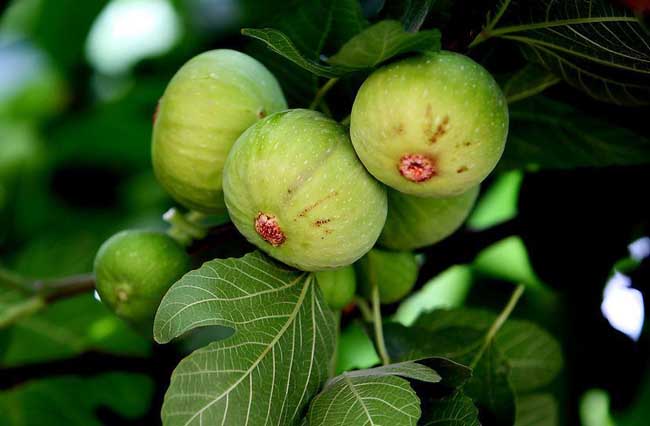
The fig is also known as the milk fig. Its fruit is soft and sweet, with a distinctive flavor, rich in fructose and glucose that are easily absorbed by the human body, and its content of carotene and vitamin C is also relatively high; it also contains a variety of digestive enzymes that aid digestion, making it a very good health fruit. At the same time, traditional Chinese medicine holds that the fig fruit is sweet and neutral in nature, with various effects such as stimulating the appetite, moistening the intestines, reducing inflammation, detoxifying, promoting lactation, stopping diarrhea and treating hemorrhoids. There are many folk remedies, often using the branches, leaves, roots and fruit as medicine. In recent years, experiments on mice have shown that figs also have a certain anti-cancer effect. Ripe figs do not keep well for storage and transport, but they can be processed into various products such as candied fruit, jam, dried fruit and canned fruit in syrup.
Figs are easy to propagate, simple to manage, bear fruit early and have few pests and diseases; their branches and leaves are smooth and clean, and they have a strong ability to absorb and resist toxic gases such as sulfur dioxide, so they can eliminate pollution and purify the air, and their root system is tolerant of relatively heavy salinity and alkalinity (generally up to 0.3%-0.4%). Therefore, developing fig production in front of and behind homes, around factories and mines, and especially in the vast coastal tidal flat areas, has great prospects.
Main species and varieties
The fig belongs to the Moraceae family, genus Ficus, and only the fig itself is cultivated as a fruit tree. According to whether normal fruiting requires pollination and according to flower type, it can be divided into 4 groups or varieties. Most cultivated varieties belong to the common fig group, in which the syconium contains only female flowers and can set fruit parthenocarpically without pollination. According to the ripening and harvest period of the fruit, it can also be divided into three types: autumn-fruit-only type, summer-fruit-only type, and summer-autumn dual-purpose type.
The varieties currently planted in China are basically introduced from Europe, America and Japan; some original names have been forgotten, and different names have been given. Cultivated varieties in the middle and lower reaches of the Yangtze River include Brunswick, Brown Turkey, California Black, Banshoshi, Masui Dauphine, Albania No. 1, Xinyang 88 and Lukang No. 1, among others. Winter temperatures in North China are relatively low, and figs are prone to freezing, so attention should be paid to variety adaptability when introducing them.
Growth and fruiting habits
The fig is a subtropical deciduous shrub or small tree, and under suitable conditions a long-lived one can also grow into a large tree. The fig root system is well developed, drought-resistant and salt-tolerant, and prefers aeration while avoiding waterlogging. Branches grow quickly and branch little, with only a few buds at the branch tips extending upward and outward each year. On new shoots, except for the several basal nodes, most leaf axils can form 2-3 buds, one of which is round and large and is a flower bud. After entering the fruiting stage, except for water sprouts, almost all new shoots in the canopy can become fruiting shoots. Therefore, after planting, it can begin bearing fruit in 2-3 years, and can enter full bearing in 7-10 years.
The flower buds further differentiate and develop, becoming the unique syconium fruit. The syconium fruit is fleshy and sac-like, with a small opening at the top concealed by surrounding scales. On the inner wall of the syconium are arranged thousands of tiny flowers, forming a syconium inflorescence, so from the outside only the fruit is seen and not the flowers. The tiny flowers can set fruit parthenocarpically without pollination. The edible part is actually a multiple fruit formed by the syconium and the many tiny fruits enclosed within it all enlarging together.
The fruit development period is 50-60 days. Fruits in the middle and lower parts of new shoots ripen in autumn of the same year in the Yangtze River basin and are called autumn fruits. Fruits on the upper part of new shoots that develop relatively late mostly do not have time to ripen and shrink and drop when they encounter cold. The flower buds on the several nodes at the tips of new shoots differentiate in late autumn, are covered with scales, and can overwinter safely in areas with warm winters; after the weather warms in the following spring they continue to differentiate and develop and become summer fruits. Normally ripened summer fruits are generally of better quality. Depending on the ability to form summer fruits and autumn fruits, varieties belong to different types.
Characteristics of cultivation techniques
1. Propagation and planting. Fig branches root very easily and also readily produce root suckers, so methods such as cuttings, layering and division can all be used when propagating nursery stock. In production, cuttings are used for large-scale propagation of nursery stock, with an extremely high survival rate. In the Yangtze River basin, hardwood cuttings are carried out in mid-to-late March. Any branch with short internodes and a thickness of 1 cm-1.5 cm can be used as a cutting, and each cutting should carry 2-3 buds. For specific operating techniques, refer to grapes. Cutting beds should avoid continuous cropping to prevent the spread and damage of nematodes. If plastic greenhouses are used in winter to raise seedlings in nutrient bags, seedling formation can be advanced.
When establishing an orchard, suitable varieties should be selected according to different requirements and site conditions. For example, yellow varieties should be selected for canning processing, cold-resistant varieties should be selected in places with low winter temperatures (around minus 15 degrees), salt-resistant varieties should be selected for tidal flat land, and large-fruited varieties should be selected for marketing fresh fruit. Orchards should avoid continuous cropping.
The planting spacing is generally 3 m-4 m; in areas with good soil or a warm climate, where the canopy is large, the spacing between plants and rows can be expanded to 5 m-7 m. As for planting time in the Yangtze River basin, both autumn planting and spring planting are acceptable. Autumn planting should be earlier, and spring planting is best in mid-to-late March. Coastal tidal flat land is suitable for autumn planting, while the Huaibei area is suitable for spring planting.
2. Training, pruning and fertilizer and water management. Under normal conditions, the branches within a fig canopy are not dense, so it is suitable to train a delayed-open central-leader form or a natural open-center form with multiple main branches, and a shrub-like canopy branched directly from the ground can also be formed. When training, the nursery stock is headed at a height of 40 cm-50 cm, and afterward the whole tree retains 4-6 main branches, with or without a central leader. A certain spacing should be maintained between the main branches; each main branch is cut back each year to leave 40 cm-60 cm, and 2-3 sub-main branches are then arranged on it at appropriate intervals to expand the fruiting surface.
After the tree form is completed, each year only remove useless water sprouts, dense branches, drooping branches and dead branches, and retain as many strong branches as possible for fruiting. For varieties mainly producing autumn fruit, since the fruiting positions are mostly in the middle and lower parts of the current year's new shoots, the branches can be moderately shortened. The flower buds of summer-fruit varieties are mostly borne at the top of the branches, so in winter vigorous branches should not be shortened, so as not to affect yield. For fig trees with few branches or whose fruiting positions move outward year by year, heavier renewal pruning can be done in winter to promote new branches. Some branches can be cut back to leave 2-3 leaf buds at the base.