Detailed Explanation of Kumquat Cultivation Techniques and Management Methods
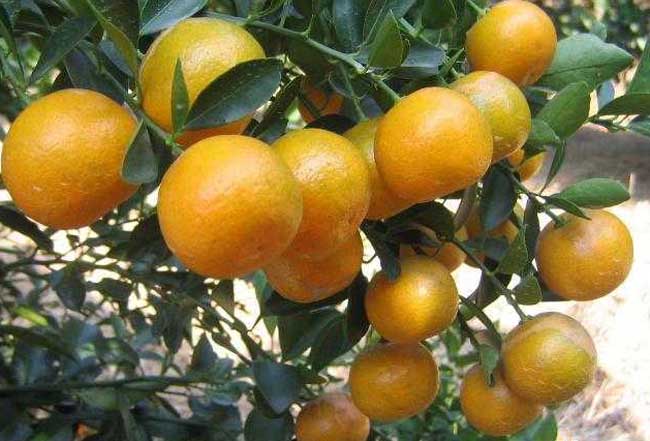
Kumquat Variety Classification
Kumquats are generally divided into two types: common kumquat and smooth-skinned kumquat. Let us first take a look at how these two types of kumquat differ!
1. Common Kumquat
The common kumquat (including names such as Huoyan, Jin, Mi, Xiu, Jingan, Jindan, Jinzao) belongs to the Rutaceae family. It is a thorny evergreen shrub, with a tree height of over 1 m, reaching up to 4 m at its tallest. The canopy diameter is about 2 m or more. The branches are round, slightly angular, with short internodes, about 1 cm between 9 nodes. The thorns are 3.2-3.8 cm long, with sharp tips, yellow in color, growing horizontally, emerging from beneath the leaves. The leaves are alternate and fairly densely arranged. The new leaf margins have slightly blunt serrations; the petioles are short with narrow wings. The flowers are white, with 5 petals, and a narrow small calyx. The flowering period is from June to September. The first flowering occurs around Grain in Ear (Mangzhong); the second flowering from Summer Solstice to Grain Full (Xiazhi to Xiaoman); the third flowering at Slight Heat and Great Heat (Xiaoshu and Dashu); the fourth and fifth flowering around the Beginning of Autumn (Liqiu). Flowering does not end until after the fruit has set. The kumquat fruits generally begin to ripen in mid-October, entering the harvest period.
The fruit is elliptical or round in shape, with a fruit diameter of 2.49—3.2 cm and a fruit height (length) of 2.73——3.35 cm. The fruit is plump in the middle and tapers toward both ends; the fruit apex is smooth, the stem end is slightly concave with faint grooves, and the stylar point is quite small. When ripe, it is glossy and shiny, and the fruit is yellow-green or golden yellow. The cut surface of the fruit has a fragrant aroma. The peel thickness is 4-5 mm. The oil cells are light orange in color. The peel and flesh are difficult to separate; the flesh is juicy, sweet and sour, and delicious. Each fruit contains 5-8 seeds, and each kumquat tree produces 8-10 kg of fruit.
① Seedling-grown plants begin to flower and bear fruit in 5-6 years, and can continue bearing for 40-50 years, with some lasting up to 100 years.
② Grafted seedlings begin to flower and bear fruit in 3-5 years, bearing fruit earlier than seedling-grown plants, thus generating income earlier. Layered seedlings are basically similar to grafted seedlings.
2. Smooth-skinned Kumquat
The smooth-skinned kumquat is a newly developed excellent variety. The smooth-skinned kumquat tree has an upright posture, with a tree height of 1.5—2 m, a canopy diameter of [missing value] m, a trunk circumference of 40 cm, and a trunk height of 1.8 m. The trunk is smooth and thornless, grayish-brown. The vegetative branches are slender, soft, slightly drooping, and smooth. The leaves are whorled, elliptical-lanceolate in shape, 6.3—6.5 cm long and 2—3.1 cm wide, with a petiole length of 1.1 cm. The leaf margin is entire, with a bluntly pointed apex; the leaf curls inward like a boat shape, and the basal 1/3 of the leaf is wavy and undulating. The upper leaf surface is dark green, the lower surface is light green, the midrib is prominent, and the lateral veins and reticulate veins are distinct. The flowers are white, with 3—6 petals, mostly 5, spatulate in shape, 1.12 cm long and 0.42 cm wide, with the apex oil cells not obvious and smooth. The pedicel is 0.53 cm long, and when open, the petals reflex outward to a great degree. The flowering period is 3—5 days earlier than that of common kumquat, with 3—4 flushes of bloom from June to August.
The fruit is nearly spherical or elliptical, and the peel oil cells are sparse, fine, and smooth. The individual fruit is large and heavy, with large ones reaching 23.6 g. The flesh is firm and tightly packed, yellow-white in color, with soluble solids content above 20%. The fruit tastes sweet and crisp, with no sour or pungent flavor. The skin is thin yet tough, and stores better than common kumquat. The ripening period is from November to January of the following year.
Kumquat Planting Environment Requirements
1. Growth Habits
The kumquat tree is a neutral tree species. During the seedling stage and young plantation stage, it is neutral to shade-preferring; after the plantation matures, it is neutral to sun-preferring. It prefers a warm and humid climate, likes fertilizer, fears waterlogging, and is averse to drought. Excessive light and direct sun exposure can easily cause sunscald. When planting in mountainous areas, north-facing, northeast-facing, or southeast-facing slopes are preferable. It adapts to a wide range of soil pH, with slightly acidic soil of 5.5—6.5 being most suitable. It has strong cold resistance. It grows quickly; a two-year-old seedling-grown plant reaches 60-70 cm in height.
① Shoot growth: Spring shoots sprout from late April to early May, lasting 25—28 days; summer shoots sprout in late June and stop in mid-July, lasting 25—28 days. Autumn shoots sprout in mid-August and stop in mid-to-late September, lasting 30 days.
② Flowering period: The first flowering is in mid-to-late June; the second flowering is in mid-to-late July; the third flowering period is in mid-to-late August; the fourth flowering is from early September to October. From flowering to fruit ripening takes about 150—170 days.
2. Soil Environment for Growth
Kumquats are suitable for planting in mountainous areas. Hilly, low-mountain, and mid-mountain zones at an altitude of 200-500 m are ideal, with river valley areas being especially good, because these areas are surrounded by towering mountains and ridges that block cold air currents and can prevent low temperatures and wind damage. The kumquat tree is a mycorrhizal plant, and its root system has the characteristics of requiring good aeration, abundant fertilizer, and moisture. Therefore, the land for planting kumquat groves should preferably be black sandy soil or yellow sandy soil with strong water and fertilizer retention capacity, relatively high natural fertility, and a relatively deep soil layer, so as to promote the development and growth of the kumquat grove's mycorrhizae.
3. Climate Conditions Required for Kumquat Growth
① Temperature: Kumquat groves require a mild climate, with an annual average temperature of 19°C. The hottest month is July, with a monthly average temperature of 27.9°C; the coldest is January, with a monthly average temperature of 8.5°C. Over the past 30 years, the county's extreme maximum temperature was 38.6°C (January 1971), and the extreme minimum temperature was minus 5.5°C (January 1963). The average frost-free period is 290 days. No damage to kumquat groves from high temperatures or freezing has been found.
② Rainfall: The annual total rainfall is 1942.5 mm. June rainfall accounts for nearly 20% of the annual rainfall, while December or January rainfall accounts for only 2.5—2.6% of the annual rainfall. No phenomenon of poor kumquat harvest caused by insufficient rainfall has been found.
③ Humidity: When air humidity is high, the kumquat fruit contains more water and has fine, tender skin. Conversely, if the air is too dry, it will cause poor fruit development, resulting in small fruit, thick skin, and bland flesh, with inferior quality. During the flowering and fruiting period of kumquats, a humidity above 80% is more suitable.
④ Sunshine hours: The annual total sunshine hours are 1416.3 hours, accounting for 32% of the local possible sunshine hours. Sunshine hours are greater in summer and autumn and fewer in winter and spring. Summer is 502.2 hours, autumn is 47.4 hours, winter is 214.3 hours, and spring is 228.4 hours. For high yield and good quality of kumquats, it is best to have relatively more sunshine in spring and autumn, and direct sunlight that is not too intense in summer.