Detailed Explanation of Key Mango Cultivation and Management Techniques
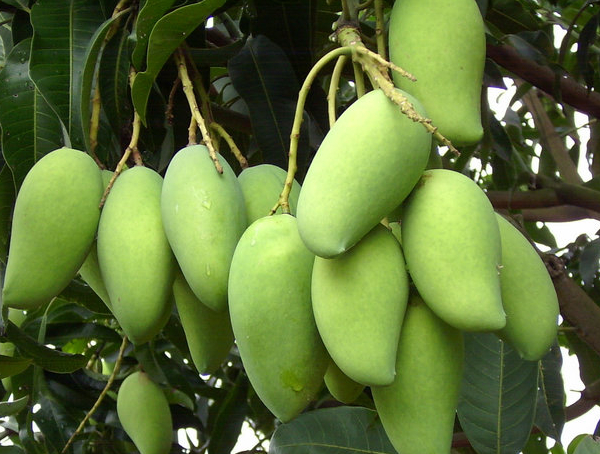
Mango is one of the famous tropical fruits. Its flesh is fine and sweet, with a distinctive flavor and high nutritional value, and it is deeply loved by people. Mango also has the characteristics of wide adaptability, rapid and easy growth, a long fruiting period and high economic value, so it enjoys the reputation of “king of tropical fruits”. In recent years, the global mango planting area has been expanding year by year, and production has also been rising year by year. At present, it ranks after grapes, citrus, bananas and apples, and has become the world's 5th largest fruit.
Site Selection and Orchard Establishment
1. Orchard site selection: A mango orchard requires relatively thick soil, soil that is not easily compacted and does not accumulate water, and proximity to a water source, so that irrigation can be carried out during spring drought to ensure a good harvest.
2. Planting density: This varies according to climate, soil fertility and cultivar. The planting spacings that can be used are 4 m × 4 m, 4 m × 5 m, and 5 m × 6 m.
3. Field planting: The suitable planting time each year is June to August. Choose an overcast or sunny day for planting. When planting, place the seedling into the previously prepared planting hole and then backfill with soil. When planting bagged seedlings, the plastic bag must be removed before planting.
Orchard Management
1. Irrigation and drainage
After field planting, seedlings need watering to maintain moisture during dry weather. Water once every 7 to 10 days, and it is best to keep the orchard soil moist. During the flowering and fruiting period, regular irrigation is needed to ensure the water required for flowering and fruit development. During the rainy season, any localized water accumulation should be drained promptly.
2. Intertillage, weeding and loosening the soil
The orchard requires weeding 4 to 6 times per year, keeping the root zone free of weeds. From late autumn to before winter, shallow loosening of the soil in the root zone should be carried out.
3. Mulching
Straw mulching can maintain moisture balance and soil temperature, reduce weed growth, and at the same time increase soil organic matter, prevent compaction, and favor root activity.
4. Deep plowing to improve the soil and bury green manure
At the drip line of the tree canopy, dig fertilizer trenches 80 to 150 cm long and 40 to 50 cm each in depth and width. Into each trench, press 40 to 50 kg of green grass, 10 to 20 kg of farmyard manure, and 0.5 to 1 kg of superphosphate.
5. Fertilization of fruiting trees
① Post-harvest fertilizer. Mainly organic fertilizer, combined with deep plowing to improve the soil. Each tree should also be given an additional 0.5 to 1 kg of quick-acting nitrogen fertilizer.
② Flower-promoting fertilizer. Apply it 1 month before flowering, during the flower bud differentiation period, in November to December. Generally use 0.5 to 1 kg per tree of ammonium sulfate or urea.
③ Post-bloom fertilizer. Apply quick-acting nitrogen and potassium fertilizer once when mango flowers fade, or add 0.5% to 1% monopotassium phosphate or potassium nitrate as a foliar topdressing when spraying pesticides.
④ Fruit-swelling fertilizer. The fertilization time is March to April each year. This fertilization amount accounts for 60% of the annual usage. The N:P:K mixing ratio is 8:1:8. Combine with irrigation to provide the water and nutrients needed for fruit expansion.
Tree Management
1. Shaping and pruning of young trees
After field planting, begin shaping when the seedling is 80 to 90 cm tall. The steps for shaping and pruning young trees are: establish the trunk — cultivate main branches — cultivate secondary main branches — increase auxiliary nutrient branches. This lays a good tree structure for future fruiting and maintains a reasonable canopy.
2. Pruning of fruiting trees
Pruning of fruiting trees is, on the basis of shaping, organizing and straightening out the branches to create a canopy with good ventilation and light penetration, laying the foundation for high yield and good quality. Pruning is generally mainly short pruning and thinning. However, because climatic conditions vary across Hainan, the pruning methods used differ somewhat, but all achieve the concept of “large branches bright and open, small branches lively and abundant.”
Controlling Shoots and Promoting Flowering
Failure of trees of suitable age to flower is an important reason for unstable mango yields and is also a relatively common phenomenon in production. Failure of mango trees to flower is related to excessive nitrogen fertilization, excessive vegetative growth, and warm, humid winter weather. In order to enable mango trees of suitable age to flower and fruit normally, hormone and plant growth regulator control, nutrient regulation, and some physical measures should be used in production to promote the cessation of shoot growth, accumulate sufficient nutrients, and promptly shift to flower bud differentiation and flowering.
1. Regulation with growth regulators Applying plant growth regulators to regulate mango growth, flowering and fruit set and to increase yield is an effective measure in mango production. At present, ethephon and paclobutrazol are commonly used in production for regulation.
① Ethephon. After entering the plant body, ethephon slowly decomposes and releases ethylene, which plays a regulatory role in plant growth and development, can promote flower bud differentiation in the plant, and increases the proportion of bisexual flowers, with a relatively good and stable flower-promoting effect.
② Paclobutrazol. Paclobutrazol is a new plant growth retardant widely used in recent years with low toxicity, a short residual period, little residue, and relatively obvious effects. It can inhibit the biosynthesis of gibberellins in the plant body, thereby inhibiting vegetative growth while promoting flowering and fruiting.
2. Nutrient regulation
① Spraying potassium nitrate. Spraying potassium nitrate can make the tree flower and fruit several months earlier and promote flowering in trees that cannot fruit because of excessive vegetative growth. However, its flower-promoting effect is slightly weaker than that of ethephon and paclobutrazol.
② Rational fertilization. Using fertilization to regulate mango growth and development is one of the important means of controlling shoots and promoting flowering. Unreasonable fertilization will directly affect the quantity and quality of mango flowering, and even affect the fruit-setting rate and the development of young fruit. If too much nitrogen is applied, it will cause luxuriant branches and leaves, making it difficult for the plant to flower. If the fertilization amount is too small, growth will be weak, causing early flowering and early fruit drop. Phosphorus deficiency in mango affects its respiration intensity and the translocation of carbohydrates. Potassium deficiency in mango affects photosynthesis as well as the regulation of metabolism and stress resistance.