Detailed Explanation of the Key Technical Points for Growing and Cultivating Large-Fruit Loquat
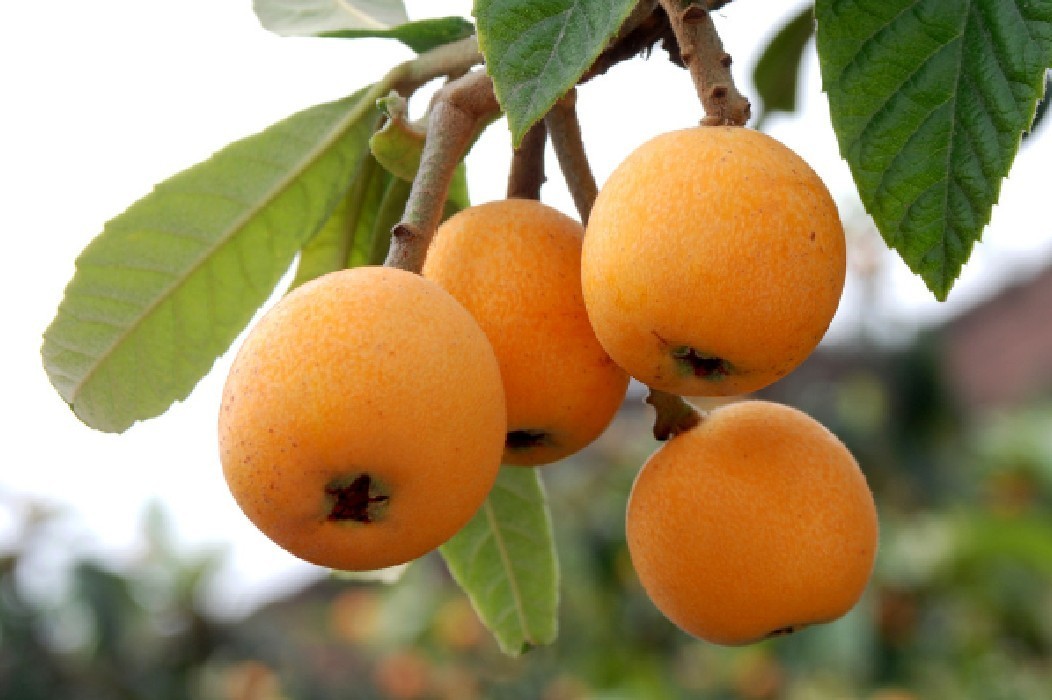
Large-fruit loquat refers to excellent loquat varieties with a single fruit weight of more than 40—50 grams, attractive fruit, and high commercial value. The excellent varieties currently promoted for planting in production include: Zaozhong No. 6, Dawuxing, Jiefangzhong, and others. Loquat is a specialty fruit of southern China, and the fresh fruit is rich in nutrients. According to analysis: in every 100 grams of flesh: 7 grams of carbohydrates, 0.8 grams of crude fiber, 0.4 grams of protein, 0.10 grams of fat, 22 milligrams of calcium, 32 milligrams of phosphorus, and 1.33 milligrams of carotene. The whole loquat plant is a “treasure”: the fruit has the effects of quenching thirst, reducing internal heat, strengthening the stomach, and clearing heat; the leaves have the effects of clearing the lungs, descending qi, harmonizing qi, and directing qi downward, and are mainly used for cough due to lung heat. The flowers can resolve phlegm and stop coughing…… and so on. It is an excellent fruit variety worth vigorously developing and planting.
Characteristics of Each Excellent Variety
1. Zaozhong No. 6 loquat: This variety was bred by crossing Jiefangzhong loquat as the female parent with the Senwei Zaosheng variety introduced from Japan, and it is currently the earliest-maturing variety in China. This variety matures 20—30 days earlier than ordinary early-maturing varieties, and has important economic value for bringing fruit to market earlier and supplying the market. This variety has a moderate tree vigor, a semi-spreading form, thick and strong branches, and long elliptical leaves with slightly outward-curled leaf margins and deep, non-glossy leaf color. The fruit is oval. When 4-5 fruits are retained per cluster, the average single fruit weight is 50.3 grams, and the largest can reach 108 grams. The fruit skin is orange, the fruit size is uniform, the skin is thick and easy to peel, the flesh is orange-red, the flesh thickness is 0.85 cm, the flesh texture is relatively fine and dense, melting in the mouth, of high quality, sweet with little acidity, and aromatic. The soluble solids content is 10.5%, the acid content is 0.32 g/100 g flesh, and the sugar content is 10.25%. The edible rate is 70.1%. Each fruit contains 3-4 seeds. This variety has the characteristics of less occurrence of leaf spot disease, relatively strong stress resistance, less occurrence of fruit cracking, fruit wrinkling, and sunscald, and relatively good high-yield performance. It begins to bear fruit in the third year after planting, with an average yield per plant of more than 8.0 kg in the fourth year and more than 20 kg in the fifth year, making it an excellent variety worth developing.
2. Dawuxing loquat: “Dawuxing” loquat is a new high-quality large-fruit loquat variety selected and bred from seedlings. It once won the “Silver Award” at the “99 Kunming World Horticultural Exposition” and has been called the “king of loquat” by domestic peers. This variety has the following characteristics: the single fruit weight of Dawuxing loquat is about 80 grams, with the largest reaching 194 grams; the fruit skin is orange-red, the taste is richly sweet, and the quality is excellent; the soluble solids content is 13.5-14.8%; the fruit has high firmness and the fruit skin has strong toughness, making it resistant to storage and transport; it can be stored and transported for more than 10 days at room temperature and can be stored for 2 months under frozen conditions. The edible rate is 75%. It matures about 1 month later than Zaozhong No. 6 loquat. Its comprehensive trait indicators far exceed those of Jiefangzhong and Zaozhong No. 6 loquat. It is a late-maturing variety. It has practical significance for extending the market supply of fruit. Generally, it can trial-flower and bear fruit in the second year after planting; with proper management and sufficient fertilizer and water, the fruit yield per plant can reach 2-5 kg, and thereafter the yield increases year by year. After seven or eight years, it can reach the full-production period. Producers are advised to try planting it. Our department can provide pure seedlings.
3. Jiefangzhong loquat: This variety originated in Putian, Fujian. The tree is vigorous, with thick and strong, spreading branches; the crown is a natural round-headed shape; the leaves are elliptical and terminal; the flowers are yellow-white. The fruit is obovate, with an average single fruit weight of 60 grams and large ones reaching 170 grams. When ripe, the fruit skin is orange-red with a few rust spots; the skin is thick and easy to peel; the flesh is orange-red, the texture is slightly coarse, the juice is abundant, and the flavor is rich. When planted in the Guangzhou area, it flowers in November-December and matures in April-May of the following year. The edible rate of the fruit is 73%, the soluble solids content is 10-12%, and the quality is above average. This variety has strong adaptability, begins to bear fruit in the third year after planting, and is relatively high-yielding and stable.
Biological Characteristics of Loquat
Loquat is easy to cultivate and does not have strict requirements for environmental conditions. It can be planted in areas where the annual average temperature is above 15°C and the winter temperature is not lower than -5°C. Loquat can sprout and grow throughout the year and can sprout 4-5 times each year. The root system of loquat is not very developed, and growth stops above 30°C. Most loquat varieties can set fruit by self-pollination and do not need pollinizer trees. The flowering period of each flower cluster lasts 20-45 days, and the flowering period of a single loquat tree lasts 1.5-2 months, which causes inconsistent fruit ripening periods in production, but is beneficial for market regulation. The fruit-setting rate of loquat generally can reach more than 10-15%, so fruit thinning is needed. Bearing in on-years and off-years is not obvious, and it is easy to obtain stable and high yields in cultivation. Loquat has wide adaptability to soil and can grow in sandy soil, gravelly loam, or clay. Among these, soil that is well drained, has a deep soil layer, slightly clayey gravelly topsoil, is rich in organic matter, and has a pH of about 6 is most suitable for planting.
Key Technical Points for Cultivation
1. For planting loquat, choose a plot with a deep soil layer, rich organic matter, good drainage, and a low groundwater table. When planting on flat land, prevent waterlogging, and deep trenches must be dug and high mounds built for cultivation.
2. Planting requirements
① Digging holes and applying base fertilizer: The size of the hole depends on the soil texture and structure, and generally requires a length and width of 80 cm and a depth of 60 cm. Fill each hole with 10-15 kg of weeds or rice straw, 0.5-0.75 kg of lime, 1.0-1.5 kg of calcium-magnesium phosphate fertilizer, 1 kg of compound fertilizer, and 20-30 kg of decomposed manure. According to the principle of coarse materials below and fine materials above, sprinkle lime powder on each fertilizer layer, then cover with soil, and mix as thoroughly as possible with the fertilizer. It is best to pile the topsoil into a mound 30 cm above the ground.