Detailed Explanation of High-Efficiency Propagation Techniques for Lychee Seedlings
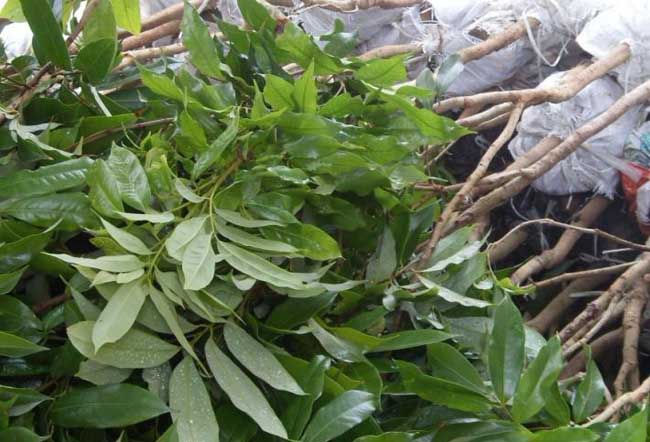
Grafting Propagation from Seedling Rootstock
1. Nursery Site Selection
Select a standard rectangular field plot with abundant sunlight, open terrain, ample water supply, convenient drainage and irrigation, and well-equipped water conservancy ditches and field roads, suitable for the operational needs of nursery site construction.
2. Nursery Soil Fertilization
The soil cohesiveness of the seedbed should be suitable for rootstock growth and for holding soil together when lifting seedlings. For relatively fertile soil with weak cohesiveness, it is not suitable for operations such as lifting seedlings with a soil ball using a seedling lifter. Therefore, different soil textures need to be blended into the seedbed. If the seedbed is paddy field, water should be controlled, and the field should be plowed and sun-dried, and deep-plowed for maturation, which helps raise soil temperature and soil oxygen content, while killing soil pathogens and insect eggs, and loosening the soil. On the basis of controlling the field and sun-drying, red clay should be transported from other places and blended in to enhance cohesiveness, which facilitates later lifting of seedlings with soil balls. This is a key measure for not lifting bare-root seedlings and ensuring survival after planting. If the seedbed soil is poor and weak, it should be fertilized. It is recommended to additionally apply, according to fertility level, 500-600 kg of decomposed sheep manure, 50-100 kg of superphosphate, 50-100 kg of compound fertilizer, and 50 kg of lime per mu, and mix thoroughly and evenly with the soil.
3. Seedbed Ridge Preparation
Two months after the nursery soil fertilization and maturation work, the seedbed ridges are prepared, specifically as follows:
① Ridge surface preparation. Ridge preparation requirements: ridge surface width 2 m, length depending on the field terrain and ridge layout, ditch width 30 cm, depth 30 cm, drainage ditch depth 50 cm. After the sowing ridges are opened, break up the soil and level it, and wait for sowing.
② Setting up fences. To prevent pigs, cattle and other livestock from intruding into the nursery site and trampling and damaging it, fences need to be set up around the nursery base. The specific method is: around the nursery site, set cement bricks and bind them tightly with wire, or make a fence with bamboo poles.
③ Building shade sheds. Standards: greenhouse span 6 m, length 15-20 m, shoulder height 1-1.5 m, ridge height 1.8-2 m, bottom cross-section diameter 6 m. Procedure: set one upright post every 2 m along the width (span) direction of the shed, post thickness 6-8 cm, with the top forming an arch, buried 50 cm deep underground, with bricks padded or crossbars tied, tamped firm, and bamboo poles fixed at the tops of the posts to form an arch, with crossbars added at both ends, buried underground and tamped firm; arch frame spacing 1 m, connected with longitudinal tie bars to form an integrated whole; cover the arch frames with shade netting, and after tightening, bury the ends of the net in the surrounding soil, and press the shade netting tight between arch frames with net-pressing wire or No. 8 aluminum wire, bamboo poles, etc.
4. Rootstock Cultivation
According to experience, old varieties of lychee have good compatibility with varieties such as Shuidong, Xiaohei San Yuehong, and Feizixiao. For rootstock, select local old lychee varieties as grafting rootstock. The specific work is as follows:
① Seed collection and germination promotion. After the fruit matures in April-May, collect old-variety lychee seeds in a centralized manner. To raise 100,000 seedlings, about 130,000 seeds are needed. Lychee seeds cannot be stored for a long time and should be collected in batches for germination promotion and sowing. Germination promotion method: choose a flat piece of land, pile 3-5 cm of wet sand on it, place the washed seeds flat on the sand surface without overlapping the seeds, then cover the seeds with 5 cm thick rice straw, water frequently to keep the straw moist, and after 4-5 days, when the radicle of the seeds emerges, they can be taken out for sowing.
② Sowing and seedling raising. Sowing specification: plant spacing and row spacing of 18 cm × 12 cm is suitable. Sowing method: implement single-seed sowing. When sowing, first open sowing furrows according to row spacing, furrow depth about 3 cm, place seeds flat in the furrows according to the originally set plant spacing, water, and then cover with soil. The soil covering thickness should preferably be 2 cm; too shallow and the seeds are likely to dry out and die, too deep and the seedlings have difficulty emerging.
5. Rootstock Grafting
① Scion selection. For grafted varieties, mainly select Shuidong, Xiaohei San Yuehong, and Feizixiao, with appropriate matching of other varieties. In the early stage of shoot collection, pruning and management of branches and shoots should be done well. Scion collection requirements: select 3-5 year old vigorously growing fruiting mother trees as the source trees for scion collection, and choose 1-2 year old branches from the middle and upper outer canopy that are full and solid in growth, with plump buds and fully mature leaves. Storage requirements: if conditions permit, graft immediately after cutting; if conditions do not permit and a short period of placement is truly necessary, wrap the scion branches with fresh lychee leaves, then wrap another layer of wet towel, seal with a plastic bag, and place in a cool place.
② Grafting time. According to experience, lychee grafting should preferably be carried out in March-April each year, with supplementary grafting in September-October of the same year.
③ Grafting method. Nursery seedling grafting adopts the branch grafting and cut grafting method. Grafting method: first, cut the rootstock. Cut the top of the rootstock at 30 cm above the ground, choose a flat and straight side facing upward and make one horizontal cut to form a 45° slope, then on the flat and straight part below the slope, cut vertically downward along the cambium or slightly into the xylem, with the cut 3-4 cm long. Second, cut the scion. Hold the scion branch flat and straight downward, cut the lower end of the branch into a 45° angled slope, reverse the branch so that the flat and straight side faces upward, and make one flat cut downward to the cambium or slightly into the xylem, cutting out a smooth long cut surface slightly longer than the rootstock cut, leaving 2-4 buds. Finally, join and seal. Insert the cut scion with the long cut surface facing inward into the rootstock cut, align the cambium layers between rootstock and scion with each other, and bind and seal with plastic film tape.
6. Seedling Release from Nursery
① Seedling standards. First, the rootstock and scion are well compatible, the graft union develops evenly above and below, and there are no adverse phenomena such as basal swelling or strangling of the trunk and leaf yellowing caused by too late unbinding. Second, the grafting position is at 30-35 cm and must not be too high, the trunk is thick and straight, seedling height 50-60 cm, with 3-4 branches, vigorous growth, neat leaves, and dark green leaf color. Third, the branches and trunk are thick and strong, and the root system is well developed.
② Lifting seedlings from the nursery. Seedling lifting method: first make a cylindrical seedling lifter. When lifting seedlings, with the seedling trunk as the center, insert the seedling lifter into the soil from both sides of the seedling, strike the seedling lifter with a large iron hammer until the seedling lifter is fully inserted into the soil, then grip the iron handle of the seedling lifter tightly, pull the seedling lifter up together with soil and seedling, cut off the overly long main root, and open the seedling lifter to obtain a lychee seedling with a cylindrical soil ball; then wrap the entire soil ball of the lifted seedling with plastic film, tie the film tightly with fiber tape, and it can be released from the nursery for supply.
③ Transportation and supply. When the first new shoot of the grafted seedling ages and matures, it can be released from the nursery for planting. During loading and transportation, it should be placed neatly and can be loaded in two layers. Seedlings released on the same day must be transplanted and planted within no more than three days. The year-round nursery release period is June-October.
7. Nursery Site Management and Care