What methods can protect citrus trees after frost damage?
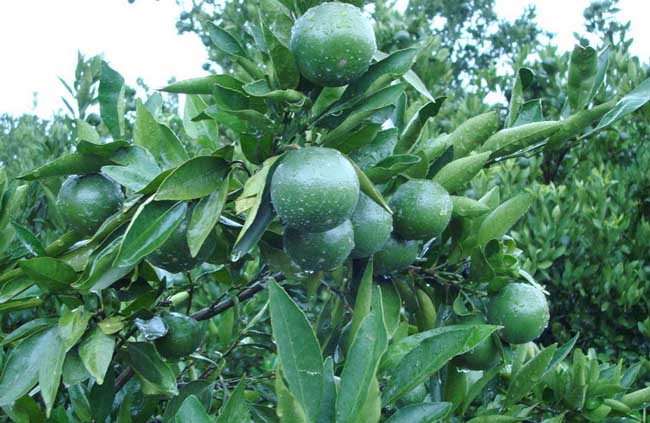
Citrus is a light-loving plant, but excessively strong sunlight leads to poor growth and development. The suitable annual average temperature for growth is above 15°C, the optimal growth temperature is 23°C to 29°C, growth stops above 35°C, and frost damage occurs at -2°C. For citrus trees that have suffered severe frost damage, take the following tree preservation measures:
Mound soil around the base to increase temperature
Mound soil to protect the root crown; the standard for mounding is that the roots are not exposed and the root crown is covered. At the same time, strengthen intertillage and loosening of the soil, apply more fertilizer, prevent waterlogging, drought, and pests and diseases, and restore tree vigor as quickly as possible. Pay attention to preventing the outbreak of gummosis after freezing.
Whitewash and wrap the branches and trunk
The trunk and main branches form the tree framework and are prone to frost damage, which leads to weakened tree vigor, and in severe cases, cracking of the bark and death of the entire tree. Whitewash is usually made by mixing 10 jin of lime, 1 jin of sulfur powder, 0.2 jin of salt, a little cooking oil, and 30-40 jin of water. Wrapping the trunk with rice straw or applying a mud coating gives a relatively good frost protection effect. When wrapping, be careful to press the straw heads over the straw tails and tie tightly, so that water does not accumulate inside the straw and freeze.
Smoking with smudge fires
This is mainly to prevent heavy frost after freezing; it can reduce radiative heat loss and alleviate frost damage. Materials for smudge fires can be obtained locally, such as weeds, branches, and leaves, with 4-6 piles per mu. Frost usually appears in the early morning, so ignition should be timed to produce smoke before the critical temperature for frost damage.
Spray an anti-transpirant thermal insulation agent
The thermal insulation agent can form a molecular film on the leaf surface, inhibit water evaporation, reduce water loss from leaf cells, and achieve a frost protection effect.