How to Grow Cape Gooseberry? A Detailed Guide to Cape Gooseberry Cultivation Techniques
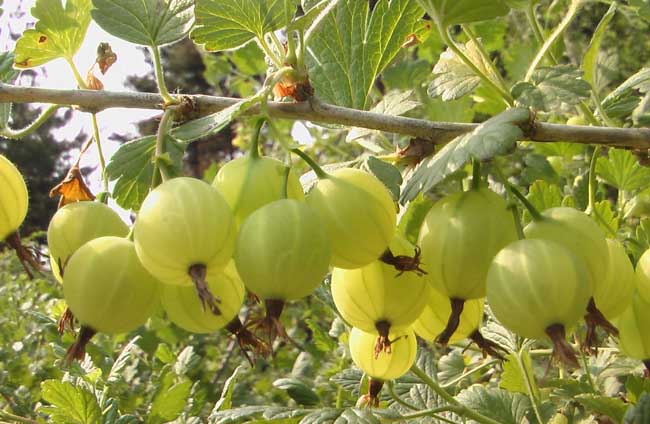
Cape gooseberry is an annual herbaceous horticultural crop with high yield and economic benefits, and it can be grown throughout the country.
Growth Cycle of Cape Gooseberry
1. Germination stage: From seed water absorption and sprouting to the emergence of true leaves, the germination stage runs from sowing until the seedlings emerge from the soil, with over 80% emergence taking about 7-15 days.
2. Seedling stage: After the seedlings emerge uniformly, 80% of the plants reach three true leaves, which is about 20-30 days before the formation of the first flower calyx. This stage is mainly the period of root, stem, and leaf growth. In production, good measures must be taken to cultivate robust seedlings, laying a good foundation for high yield, quality, and productivity.
3. Flowering stage: The number of days from the opening of the first flower to the opening of the last flower is the flowering duration. The flowering start date is when 5% of plants have their first flower open, expressed as month and day; the flowering end date is when the plants' last flowers open and the berries can still fully mature before frost.
4. Fruiting stage: The fruiting stage is divided into the initial stage and the final stage. The fruiting start date is when 5% of plants have set fruit after flower drop. The fruiting end date is when the flowers of the flowering end date have set fruit.
5. Maturity stage: The berry maturity stage can be divided into the initial ripening stage and the final ripening stage. The initial ripening stage is when 5% of plants have their first fruit ripe. The final ripening stage is the date when the last berries fully mature. Cape gooseberry flowers and fruits successively from bottom to top. The first flower's fruit expands and grows, while the 2nd to 4th flowers successively form buds, bloom, and set fruit.
Environmental Requirements of Cape Gooseberry
1. Temperature: Cape gooseberry likes warmth and is not tolerant of frost. Seeds germinate quickly at around 30°C; the seedling growth period is suitable at 20-25°C, with nighttime temperatures not below 17°C; during the flowering and fruiting period, 20-25°C during the day and not below 15°C at night is suitable, otherwise flower and fruit drop is easily caused. Plants stop growing below 10°C. Plants freeze below 0°C. According to surveys, seedlings have insufficient low-temperature tolerance, so open-field planting must not be done too early and can only be planted after the late frost has passed.
2. Light: Cape gooseberry is relatively sensitive to light requirements and needs sufficient light. Within the range of 3000-4000 meter-candles, growth and development are coordinated, and fruit quality is excellent. When light is insufficient, plants grow excessively and become slender and weak, yield declines, berry coloration is poor, and taste is inferior. Therefore, in production, attention must be paid to the rationality of planting density and the necessity of pinching, bud removal, and pruning.
3. Water: Cape gooseberry needs more water, especially in the early stage before berries begin to mature, when branches, leaves, and fruits grow simultaneously and water demand is high. When berries mature in large quantities, water must be controlled. Therefore, throughout the life of cape gooseberry, it likes water in the early stage and fears water in the later stage. In the later stage, heavy rain causes plants to remain green and grow vigorously, and also delays berry maturity and affects harvesting work. Thus, in production, attention should be paid to watering in the early growth stage and drainage in the later stage.
4. Soil: Cape gooseberry is not strict about soil requirements, and it can be said to be plantable in various soils. However, sandy soil is best, giving berries with good taste and high yield and marketable rate. Cape gooseberry is relatively salt-alkali tolerant, and soil with a pH value of 6.5-7.5 is more suitable. In addition, the soil is required to have good physical properties, with a deep and loose plow layer, so roots can easily grow into deeper layers.
5. Nutrition: Cape gooseberry is relatively sensitive to nutritional conditions. If there is too much nitrogen fertilizer in the soil layer, or the proportions are imbalanced, phenomena such as plants remaining green and maturing late and poor fruit quality will occur. With insufficient nutrition, plants are short, berries are also small, but coloration is fast, maturity is early, and yield is low. Therefore, in fertilization, organic fertilizer should be the main focus, with supplemental chemical fertilizer. In the early growth stage, nitrogen and phosphorus fertilizers should be the main focus, while in the later stage, phosphorus and potassium fertilizers should be the main focus, to ensure the needs of each period.
Seedling Raising Techniques
Cape gooseberry is a crop in which vegetative growth and reproductive growth proceed simultaneously, with a growth period of about 100 days and requiring an effective accumulated temperature above 2600°C. North of the Yangtze River, the frost-free period is short, and the early spring climate is cold, often with frost, snow, cold waves, and cold wind, so large and medium plastic tunnels should be used for seedling raising. Off-season cultivation in the south should also use protected seedling raising.
Standards for strong seedlings: In appearance, roots are about 5 cm long, with more than 3 lateral roots, seedling height 15-18 cm, stem thickness 0.4 cm, 4-5 true leaves, and about 20% budding. Leaf color is relatively dark, glossy, protective tissues are well formed, and there is no pest or disease damage. Physiologically, the vegetative body contains abundant nutrients, much bound water, strong regeneration ability of meristematic tissues, high metabolic level, balanced whole-plant development, strong adaptability and stress resistance to the cultivation environment, and after planting, seedlings can quickly recover and resume growth.
1. Seedling raising method: Mainly use plastic large tunnels or medium tunnels for seedling raising. The seedbed should be set in a place with higher terrain and good drainage, and a plot where solanaceous vegetables have not been planted in the previous crop should be selected. Each hectare requires 80-200 sq m of large tunnel or medium tunnel seedling raising area.
2. Seedbed soil preparation: Field soil that does not contain pathogens or pests, is rich in humus and available nutrients, has a neutral chemical reaction, good structure, is loose and not compacted, and has not been treated with long-residual herbicides. The seedbed soil should be fully turned and sunned, the fertilizer should be fully decomposed, and the fertilizer and soil should be evenly mixed.
3. Nutrient soil preparation: Garden soil : biological organic fertilizer (special fertilizer for cape gooseberry) = 1:1 or 2:1. If the soil is heavy and sticky, 10% fine sand can be added, mixed evenly and sieved, sealed with formalin solution to sterilize and kill insects, opened and sun-dried for 48 hours, then piled for later use. The seedbed soil of the sowing bed is generally 6-10 cm thick, and each sq m of seedbed requires 100-125 Kg of nutrient soil. The seedbed soil of the transplanting bed is generally 12-17 cm thick, and each sq m of seedbed requires 150-200 Kg of nutrient soil.