What are the methods for controlling apple tree diseases?
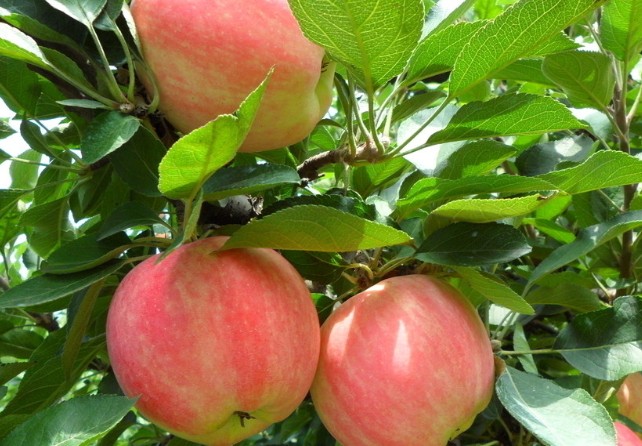
In recent years, many apple orchards have seen diseases such as early leaf drop disease, canker, ring rot, as well as viral fruit shrinkage disease, facial mottle disease, and mosaic disease. Generally speaking, apple trees enter the initial fruiting stage 3-5 years after planting, enter the full fruiting stage after 6-8 years, and enter the aging stage after about 20 years, but now in many places trees of around 15 years have already shown decline. Why does this happen? In our investigation, we found that there are 3 main reasons for the decline in tree vigor.
Poor nutritional conditions
Many orchards commonly have the problems of low soil organic matter content and insufficient application of organic fertilizer. Although in the past 2 years fruit growers' incomes have increased, their enthusiasm has risen, and they have gradually increased the amount of organic fertilizer applied, it still has not reached the proper standard, and organic nutrition is still lacking. In addition, many fruit growers still attach importance to applying base fertilizer, but topdressing is sometimes done and sometimes not, so the fruit trees cannot receive timely and adequate nutrient supply at each key growth period.
Excessive load
Some fruit growers still have the idea of increasing income through yield, leaving too much fruit, turning it into "exploitative" production, which makes the tree load too heavy, the fruit size relatively small, the number of flowers reduced the following year, forming a biennial bearing phenomenon, early decline of tree vigor, and reduced disease resistance.
Improper application of girdling technology
In order to promote flower bud formation, some fruit growers carry out girdling year after year on the backbone branches and lateral branches at all levels of the tree, and the girdling strip is relatively wide, causing poor wound healing, seriously affecting the transport of nutrients produced by leaf photosynthesis to the roots, leading to poor accumulation of organic nutrients in the tree, extremely weakened tree vigor, and susceptibility to various diseases.
In addition to the above 3 main reasons, improper application of shaping and pruning techniques, inadequate pest and disease control, drought, freezing injury, and so on can also affect tree vigor.
In response to the main reasons causing the decline in tree vigor, the following measures need to be taken to strengthen tree vigor:
① Increase the application of organic fertilizer, topdress in time, and raise the tree's nutritional level. In autumn and winter, increase the application of decomposed chicken manure, cattle and sheep manure, human excrement and urine, and other farmyard manure, which can improve the soil, strengthen tree vigor, and improve the tree's disease resistance. The standard for the amount of organic fertilizer applied is "one jin of fertilizer for one jin of fruit."
② Keep an appropriate amount of fruit. Only by determining an appropriate fruit load can stable and high yields be ensured, tree vigor be balanced, and the tree's disease resistance be improved. The fruit load can be determined by the spacing thinning method or the trunk circumference method.
③ Implement the ring-cutting technique to replace the girdling technique. In order to promote flower bud formation in apple trees, some fruit growers carry out girdling year after year on backbone branches at all levels of the tree, and the girdling opening is relatively wide, causing poor wound healing, seriously affecting the transport of nutrients to the roots, leading to weakened tree vigor and triggering early leaf drop disease. In order to strengthen tree vigor and improve disease resistance, girdling on the central leader is prohibited, and instead multiple ring cuts are made in several rounds on the main branches, lateral branches, and branch groups, starting 15 cm above the base of the branch and using a ring-cutting knife to cut horizontally all the way around. According to branch vigor, make 1-2 ring cuts each time, with a spacing of 10 cm, and make ring cuts once every 7-10 d. When ring cutting in several rounds, the spacing between cuts must not be less than 3 cm. Orchards with a large and stable amount of flower formation do not adopt the ring-cutting technique.