Dumb Cane (Alocasia) Growing Methods and Precautions
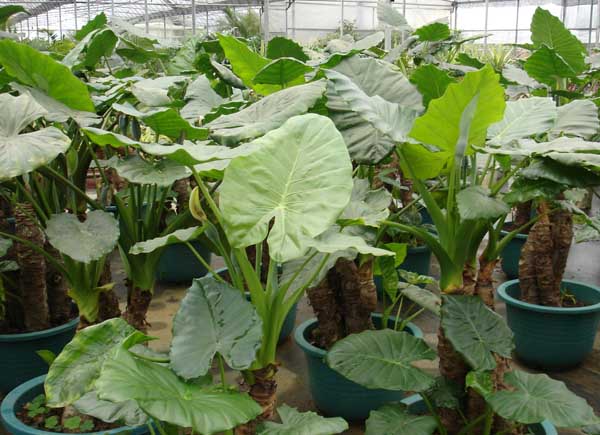
Dumb Cane, also known as Drip-drop Lily or Buddha's Hand Lotus, has a delicate inner charm, with large leaves that are unassuming, reserved and low-key. Because its flowers resemble Guanyin and it drips water from leaf tips when moisture is sufficient, it has earned the beautiful name "Drip-drop Guanyin" and is often used to decorate interiors. Despite its beautiful name and inner grace, few people know the growing methods for Dumb Cane, so here we introduce some growing methods for Dumb Cane.
Propagation Methods for Dumb Cane
The main propagation methods for Dumb Cane are division, sowing and cuttings, detailed as follows.
1. Division and Sowing
In summer and autumn, the tubers of Alocasia macrorrhizos sprout small leaf-bearing plantlets, which can be divided when repotting and changing soil. After fruits ripen in autumn, collect the orange-red seeds and sow them immediately, or dry and store them to sow after spring the following year.
2. Cutting Propagation
Cutting propagation is for perennial old plants. Along with plant renewal, cut the stem about 5 cm above the soil surface from the base of the plant for stem cutting propagation. In cutting propagation of Dumb Cane, cutting the stem has the following benefits:
① The plant loses apical dominance, allowing nutrients to accumulate at the base and prompting massive sprouting from roots and stem base, which helps propagation speed and quantity;
② The cut old stem can be cut into cuttings about 15 cm long, placed in shade to air-dry for half a day, then inserted into sandy loam for cultivation. Especially the growing top section: after removing all developed leaves, it can be directly potted as a single plant, with cutting and cultivation done simultaneously. After two months of cultivation, it becomes a formed plant with large leaves, dense branching, short and sturdy, quite elegant indoors. Stem cutting of Alocasia macrorrhizos is suitable in spring, summer and autumn. During cutting, keep the substrate (6 parts sand : 4 parts garden soil) moist, and increase air humidity; in about 7-10 days many thick roots will grow. During cultivation of old plants, because of the shady and humid environment or daily morning and evening misting of leaves in summer and autumn, occasionally a few new shoots sprout on the old stem (especially on the stem base left after cutting), with many aerial roots attached; these can be broken off from where the daughter plant meets the mother plant and potted.
Soil Cultivation Methods for Dumb Cane
1. Timely planting: In April-May, transplant small seedlings into pots, water thoroughly to settle the roots, then place the pots in a cool shaded spot for about 1 week. After 2-3 days, apply 1 light liquid fertilizer. Alocasia cultivation is relatively simple; leaf mold soil, peat soil or fine sandy soil all work for potting. When the soil is loose, fertile and has sufficient base fertilizer, the leaves are large and lush green.
2. Fertilizer and water management: During the growing season from April to October, liquid fertilizer must be applied, once a week, and nitrogen fertilizer should especially be increased. Only then can the leaves grow large. When fertilizer is lacking, the leaves are small and yellow. Alocasia likes warm, humid and semi-shady environments; from April to November, water more, and it grows quickly above 25°C. A dry environment is very unfavorable for its growth. During cultivation, mist around it more to increase air humidity. During the growing season of Alocasia, it is better to keep it wet than dry; during winter dormancy, watering should be controlled as much as possible, and moving it indoors ensures safe overwintering.
3. Sunlight: From June to October, shading is needed, blocking 50-70% of sunlight. With moisture, semi-shade and sufficient fertilizer, the leaves can develop their original characteristics, large and spreading, and the plant is spectacular and upright. Although Alocasia likes growing in semi-shady environments, being placed long-term in living rooms, bedrooms, etc., due to insufficient light, greatly affects the plant's life activities. The formation of many plant organs is directly related to light intensity; with insufficient or no light, the plant's internodes become especially long, leaves are underdeveloped and small, and lack chlorophyll, appearing yellow.
4. Repotting: After Qingming Festival the next year, move the Alocasia outdoors so the plant receives sunlight for photosynthesis and quickly resumes growth. After 2 weeks, repot. Sprinkle the potting soil with water, remove the plant from the pot, remove soil from the roots, cut off diseased and rotten roots, then pot it, cover with new soil mixed with base fertilizer, water thoroughly to settle the roots, then place in a cool spot for about 1 week; after 2-3 days, apply 1 diluted fertilizer solution.
Now everyone has learned the soil cultivation methods for Dumb Cane; next let us look at the water cultivation methods and growing precautions for Dumb Cane.
Water Cultivation Methods for Dumb Cane
For hydroponic Dumb Cane, the root-washing method can be used to convert soil-grown plants into hydroponic plants. When washing roots, do so carefully and try not to damage the tubers and root system; also cut off rotten roots and aged roots. If the tuber has no roots, first place it in a shaded spot to air-dry for 2-3 days, and after the wound dries, soak it in water; after 2-3 days, new roots can be seen emerging.
In the early hydroponic stage, change the water once every 2-3 days, with water depth preferably covering 2/3 of the root system. After a week, new roots can grow; after 3 weeks, once the hydroponic plant has adapted to the hydroponic environment, switch to nutrient solution culture. After that, change the nutrient solution about once a month.
Because the stem tissue of Dumb Cane is relatively loose, poor water quality can easily cause contamination leading to root rot and stem rot. Therefore, keep the bottle water clean, and also clean the mucus on the tubers and roots when changing water or nutrient solution, and cut off rotten roots.
Because Dumb Cane grows very fast, it relatively likes fertilizer. Apply nitrogen, phosphorus and potassium compound fertilizer 1-2 times a month (the nitrogen proportion can be appropriately higher). If a little ferrous sulfate can be applied, the leaves will be larger and greener. Long-term lack of fertilizer easily causes the lower part of the Dumb Cane stem to become bare, affecting ornamental value. When the temperature drops and it enters dormancy, fertilizer can be reduced or stopped.